Most corporate award programs start with the same problem. The ceremony date is fixed, the recipient list keeps changing until the last week, and nobody on the team has ordered custom acrylic awards before. The result is usually a rush order with the wrong thickness, a logo that prints poorly, or packaging that arrives scuffed.
This guide covers the specs that actually matter when you order custom acrylic awards from a manufacturer: material thickness, personalization methods, base options, quantities, and lead times. Use it to brief your supplier, or work through it with our team when you share your project details.
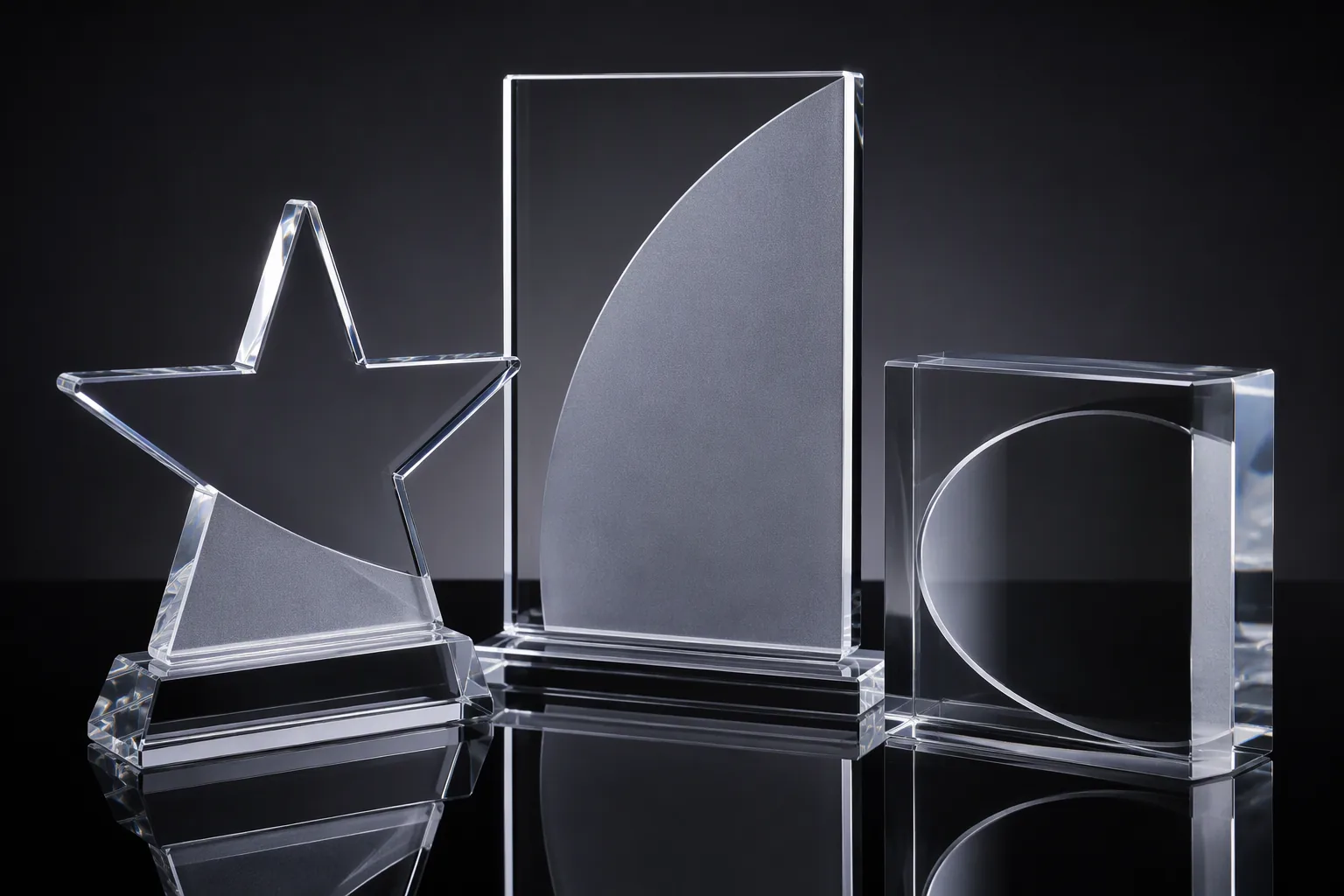
Why acrylic beats crystal and glass for bulk awards
Crystal awards look premium in photos of one trophy. At 200 or 500 pieces, the math changes. Crystal is heavy, breaks in transit, and every additional engraving line adds cost. Glass has the same shipping problem, and both limit you to etched designs.
Acrylic solves the logistics side. It weighs about half of glass at the same size, survives drops that would shatter crystal, and takes full-color printing directly. A 20mm thick acrylic block with polished edges photographs almost identically to glass in event pictures, which is where most attendees see the award anyway.
The trade-off is perceived value at very small quantities. If you are ordering five awards for a board of directors, crystal may still be the right call. For employee recognition programs, dealer awards, and sports events with dozens to hundreds of recipients, acrylic is the practical choice.
Thickness and sizes that manufacturers actually stock
Thickness drives both price and presence. These are the standard options in our factory:
| Thickness | Typical use | Stand feel |
|---|---|---|
| 3–5 mm | Plates and inserts | Flexible, needs a frame or base |
| 8–10 mm | Standing plaques, flat awards | Rigid enough to stand with a base |
| 15–20 mm | Self-standing blocks, trophy bodies | Substantial, premium feel |
For a freestanding award, 15 mm is the minimum we recommend. Anything thinner tilts forward under its own weight once you add an engraved base plate. Block-style awards in 20 mm read as premium without moving into crystal pricing.
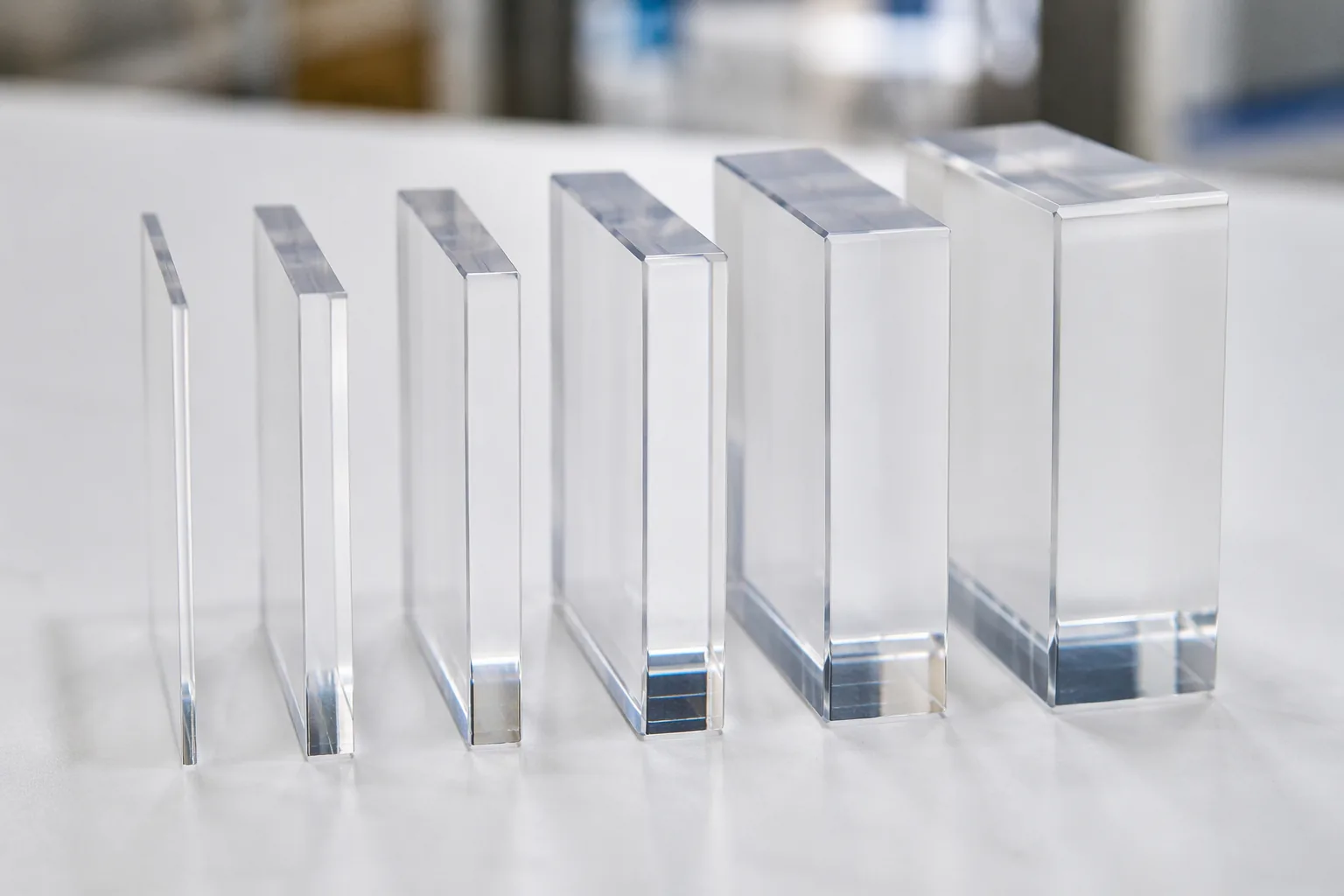
Standard shapes include rectangles, stars, shields, flames, and circles, all cut on CNC or laser from cast acrylic sheet. Custom outlines, such as a product silhouette or company logo shape, cost more in setup but nothing extra per unit once the cutting program exists. If your event repeats annually, the one-time tooling cost disappears from your second order onward.
Personalization methods compared
The method you choose decides how your logo looks more than anything else. Four methods cover almost every custom acrylic award order:
Laser engraving cuts into the surface and produces a frosted white mark. It works on any thickness, handles fine text well, and never fades. Limitation: single color. If your brand mark depends on specific Pantone colors, engraving alone will not reproduce them.
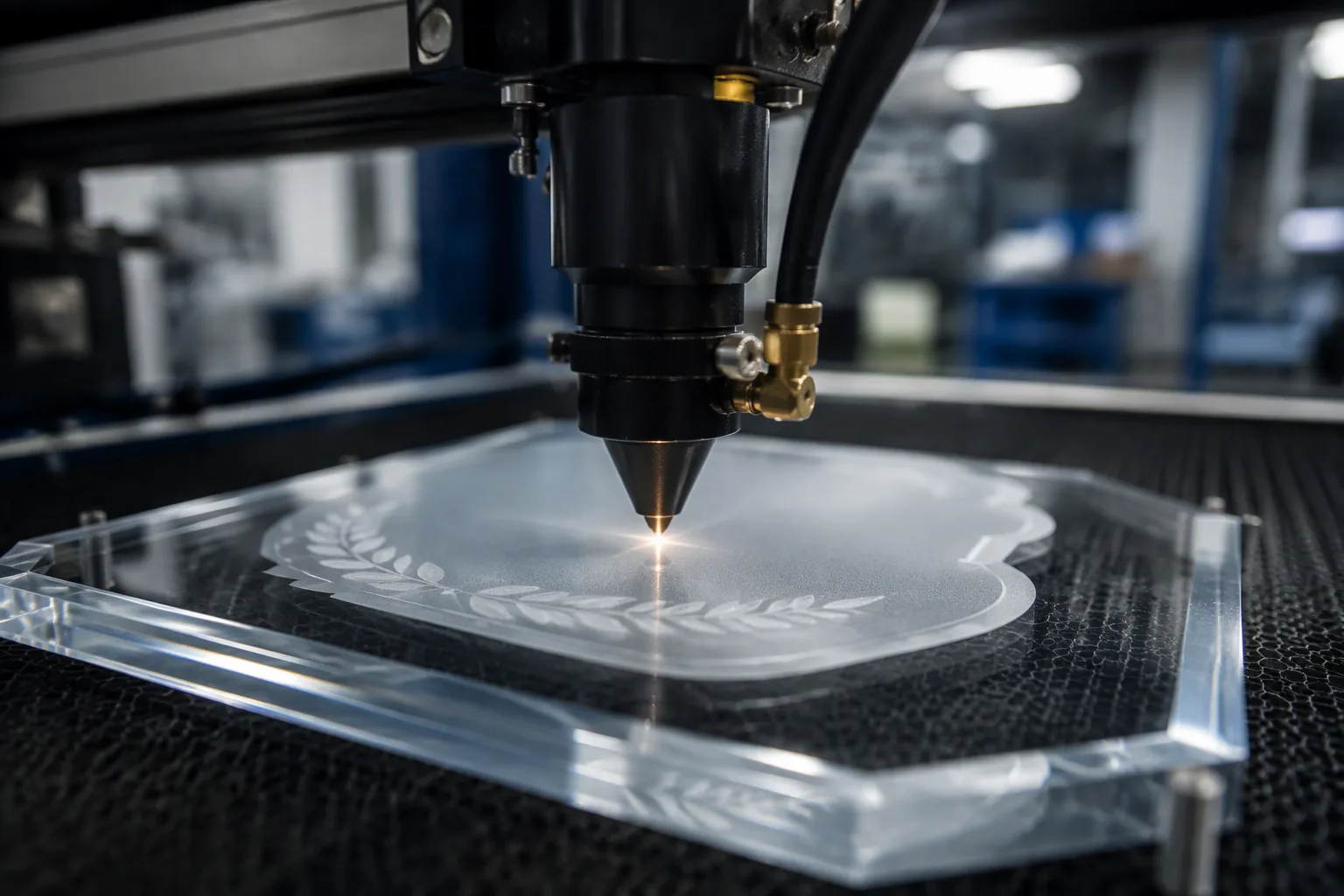
UV printing lays full-color ink directly on the acrylic. It reproduces gradients, photos, and multi-color logos accurately. Print sits on the surface, so specify whether you want it on the back of a clear block (viewed through the material, which protects it) or on the front.
Sandblasted or frosted areas create contrast zones. A common design: clear body, frosted logo panel, engraved text. This reads well under stage lighting because the frosted area catches light differently.
Metal plate inlay mounts a small aluminum or brass plate to the acrylic base. It suits programs that re-engrave annually, because plates can be replaced without remaking the award body.
Combinations are common. A typical corporate award from our production runs UV print for the logo on the back face, laser engraving for the recipient text on the front, and a polished edge finish.
Design details buyers miss
Three details cause most of the rework we see:
- Text length vs. award size. A 120 mm tall award fits roughly four lines of recipient text before the engraving looks cramped. If your award includes a long citation, size the award up or move the citation to a printed card inside the box.
- Base attachment. Self-standing blocks need no base, which saves cost and assembly. T-profile or wooden bases add height and a heavier feel but introduce a glue joint. For awards that travel to events, one-piece designs survive better.
- Color accents. Clear acrylic with a printed color core, a colored base layer, or tinted sheet (smoke, red, blue) costs little extra at quantity and photographs far better than plain clear on a dark stage.
Ask your supplier for a render or a physical sample before full production. Any factory worth ordering from will produce a sample in 3–5 days.
Quantities, pricing and lead time
Custom acrylic awards price in tiers. Typical breakpoints sit at 50, 100, 300, and 500 pieces, and the per-unit drop between 100 and 500 pieces often reaches 30–40% because setup costs spread across more units. If your program grows yearly, order one run sized for the full year rather than quarterly batches.
Lead time breaks down like this:
- Sample approval: 3–5 days including shipping
- Mass production: 10–15 days for up to 500 pieces
- Engraving and print curing: included in production, but add 2 days for multi-color UV work
- Sea freight to the US or EU: 25–35 days; air freight: 5–8 days
Work backward from your event date and leave two weeks of buffer. Every year, some percentage of award orders arrives with a last-minute recipient name change. Manufacturers handle this well if the order is already in progress; it becomes an emergency if production has not started.
For a full breakdown of how factories calculate quotes, see our guide to custom acrylic cost and quote comparison.
Packing and shipping for events
Awards ship best individually boxed. Each piece goes into a PE bag, then a white cardboard box with foam inserts shaped to the award. For orders above 300 pieces, carton dividers separate layers so forklifts and customs inspections do not push boxes into each other.
If awards travel to a venue, tell your supplier the delivery address and date, not just your office address. We routinely split shipments: bulk to the warehouse, a labeled subset direct to the event hotel.
Frequently asked questions
What is the minimum order for custom acrylic awards?
Most factories, ours included, set the MOQ at 50 pieces for custom shapes and 30 for standard shapes already in cutting programs. Below that, per-unit pricing rises sharply because setup dominates.
How far in advance should I order?
Six weeks before the event covers sample approval, production, and sea freight with buffer. Eight weeks if you need custom shapes. Two weeks is possible with air freight, but you pay for the rush on both ends.
Can you match our logo colors?
Yes, through UV printing with Pantone matching. Engraving cannot reproduce color, so color-critical logos should always be printed, not etched.
What thickness works for a self-standing award?
15 mm minimum, 20 mm preferred. Below 15 mm, plan on attaching a base.
Get a quote for your award program
Send us the event date, approximate quantity, and any reference images, and we will return a quote with material suggestions within one working day. Browse our custom acrylic awards, plaques and trophies to see standard shapes, or start with a custom outline if you have artwork ready.