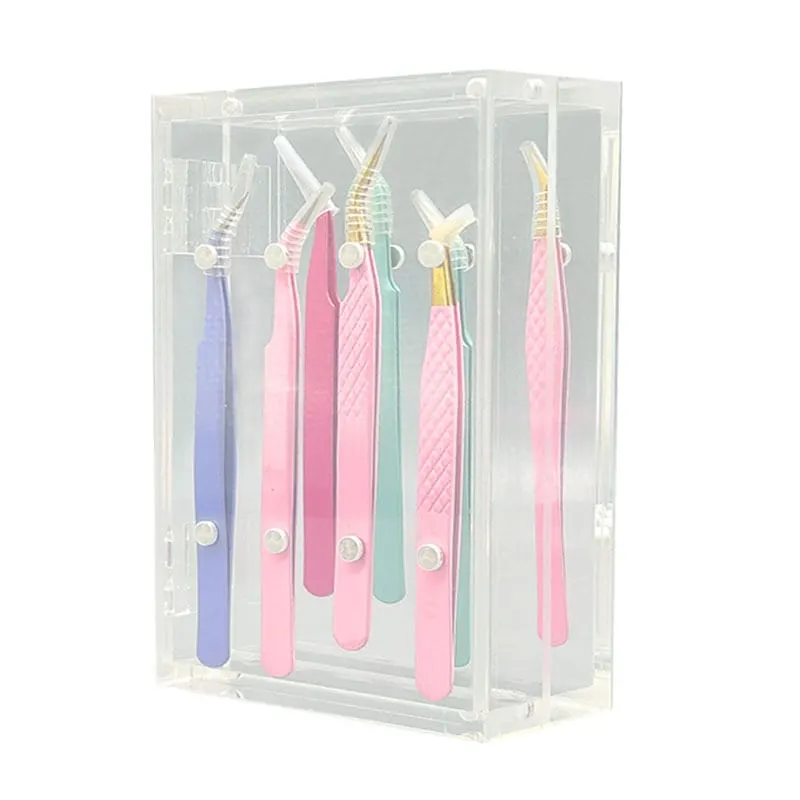
Magnetic Lash Tweezer Case
Listed size: 155 × 100 × 50 mm — A clear hinged magnetic case holds lash tweezers against its interior faces for a visible tool-storage layout.
Lash tweezer stands and cases use exposed magnets, slotted rails or enclosed upright supports. Choose how the tools attach and leave the holder, then compare tip clearance, spacing and the room needed to open a cover.
Listed size: 155 × 100 × 50 mm — A clear hinged magnetic case holds lash tweezers against its interior faces for a visible tool-storage layout.
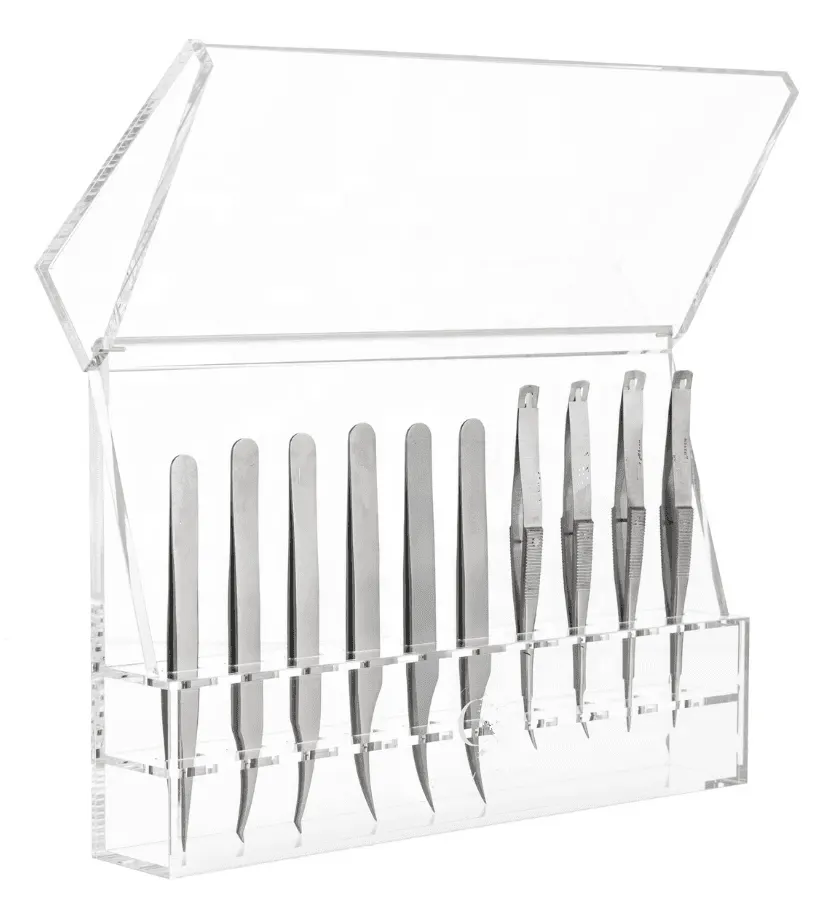
Covered acrylic stands hold tweezers upright inside a visible storage case, with clear and marble-look reference finishes.
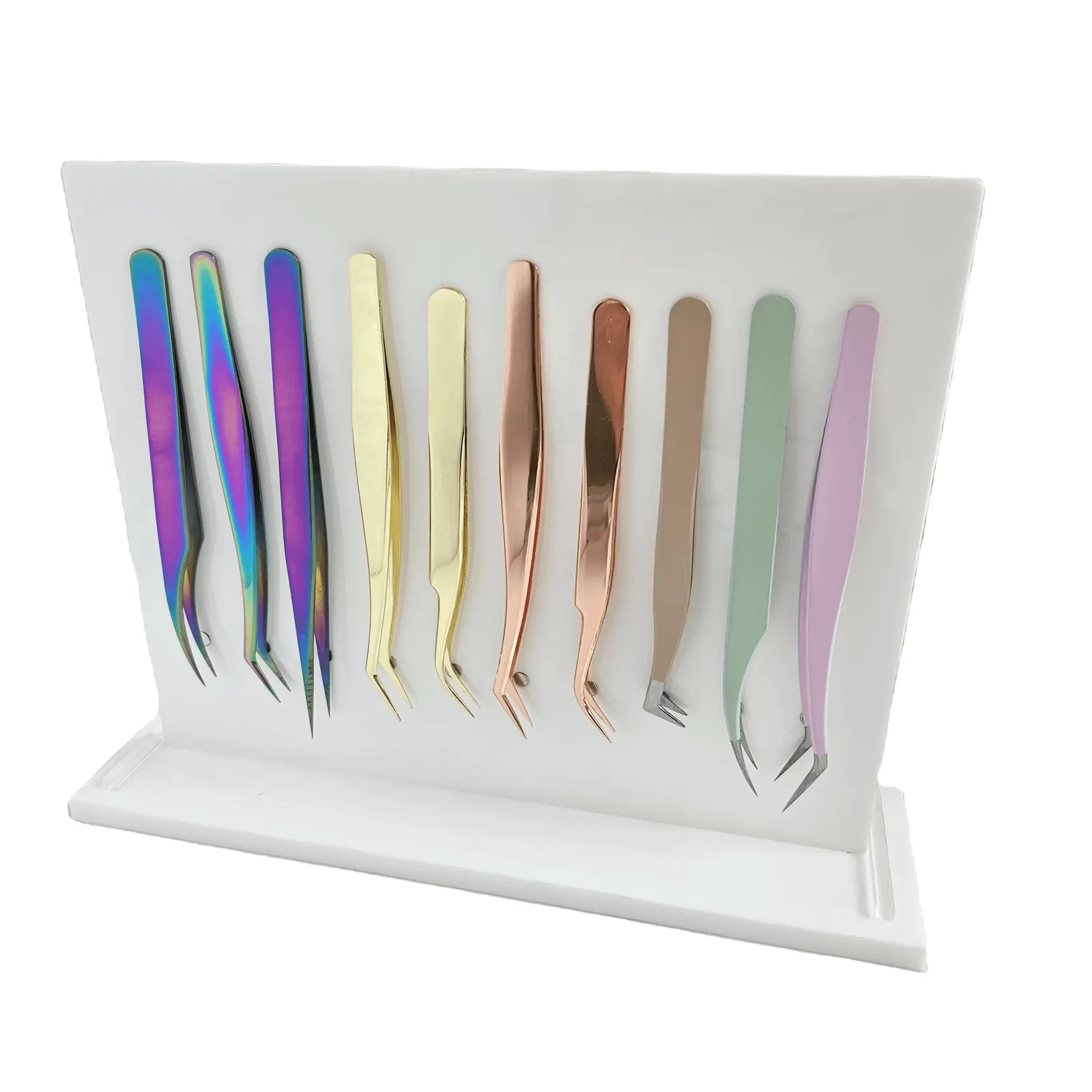
A wide upright magnetic stand arranges several lash tweezers across a visible face, with plain and printed reference styles.
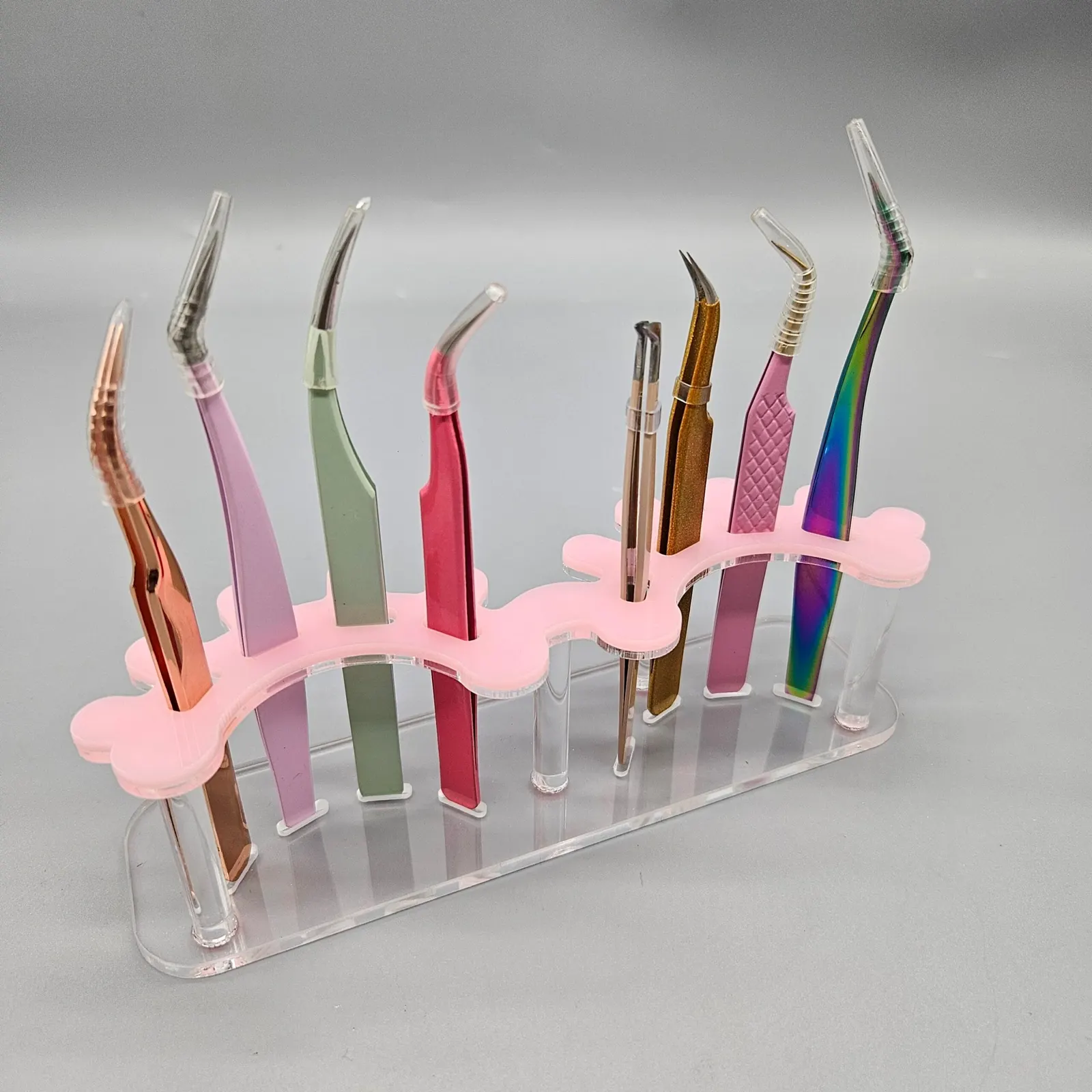
Listed size: 185 × 55 × 50 mm — An eyelash-shaped acrylic rack holds tweezers upright above a small counter base for a decorative tool display.
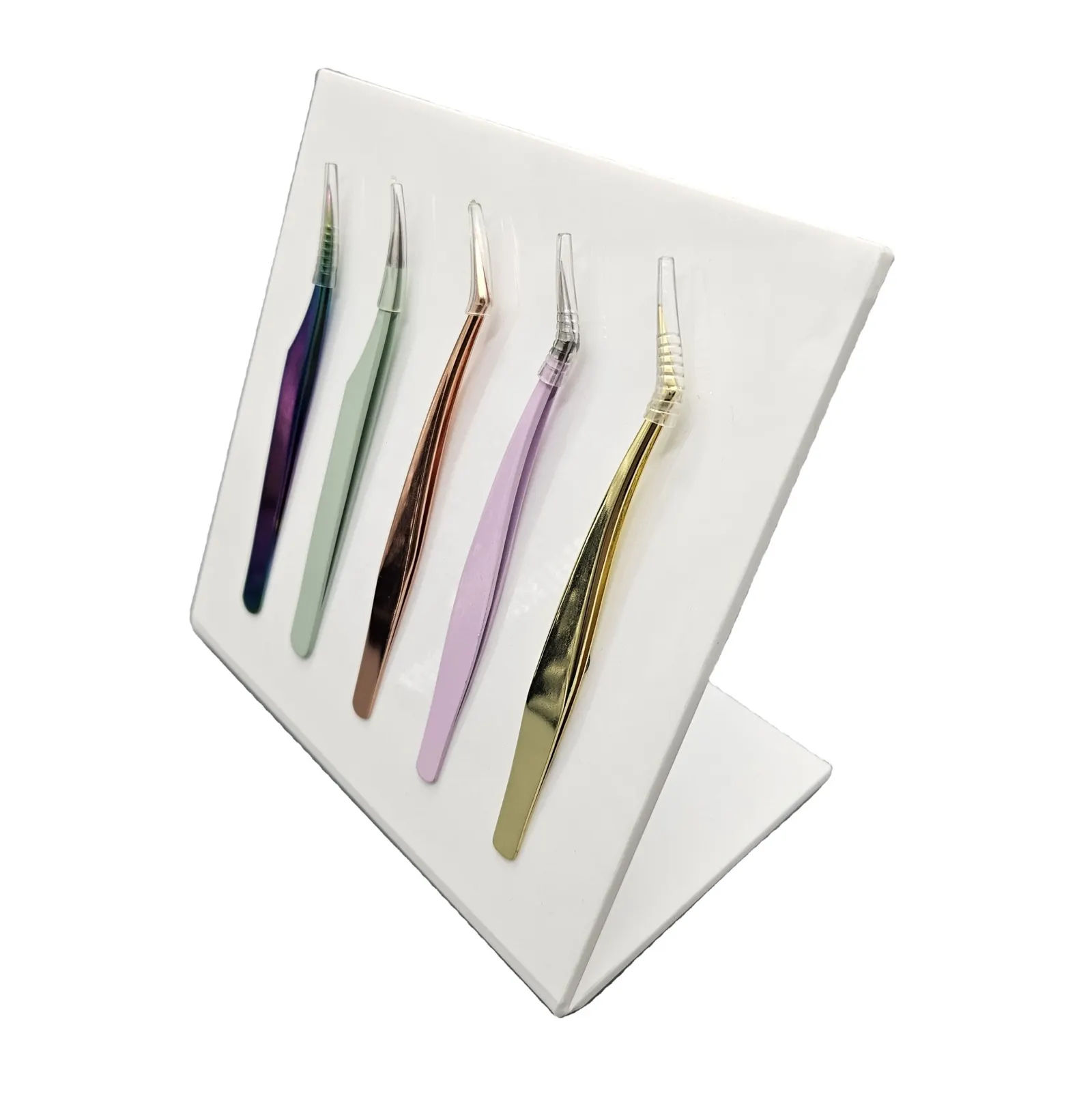
A marble-look upright tweezer display stand keeps lash tools arranged on a magnetic face above a flat base.
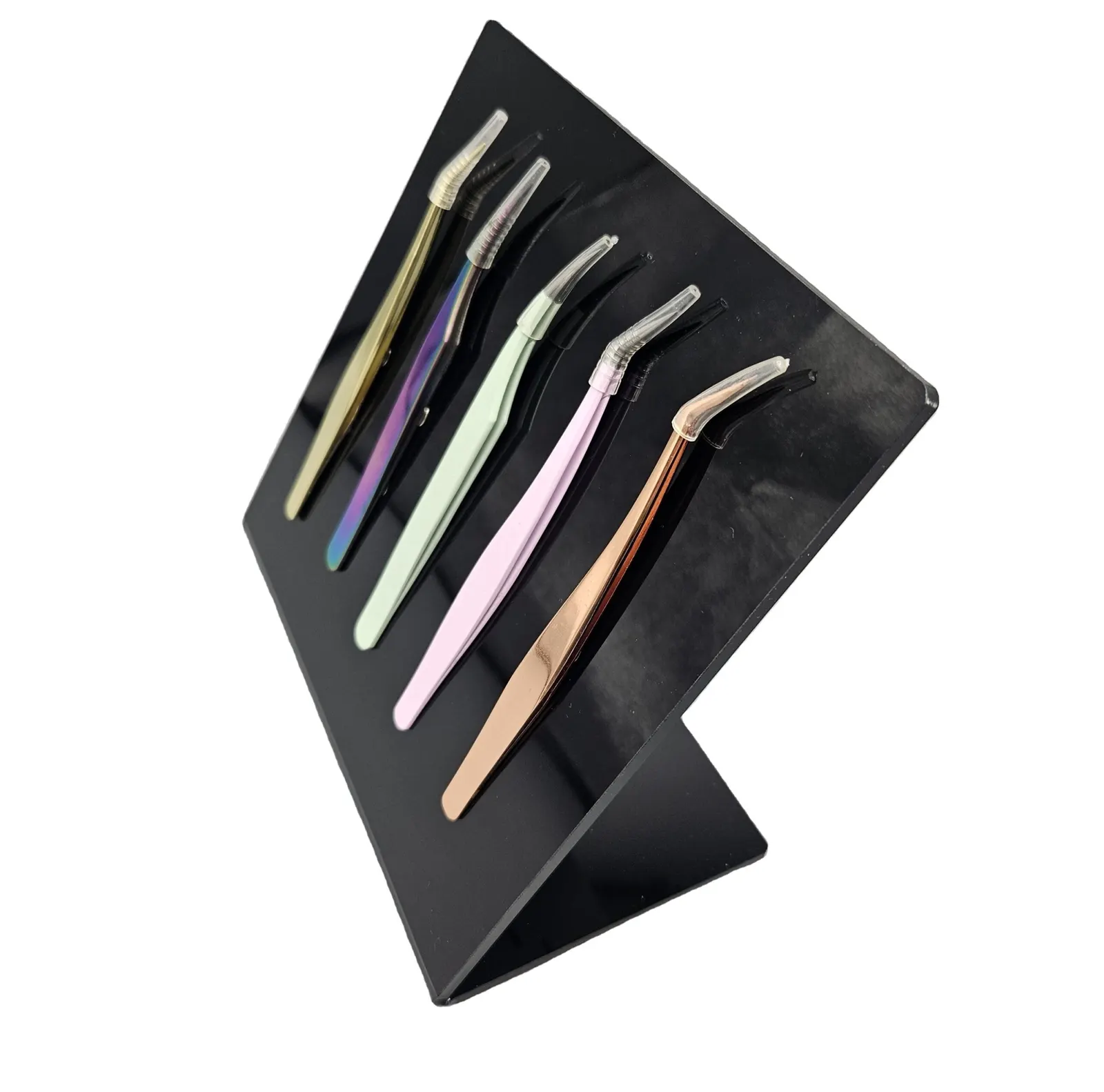
Listed size: 180 × 180 × 110 mm — An L-shaped magnetic stand displays lash tweezers upright, with marble-look pink, white and black references for the workstation.
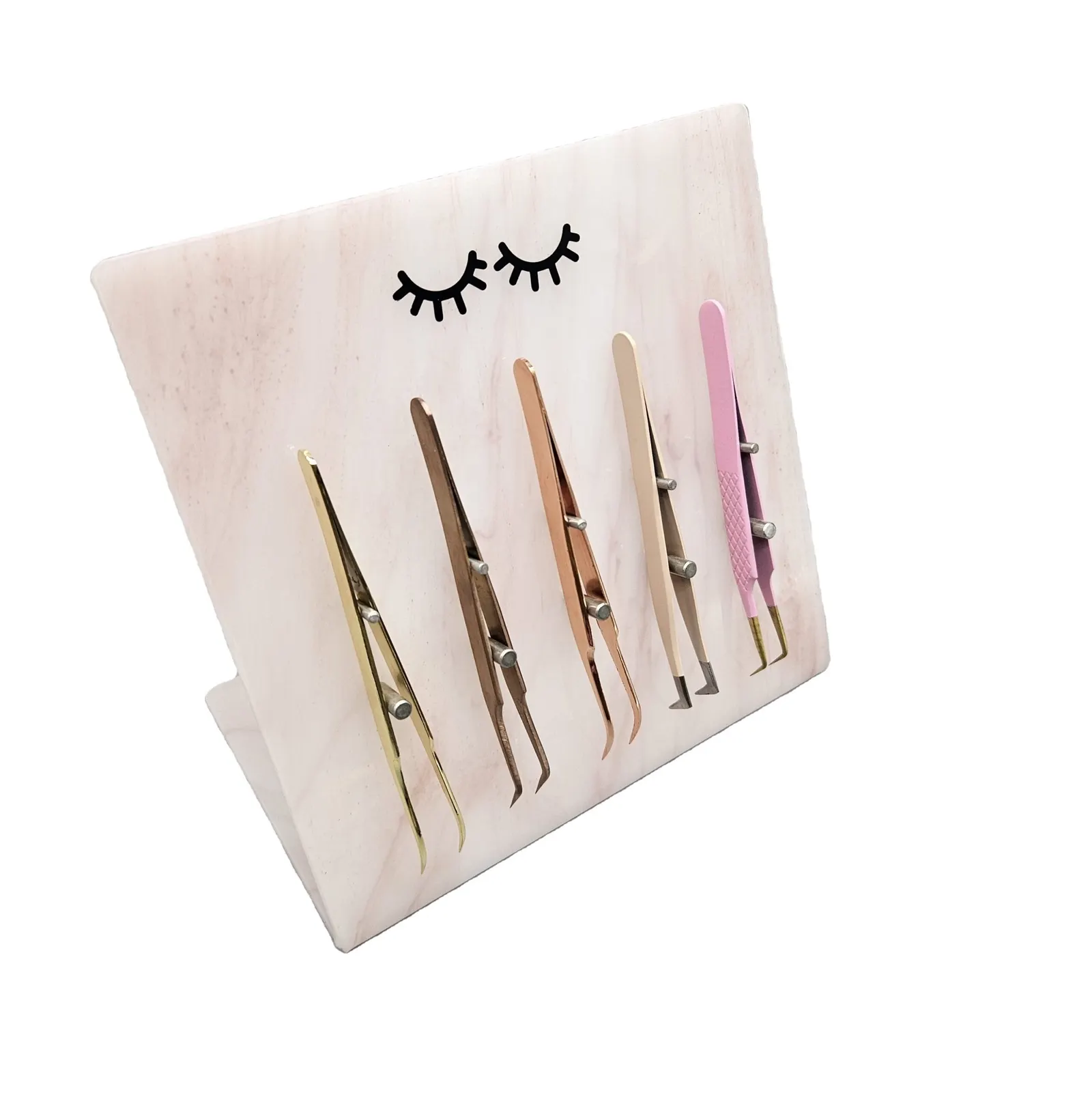
A pink marble-look stand with an upright magnetic face keeps selected lash tweezers visible above a flat counter base.
Magnetic contact depends on tool material and geometry. A slot rack needs dimensions at the supported section and clearance for insertion and removal.
A covered upright rack needs room above the tallest tool. A hinged magnetic case needs interior-face spacing and lid travel reviewed with all positions loaded.
Choose the full tool schedule before a count. Pink, marble-look, plain and printed references are appearance choices; confirm the substrate and care for the selected version.
Place the actual tools in every proposed position, remove them individually and operate any cover. Check tips, contact, access and base stability together.
Material availability, decoration, sample cost and timing are confirmed for each project.
A reference photo and an approximate brief are enough to begin.
Use a custom acrylic sample checklist for dimensions, viewing faces, printed colour, fit and packing. Record changes on the production drawing.
MATERIAL & DESIGN GUIDEReview a magnetic tweezer stand with the intended tools, contact positions and removal technique. Keep open workstation use distinct from covered storage and carrying.
MATERIAL & DESIGN GUIDESpecify a covered tweezer case from tool profiles, tip clearance, retention and lid movement. Separate stationary storage, carrying and shipping requirements.
MATERIAL & DESIGN GUIDEA glossy first edge can be misleading when the acrylic will later be bent, joined or fitted into another part.
MATERIAL & DESIGN GUIDEA short, specific cleaning handover prevents the most common confusion between acrylic, glass and decorated surfaces.