The last person to handle a display may be a store colleague with a cloth and five minutes. Give them instructions that fit the actual finished item.
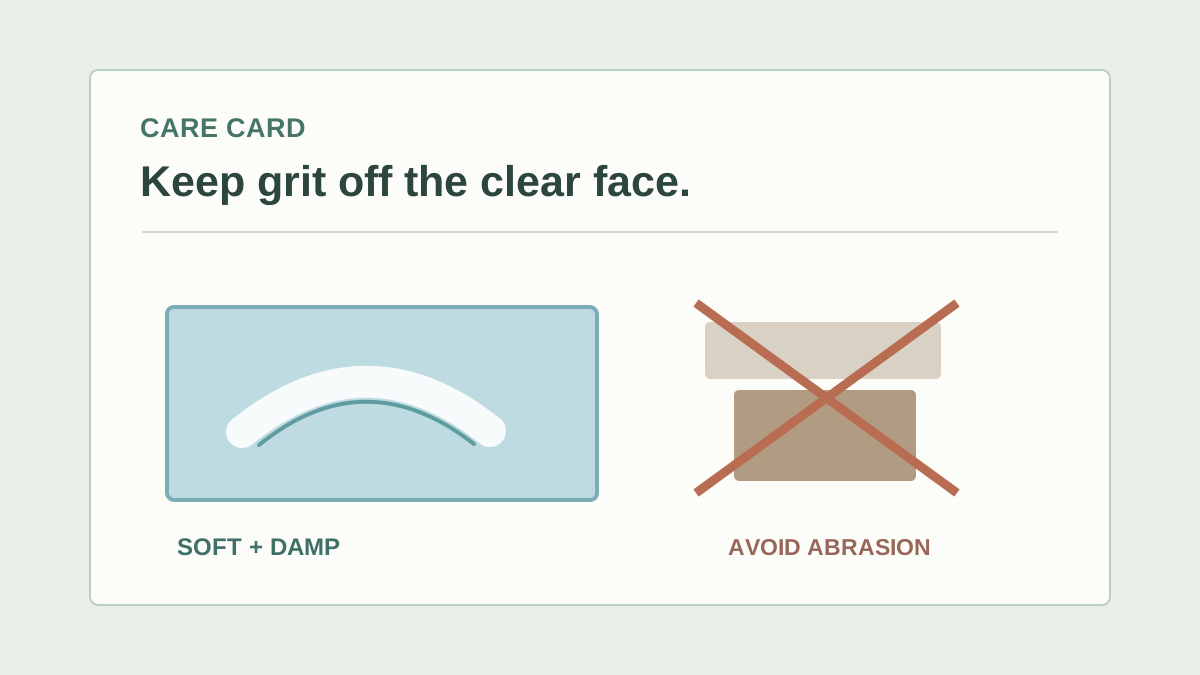
CARE CARD / EVERYDAY CLEANING
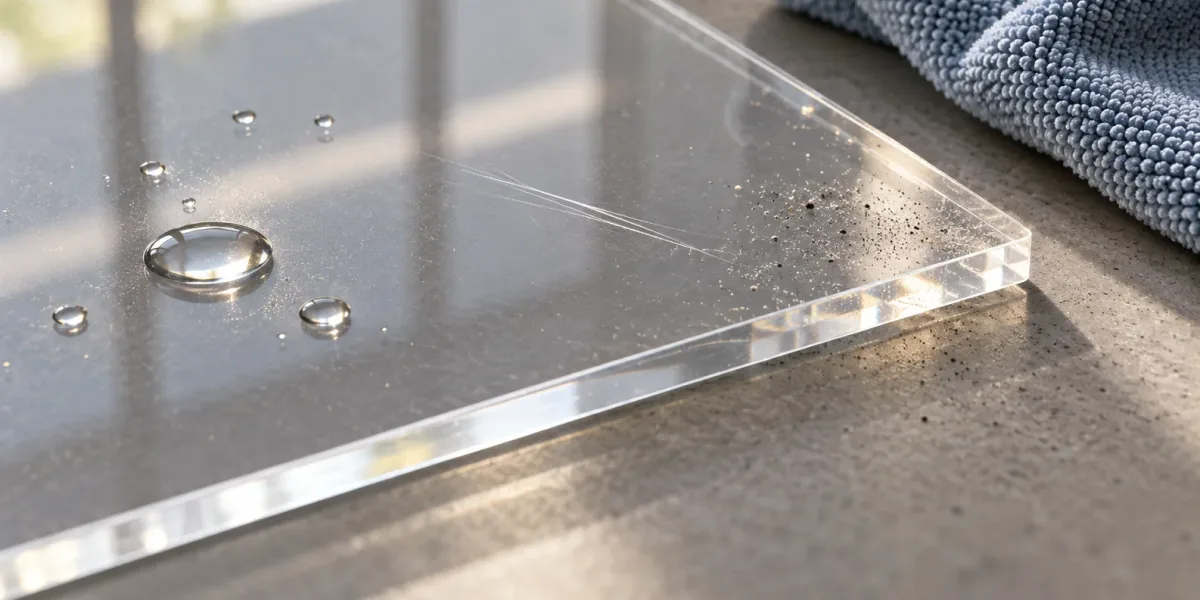
First remove what could scratch
- 01
Lift loose dust and grit gently instead of dragging it across the face.
When choosing acrylic display cases for regular use, consider which panels staff can reach for cleaning without pulling on a bonded seam or rubbing artwork.
- 02
For suitable bare acrylic, use a clean, soft, damp cloth with mild soap and water; rinse and dry gently as the sheet maker advises.
- 03
Check the instructions for prints, coatings and bonded areas before cleaning the whole assembly.
Do not treat acrylic as glass. Abrasive pads, window sprays or solvents may be unsuitable, especially where the sheet is stressed or decorated.
BEFORE HANDOVER
Keep the finish protected on the way in
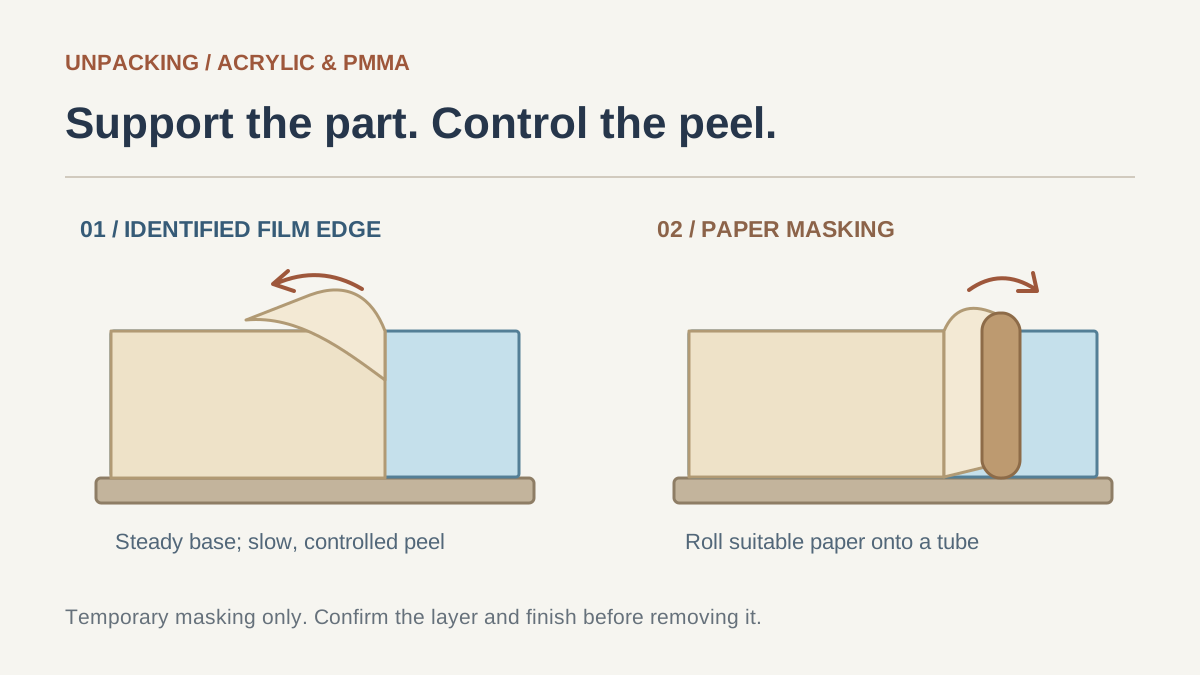
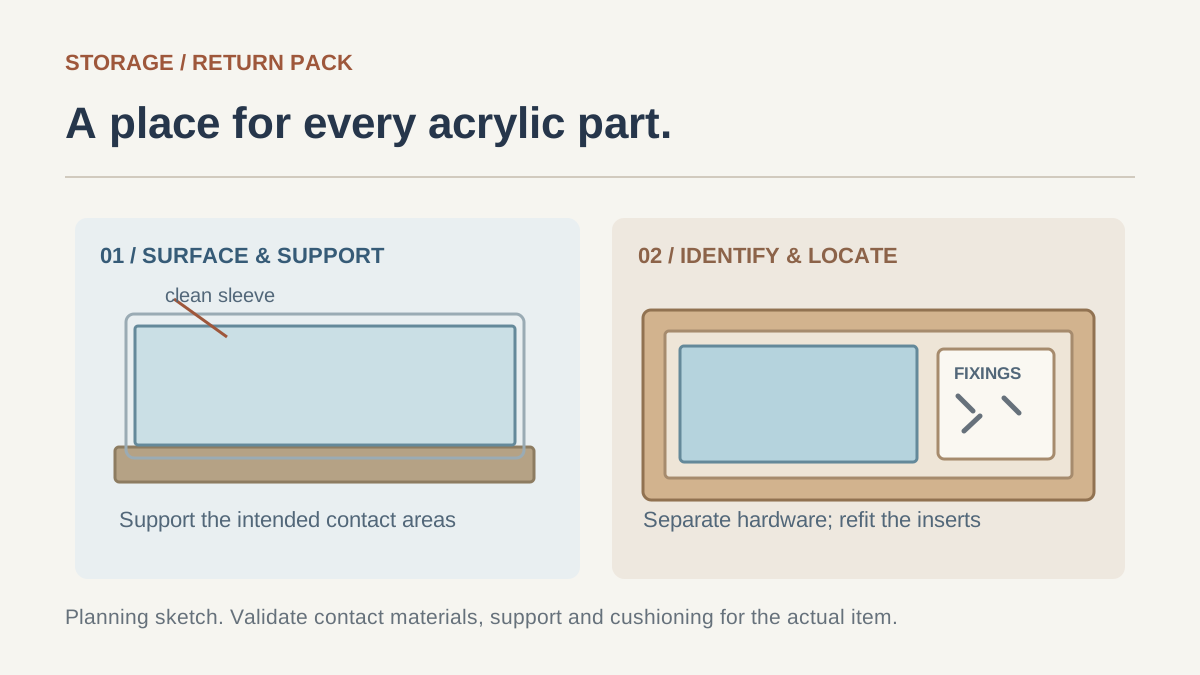
Leave protective masking in place as long as practical during fabrication and transport, within the maker's storage guidance. Support stored parts and keep them away from heat or chemicals that might damage the sheet or masking.
- The approved cleaning method
- How and when to remove protection
- Finishes that need special care
- Who to contact if a mark does not clean off
That is more useful than a generic “wipe clean” label, particularly when a display includes printing or bonded joints.
For a new display, follow the protective-film removal checklist before the first clean. For repeated use, keep the storage and return-packing instructions with the care card.
For hospitality, include the actual service items, contact conditions and handling in the serving tray specification. For photo displays, record the insert, visible area and assembly before agreeing the finished-product care instructions.
Apply this guide to your project brief
Bring the cleaning routine, decoration and contact surfaces into the specification for reusable acrylic items.
- Acrylic serving trays and hospitality references
Review the usable area, contents, handling and cleaning conditions for the selected format.
- Acrylic boxes and display cases
Define the contents, opening, inside clearance and visible corners for the selected enclosure.
Prepare your quantity, artwork and delivery details before requesting a quotation.
Compare current product references
Use these formats to apply the guide to a specification. Confirm materials and sample requirements for your project.
- Iridescent Acrylic Serving Trays
Review the colored surface, usable tray area and care requirements for a hospitality brief.
- Clear Lash Box with Removable Tiles
Check removable tile fit, cover clearance and the required workstation layout.
- Acrylic Lash Workstation Organizer with Front Rack
Plan tall storage sections and the projecting accessory rail around the actual workstation supplies.
Add care requirements to the order brief
- Name the cleaning products and cloths used at the intended site.
- Mark printed faces, joints and high-touch areas on the layout.
- Keep the accepted care instructions with the sample and packing record.