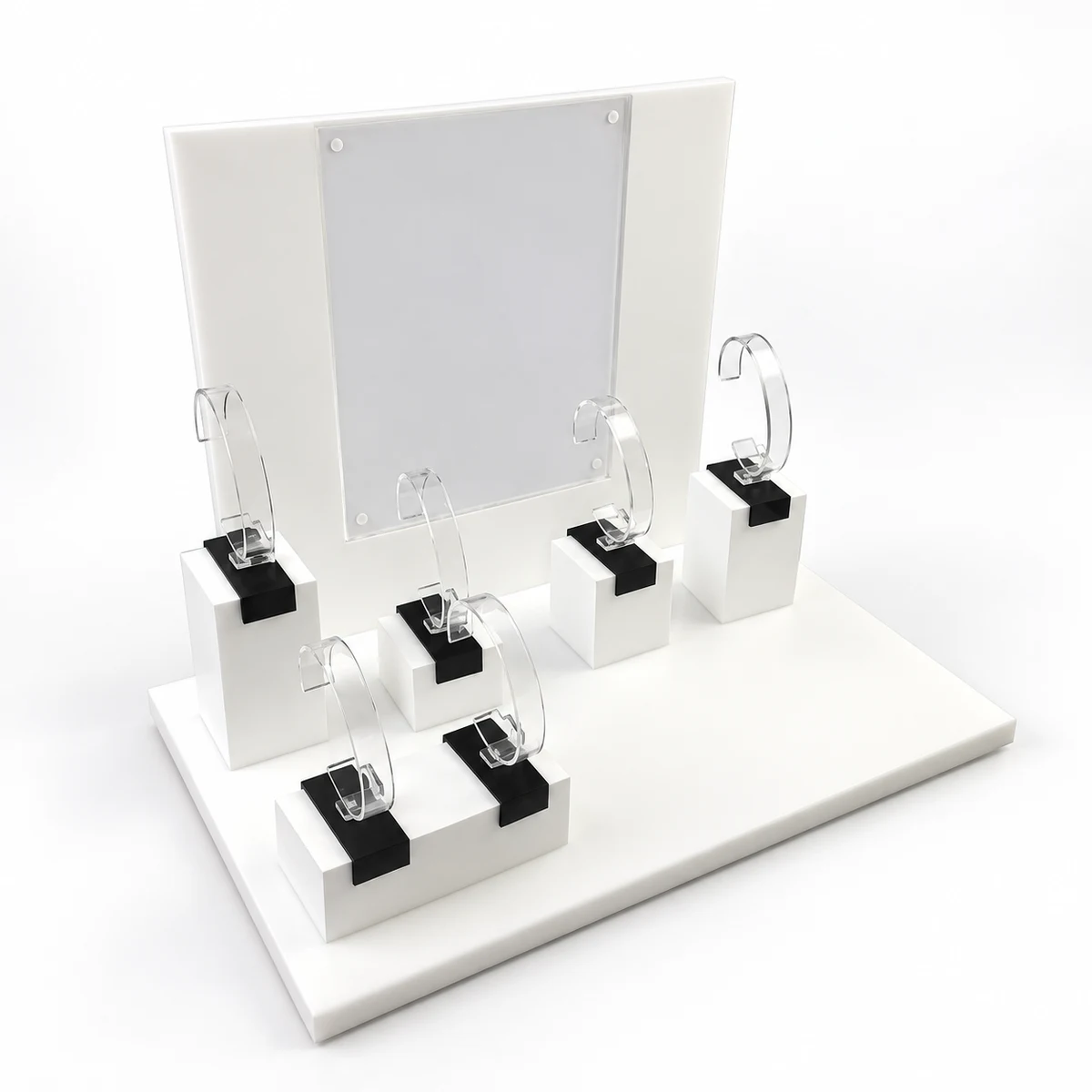
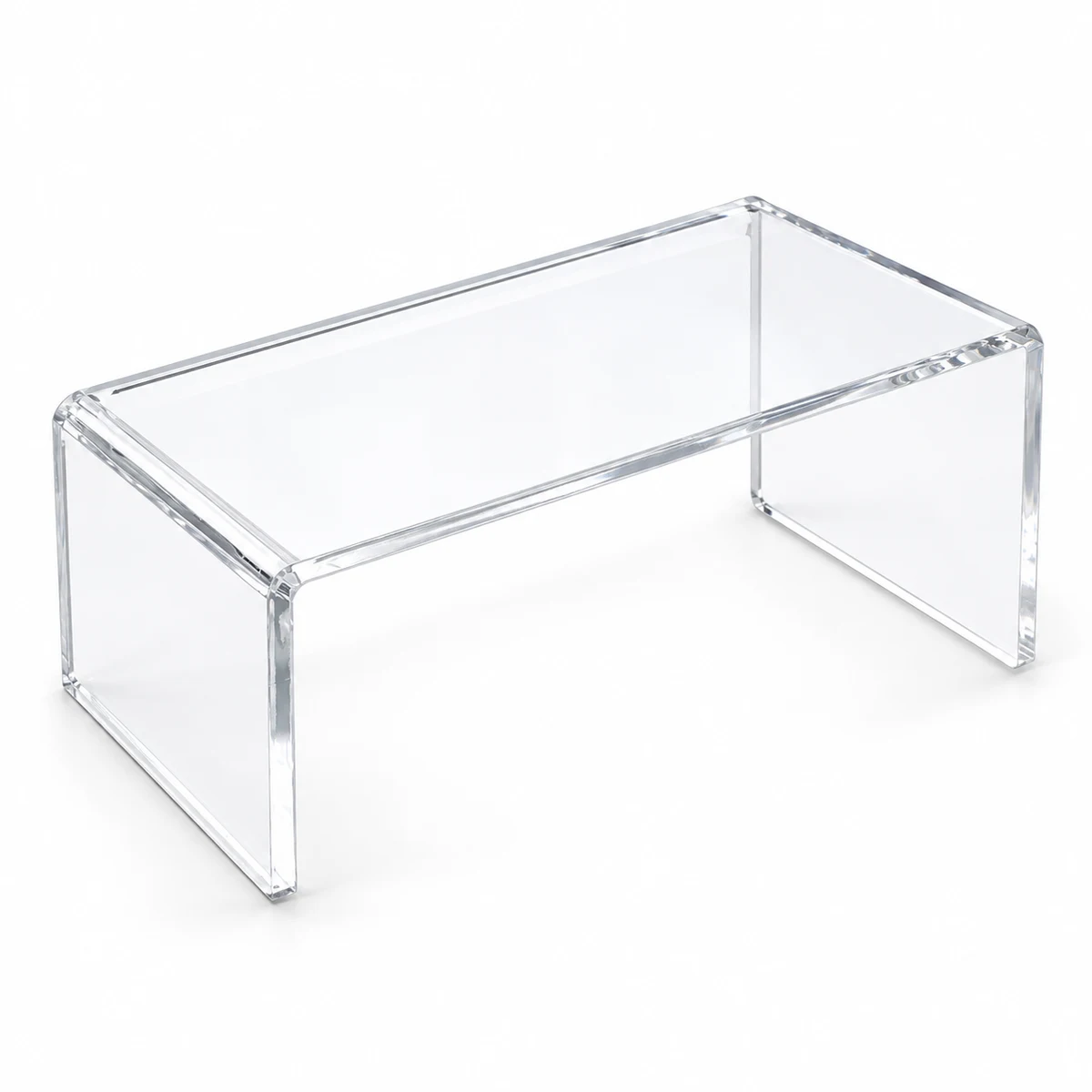
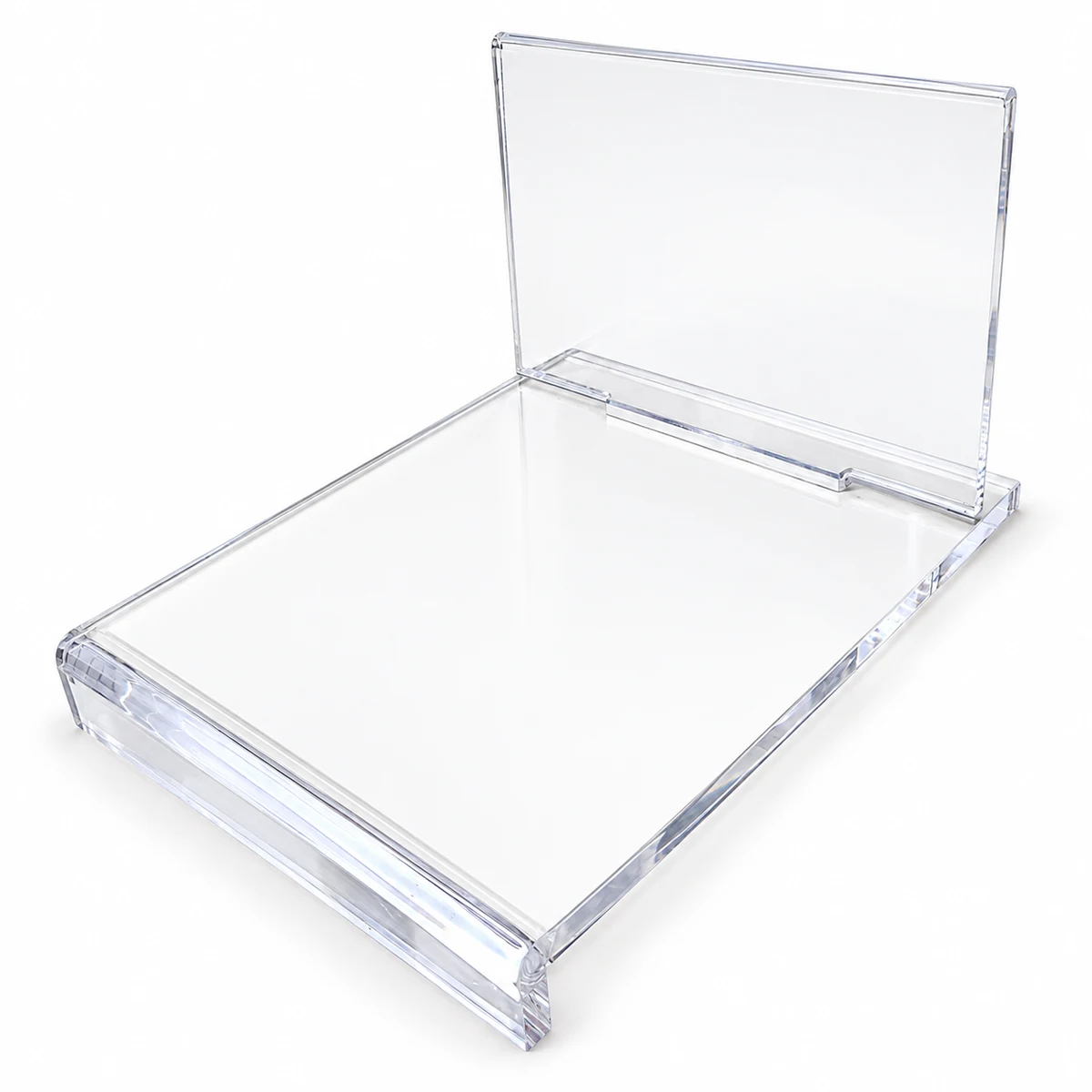
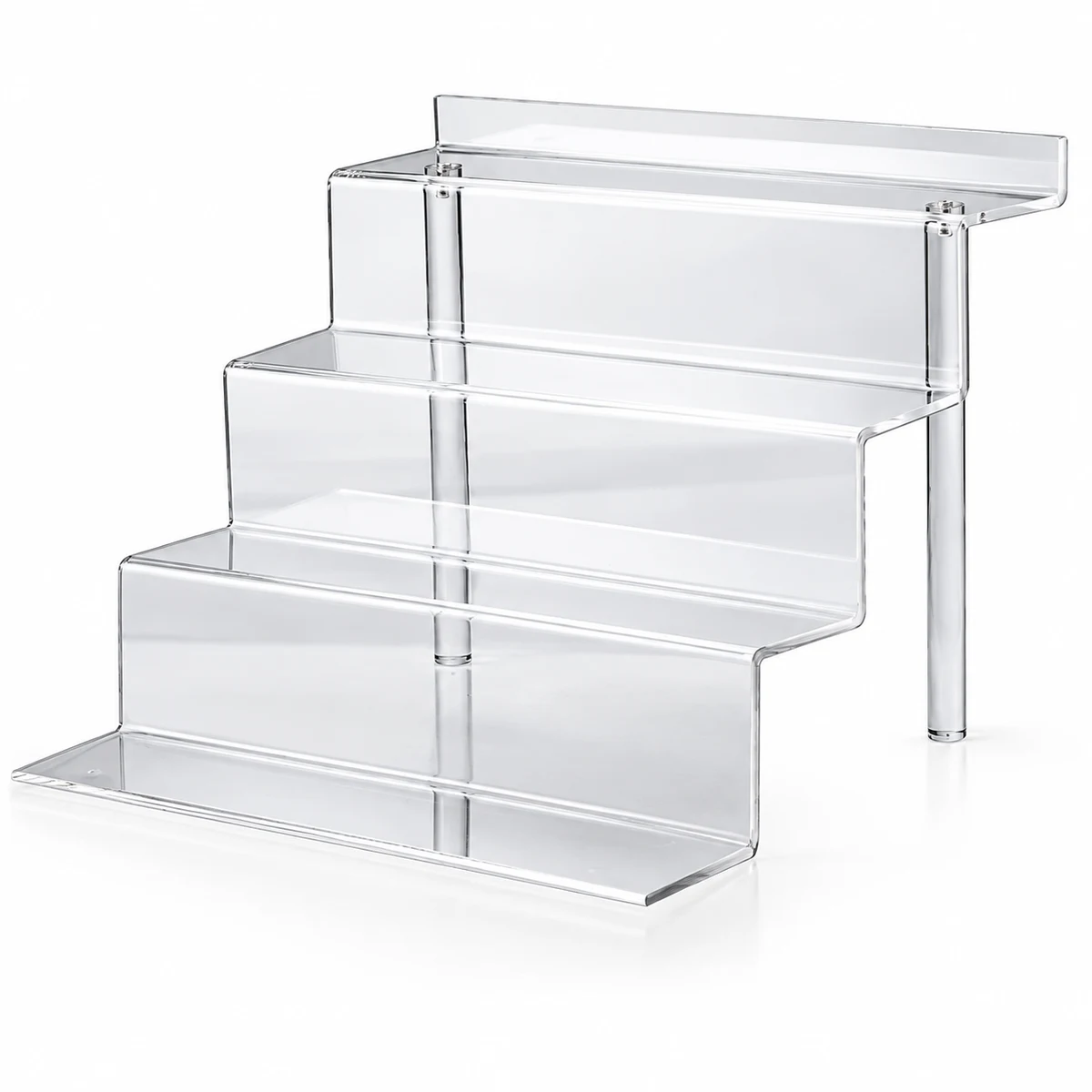
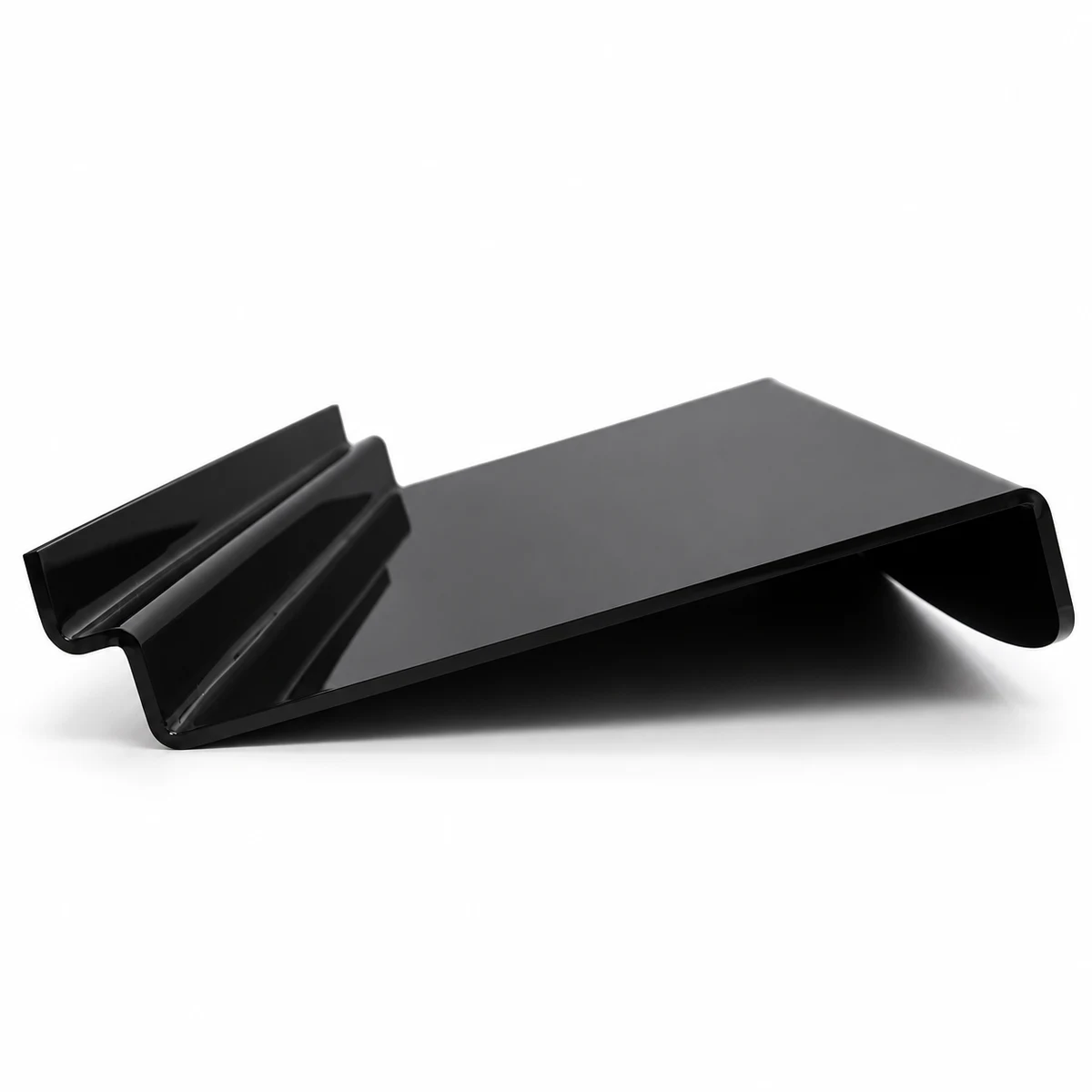
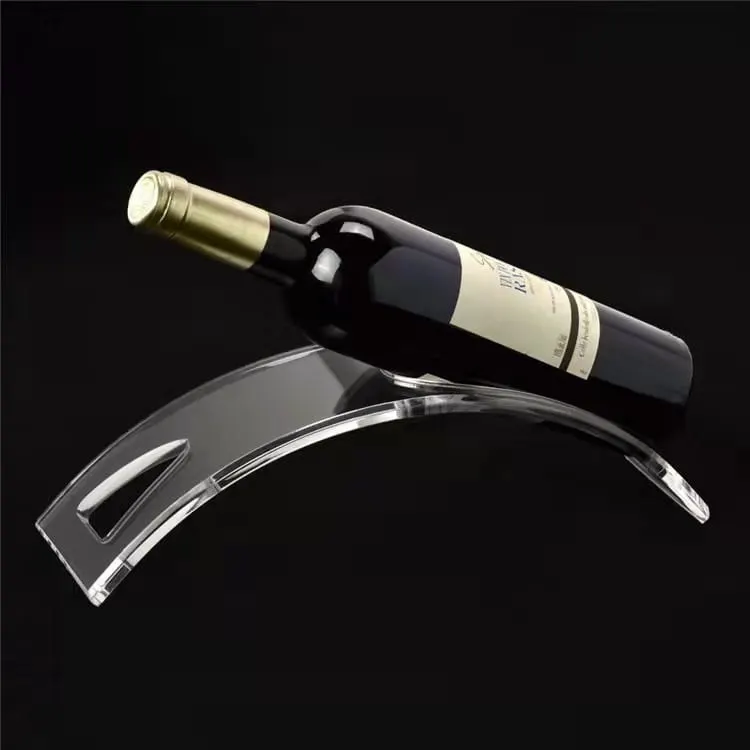
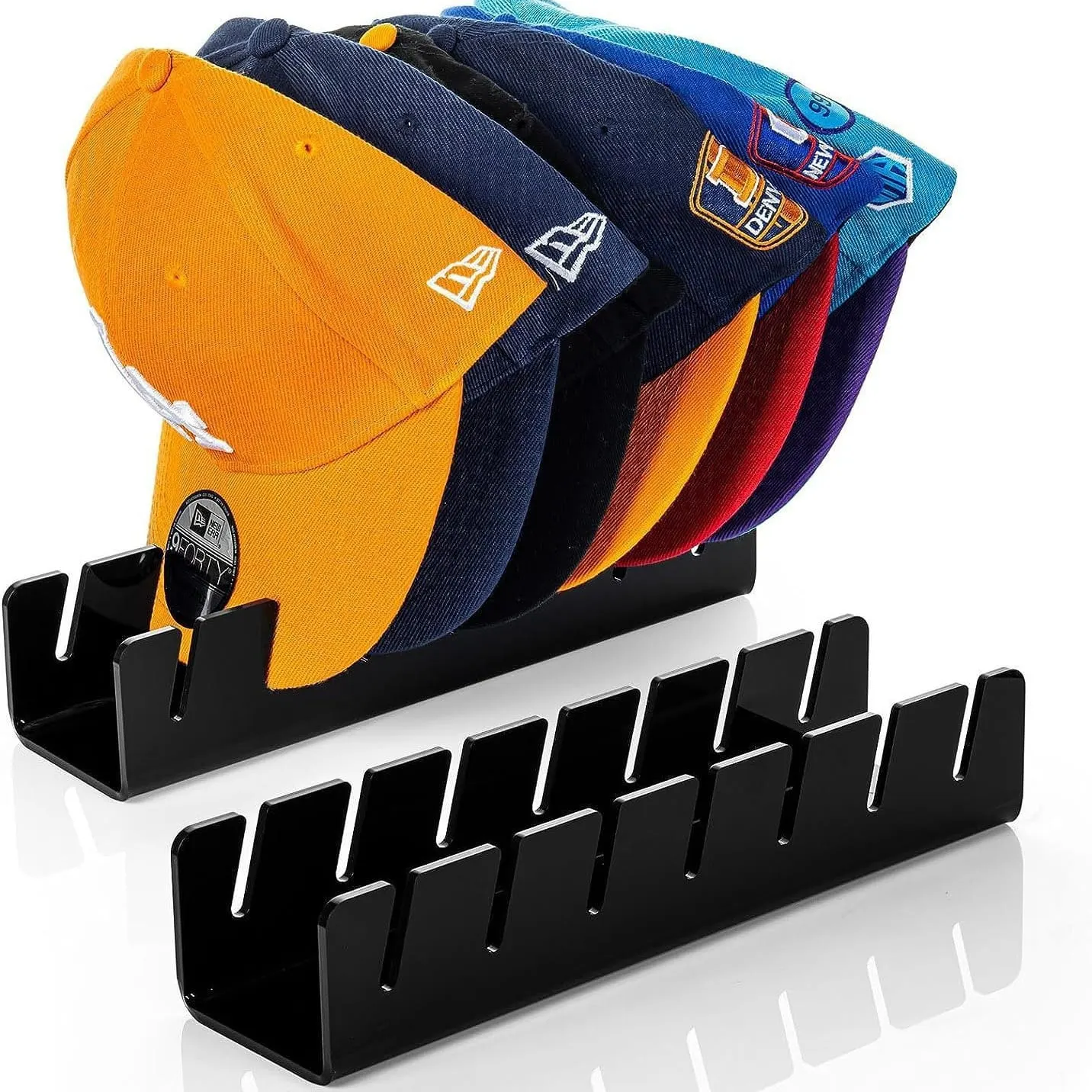
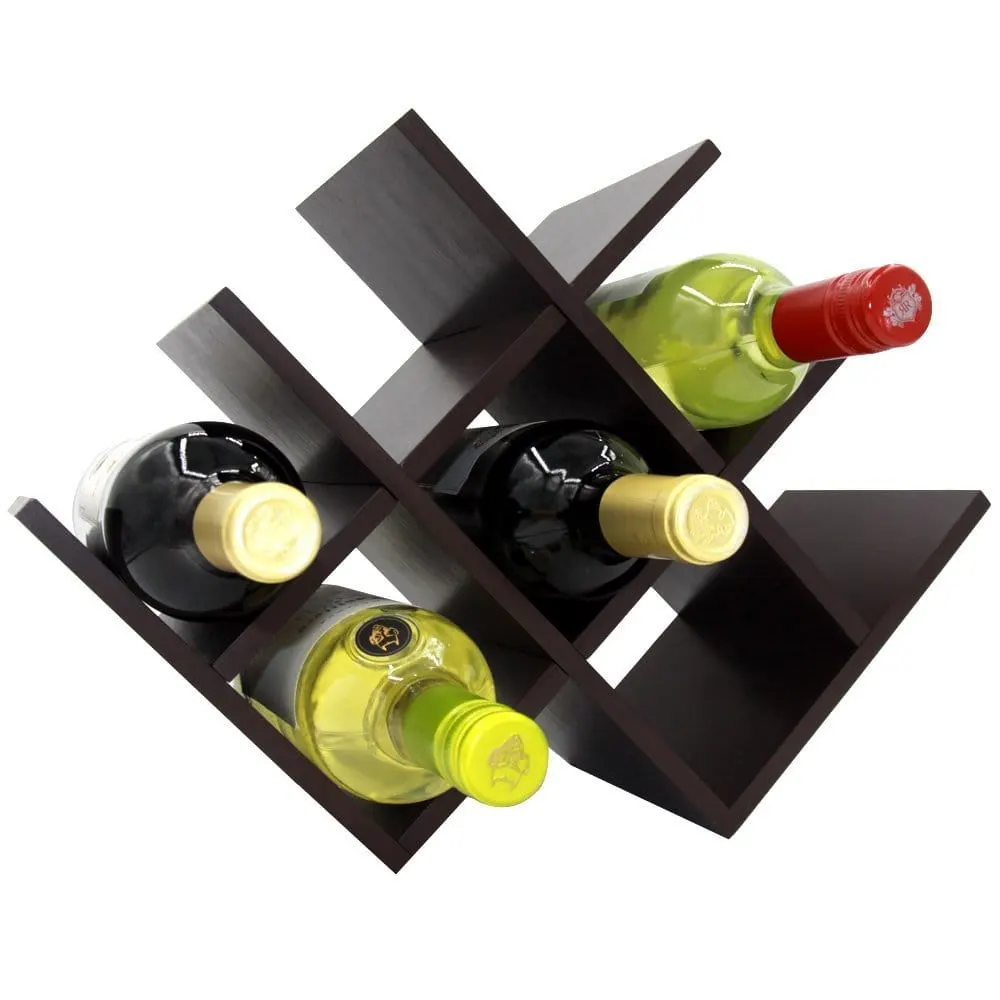
Custom acrylic display stands for retail include stepped platforms, bridge risers and product-specific supports. Compare the merchandise footprint, access between levels and viewing direction. The wooden donut board and clear plastic cap holders are separate material options in this range.
Position frames for selection and counter presentation.
Trial folded frames, supported contact points and staff handling space.
Request a quote: copy the project checklist
Add the details you know. A photo or sketch can explain the rest.
Material and construction choices
Thickness follows span and contact
Give the merchandise weight and the area that touches the stand. Acrylic thickness, bend geometry and support spacing are reviewed together: the same top width can behave differently under a broad base and a small concentrated foot. The catalog does not assign one load rating to every riser.
Bent, bonded or assembled
A formed bridge, bonded stepped display and slotted flat-pack cradle need different drawings and packing. Identify visible joints, removable parts and any metal posts. Compare assembly space at the destination with the carton size and the appearance of the finished display.
Branding from the shopper's view
Show the logo faces and viewing direction before choosing clear, colored or opaque panels. Review printing or engraving with the displayed products in place. Decoration should not cover a product label, a fixing location or the contact surface that keeps the merchandise seated.
FROM BRIEF TO ORDER
Quantity, samples and delivery
Specify the retail rollout
List units by store, footprint, tier layout and artwork version. Quantities, structural setup and decoration are quoted per version. Include a counter photograph or measured plan so the display can be checked against shelf edges, adjacent fixtures and customer reach.
Test the loaded display
Place representative merchandise at every planned position. Review customer sightlines, rear-row access, stability and product retrieval, then inspect supports, edges and artwork. Agree how the intended loading and acceptance check will be recorded for the selected assembly.
Plan assembly and shipment
Choose assembled or identified-part packing after reviewing the structure. Protect projecting supports, separate rubbing faces and identify hardware and assembly instructions. Destination, receiving access and packed volume are needed to compare shipment arrangements.
DOCUMENTED PROJECT WORK
What the project records show
Repeat dispatches documented · March 2025–March 2026
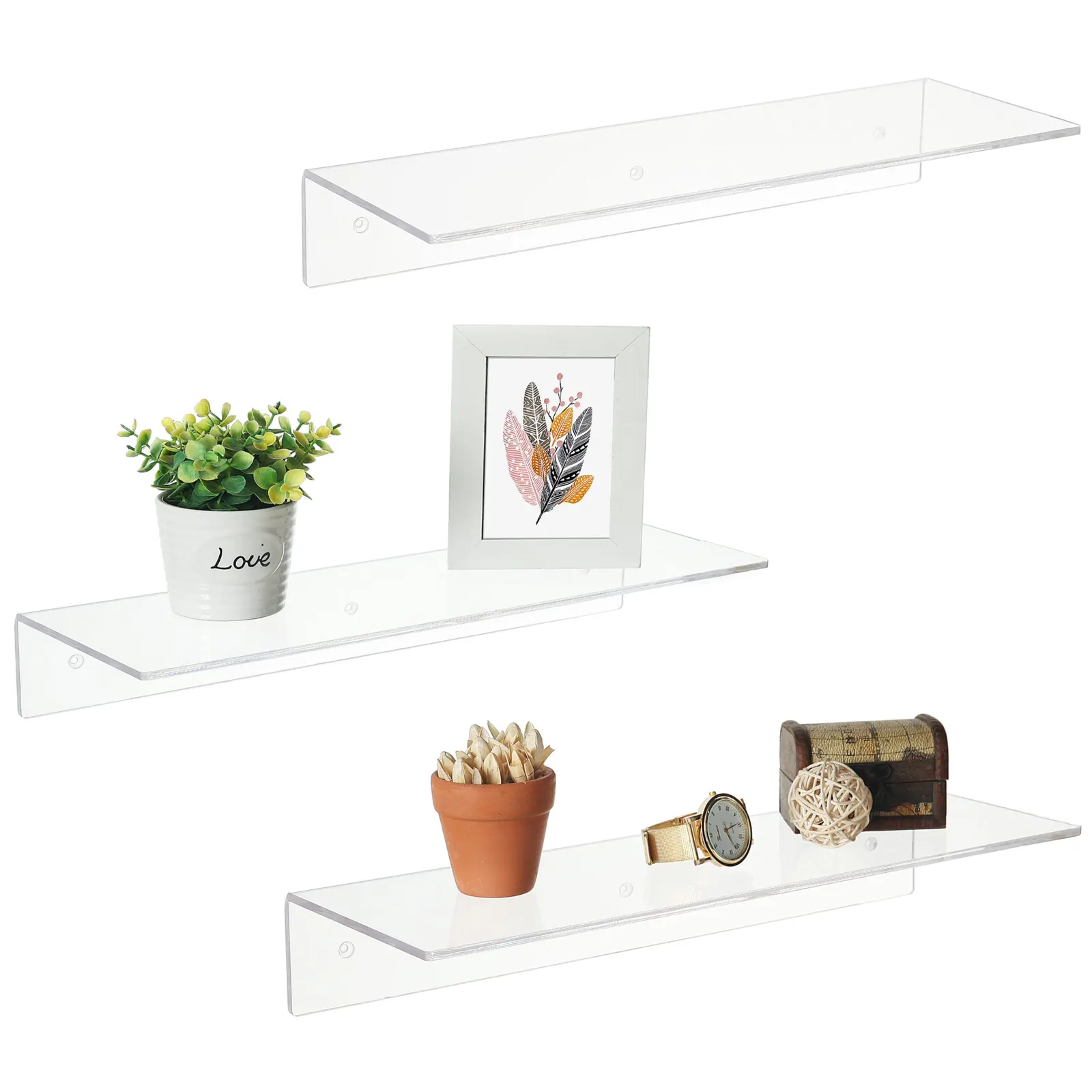
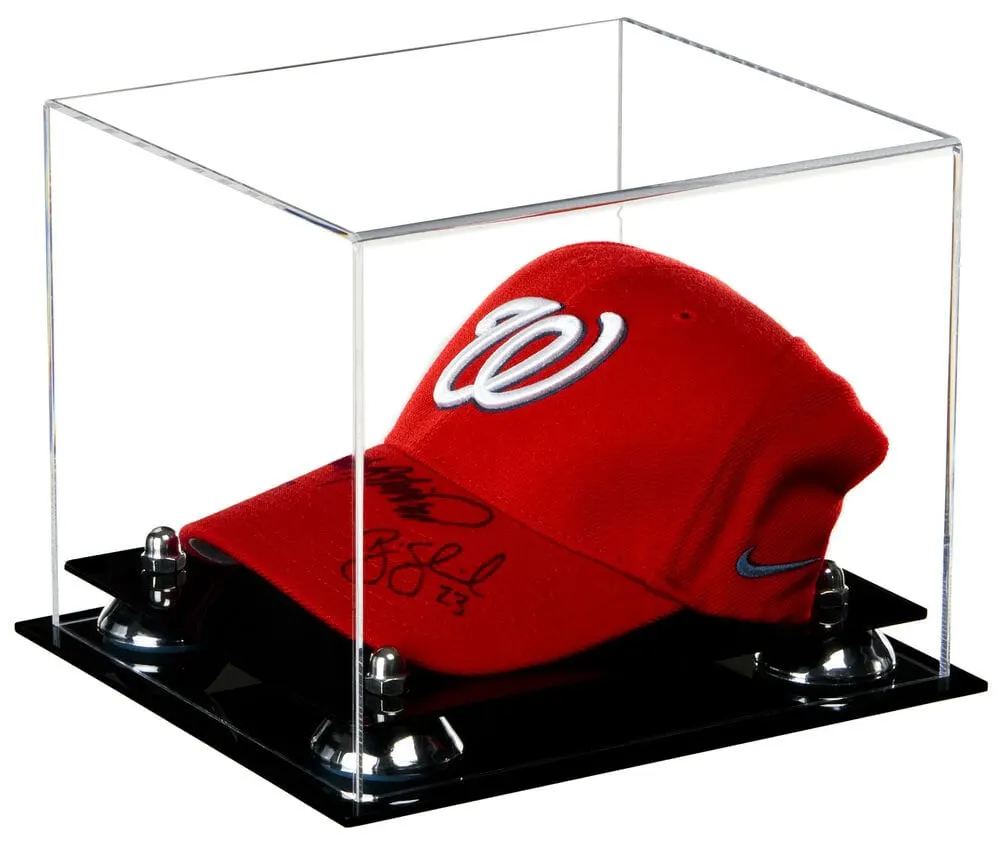
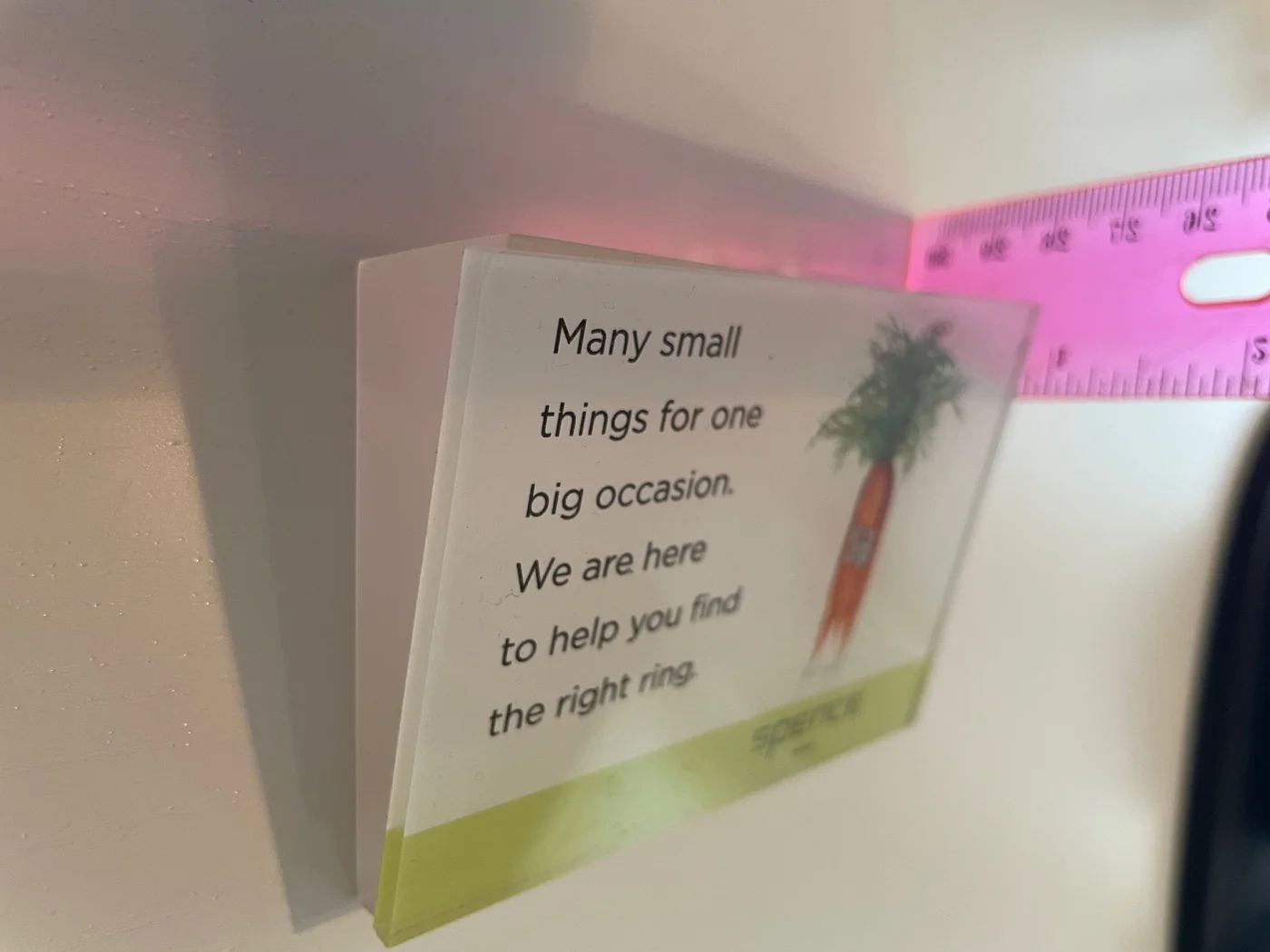
A recorded display-stand relationship includes repeat orders and dispatch updates, showing the value of keeping size and artwork versions identifiable.
Recorded scope: The record concerns its particular angled stands. It is not a load test or delivery claim for every riser and cradle in this category.
Construction review before sampling · April–October 2022
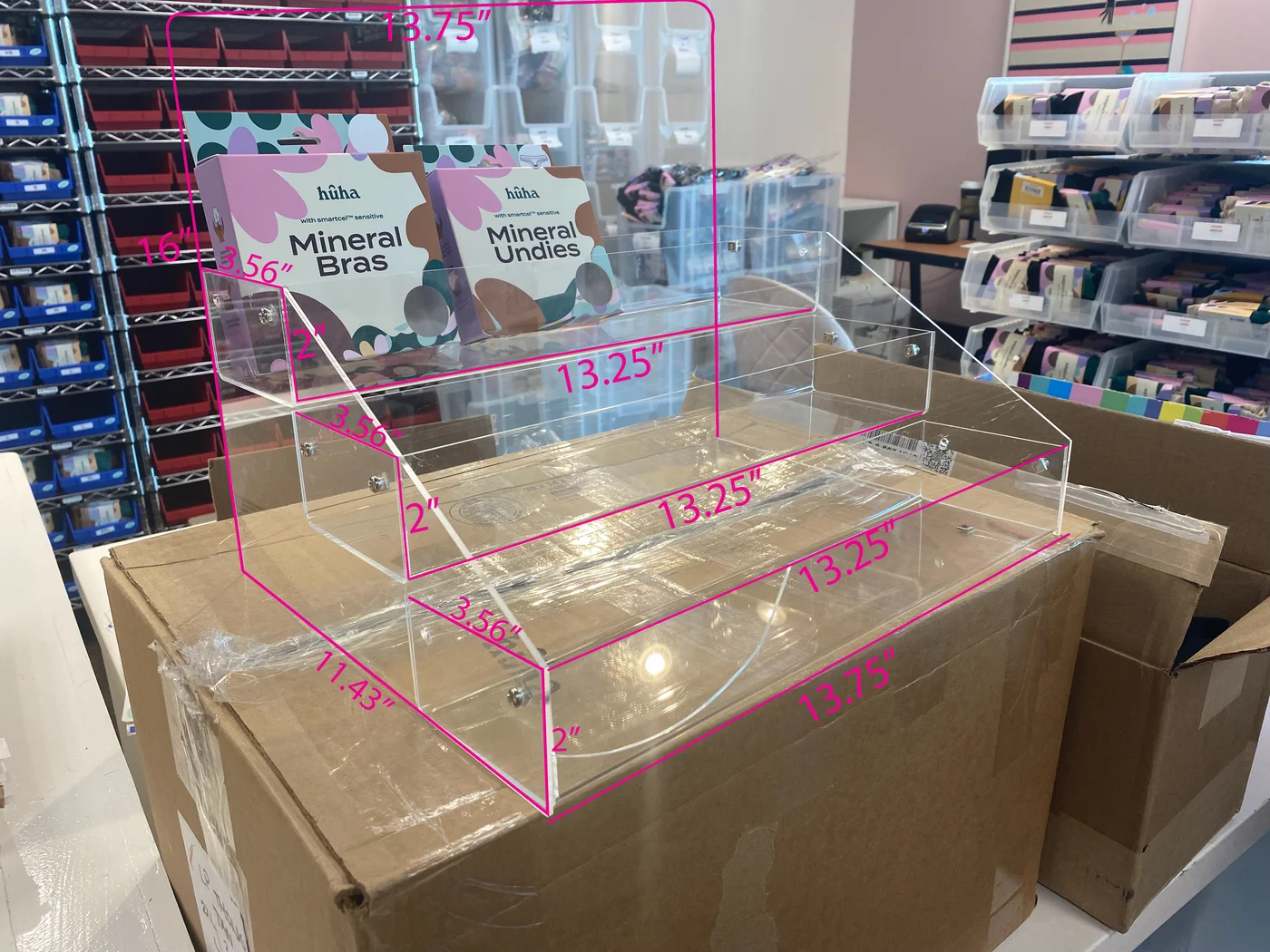
A tiered display brief compared bonded and bent constructions, visible decoration and assembly at the destination.
Recorded scope: The correspondence documents construction review before sampling, with the method still undecided; it does not prove a finished batch.
Questions before you order
Should I choose separate risers or a connected tiered stand?
Separate risers can be moved and regrouped as the merchandise changes. Connected tiers keep spacing consistent but require the full stepped footprint. Compare product-base depth, viewing height and staff reach using the actual range before selecting the format.
How much weight can an acrylic display stand hold?
There is no single rating for the whole category. Send the product weight, contact footprint, span and loading arrangement. The selected thickness, bends, joints and supports are reviewed together, and the agreed loading is checked on the representative sample.
Can the display travel flat-packed?
Some slotted or hardware-assembled formats can be reviewed for part packing; a continuous bent profile or bonded unit has different constraints. State who will assemble it and the available space. The drawing and quotation identify the actual part count, hardware and packing arrangement.
What information makes a display quotation comparable?
Use the same product layout, acrylic specification, decoration, quantity and packing scope for each version. Identify assembled versus part-packed supply and destination. A comparison based only on the outside dimensions can miss support parts, setup and the cost of shipping the complete unit.
Can I reorder the same stand with a new logo?
Supply the previous drawing or sample reference and mark the artwork change. Confirm whether size, merchandise weight, color or packing also changed. A new logo can affect print placement and setup even when the physical profile stays the same.
How do I brief a custom acrylic retail display?
Send a SKU list with dimensions and weights, the available counter area and intended quantities per display. Add the customer viewing direction, staff refill path, logo artwork and store or shipment quantities. TOYUDA coordinates the construction and sample review against that brief.


 Repeat dispatches documented · March 2025–March 2026
 Construction review before sampling · April–October 2022