An angled display, and the details behind a reorder.
We compared stock formats, responded to a batch-size issue and offered replacement support. Later orders continued through another dispatch in March 2026.
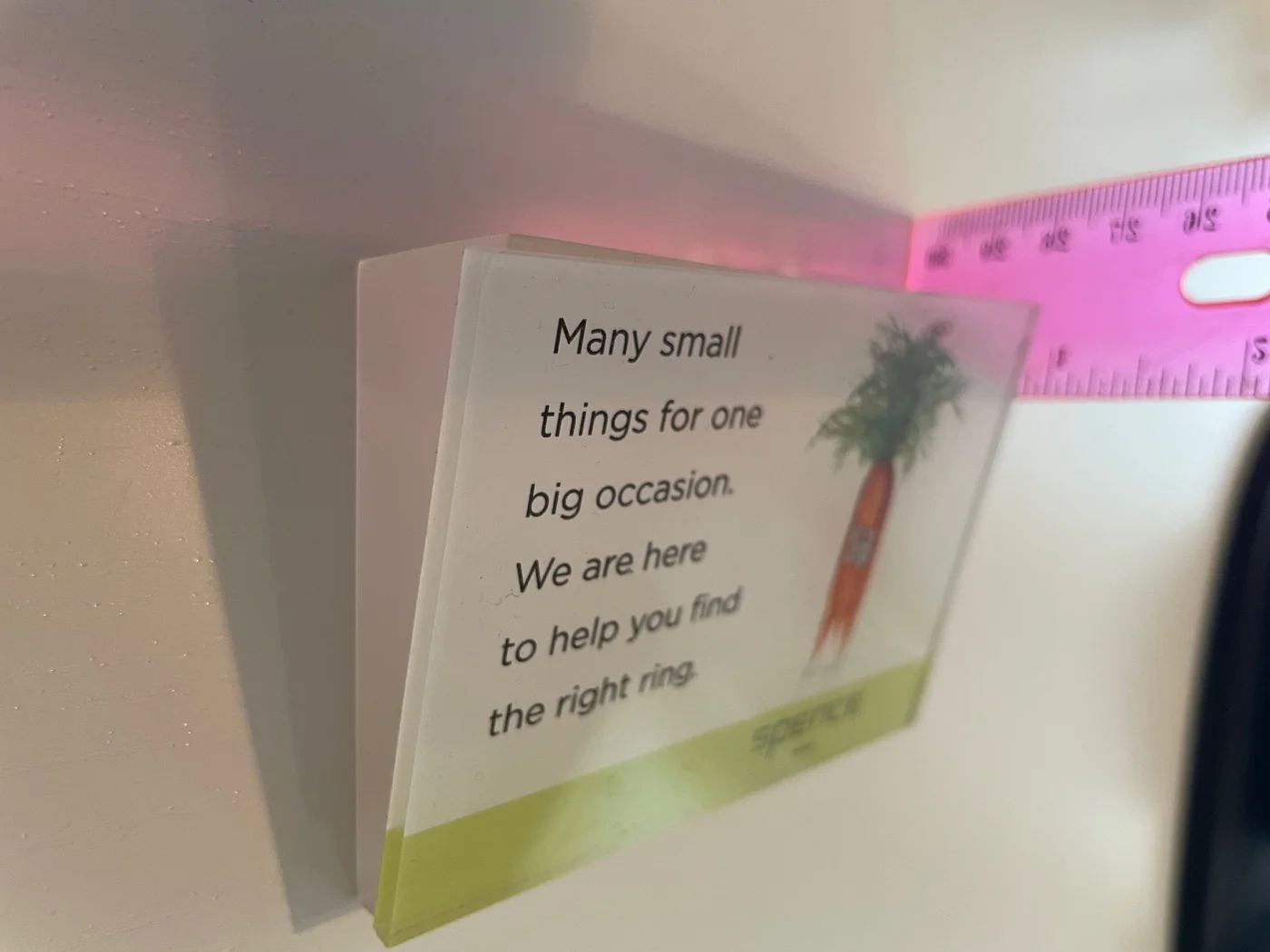
The photograph opened a construction question.
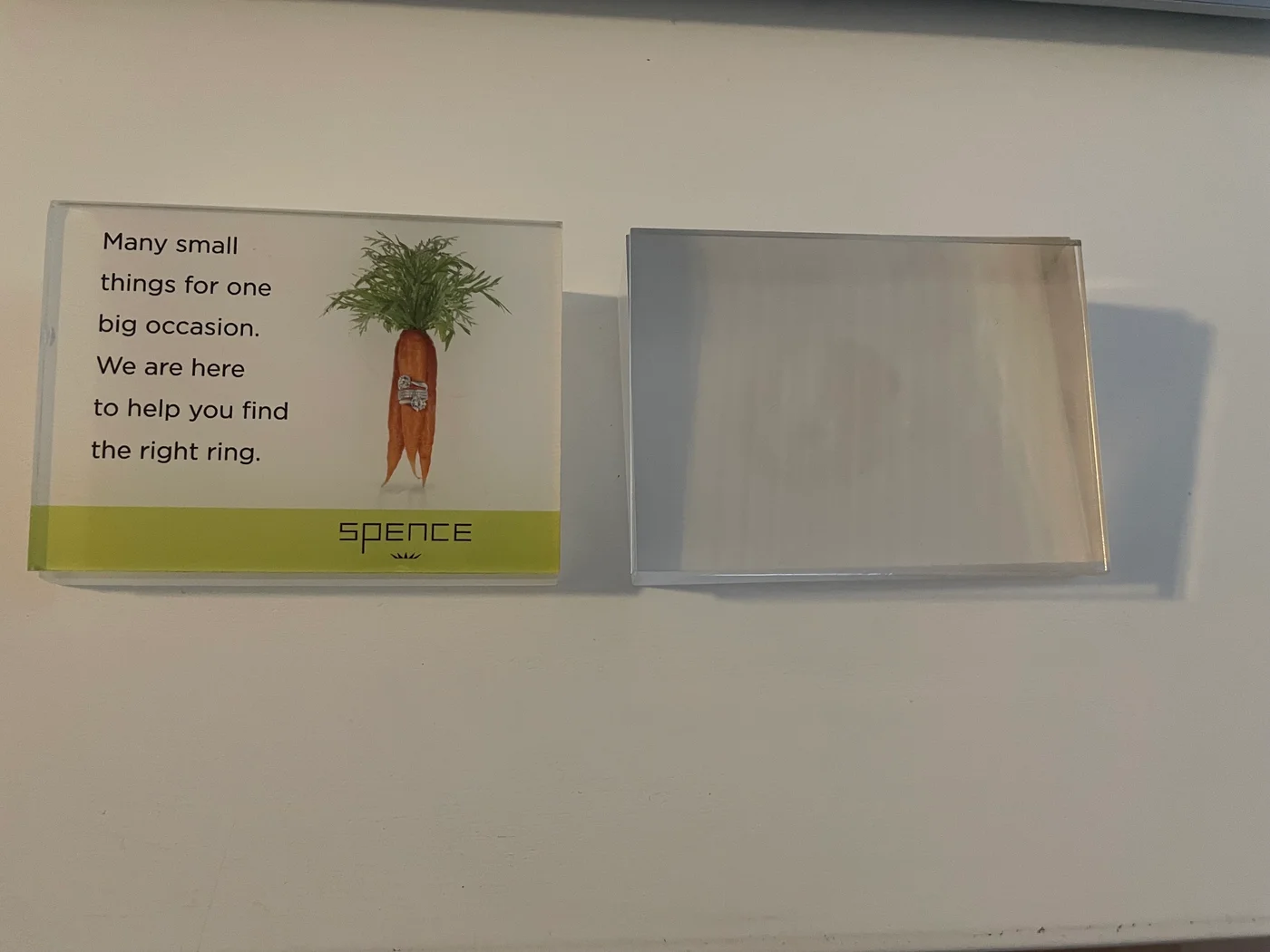
The buyer initially described a 3.5 × 2.5 × 1 inch angled sign. It could be a solid piece, rather than the two-part arrangement shown in the references. Before quoting a custom version, we asked whether the base was hollow or solid, clear or frosted, and whether a physical sample or video was available.
We then introduced stock card-holder alternatives. The options differed in the plate arrangement, magnets and whether one or both faces were bevelled. Smaller 90 × 55 mm and 100 × 70 mm formats became part of the comparison.
The benefit of that exchange was a clearer choice between a custom construction and a stock format—not a promise that either matched the original photograph exactly.
How the specification was decided
| Decision | What the project record shows |
|---|---|
| Base construction | The initial brief gave 3.5 × 2.5 × 1 inches. We clarified whether the reference was solid or two-part and compared stock plate arrangements. |
| Repeat fit | The buyer reported size differences in a received batch. We reviewed revised dimensions and offered replacement support for 25 affected pieces. |
| Order record | Later correspondence documents a 50-piece order and March 2026 dispatch. Retaining the face size, overall height and plate arrangement supports the next review. |
Check angled acrylic stand formats against the face size and base. Use the repeat-order change checklist if the new pieces must sit beside an earlier batch.
A reorder made dimensional consistency visible.
In May and June, the buyer reported differences between plaques in the received batch and asked for the next set to be uniform. We checked the maker's revised dimensions, explained the difference from the original sample, and offered replacement support for 25 affected pieces.
The buyer subsequently requested 64 pieces in total. We arranged the follow-up order and sent another tracking reference in June. The correspondence records the response and shipment; it does not contain a final inspection proving that every plaque matched.
Face size, overall height and plate arrangement all need to be compared when pieces from different batches sit together.
Further requests came back to the same file.
Additional requests followed in August and September 2025. We checked stock, discussed batch tolerance and sent courier references as the plaques were dispatched.
In March 2026, the buyer first requested prices for 40 and 80 pieces, then placed a 50-piece order. Confirmation came on 24 March in the buyer's local time. We reported shipment and supplied DHL tracking on 28 March China time.
This project brought us a service issue as well as repeat business. It showed us why a familiar item still deserves a stock and size check before the next order.
Construction and stock-format options
Batch dimensions and replacement support
Dispatch update in March 2026
What to prepare for a similar display
- Problem to solve
- Choose an angled countertop stand and keep later batches consistent when old and new pieces will be displayed together.
- Structures to compare
- Compare a custom solid or hollow profile with stock card-holder options. Check plate arrangement, bevels and any magnetic parts against the reference.
- What to confirm
- Confirm face size, overall height and acceptable variation against an approved sample. The record describes a batch issue and replacement support; it does not establish a final inspection for every piece.
- What to send for a quote
- Send front and side photos with a scale, the previous sample or drawing revision, insert or artwork dimensions, quantity and whether new pieces must match a prior batch.