Keep the holder. Change the message.
We worked through a large folded acrylic holder for replaceable card graphics, comparing material use and thickness before dispatching a 4 mm sample.
The printed message could slide out.
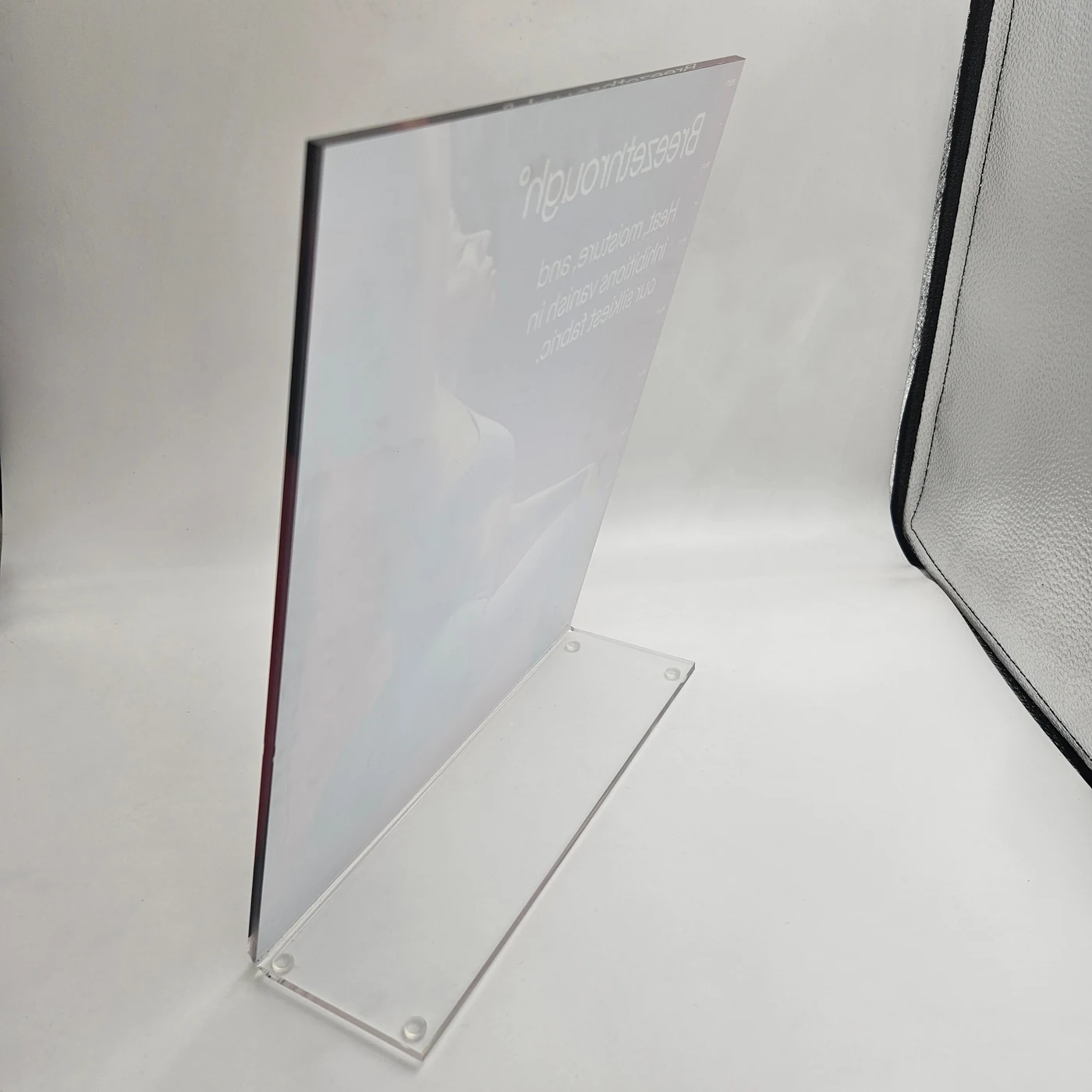
In June 2024, a print-agency buyer asked us to develop a clear acrylic display that would receive a card insert. The proposed holder measured 12 × 15 × 3 inches, with the message printed on the card rather than directly on the acrylic.
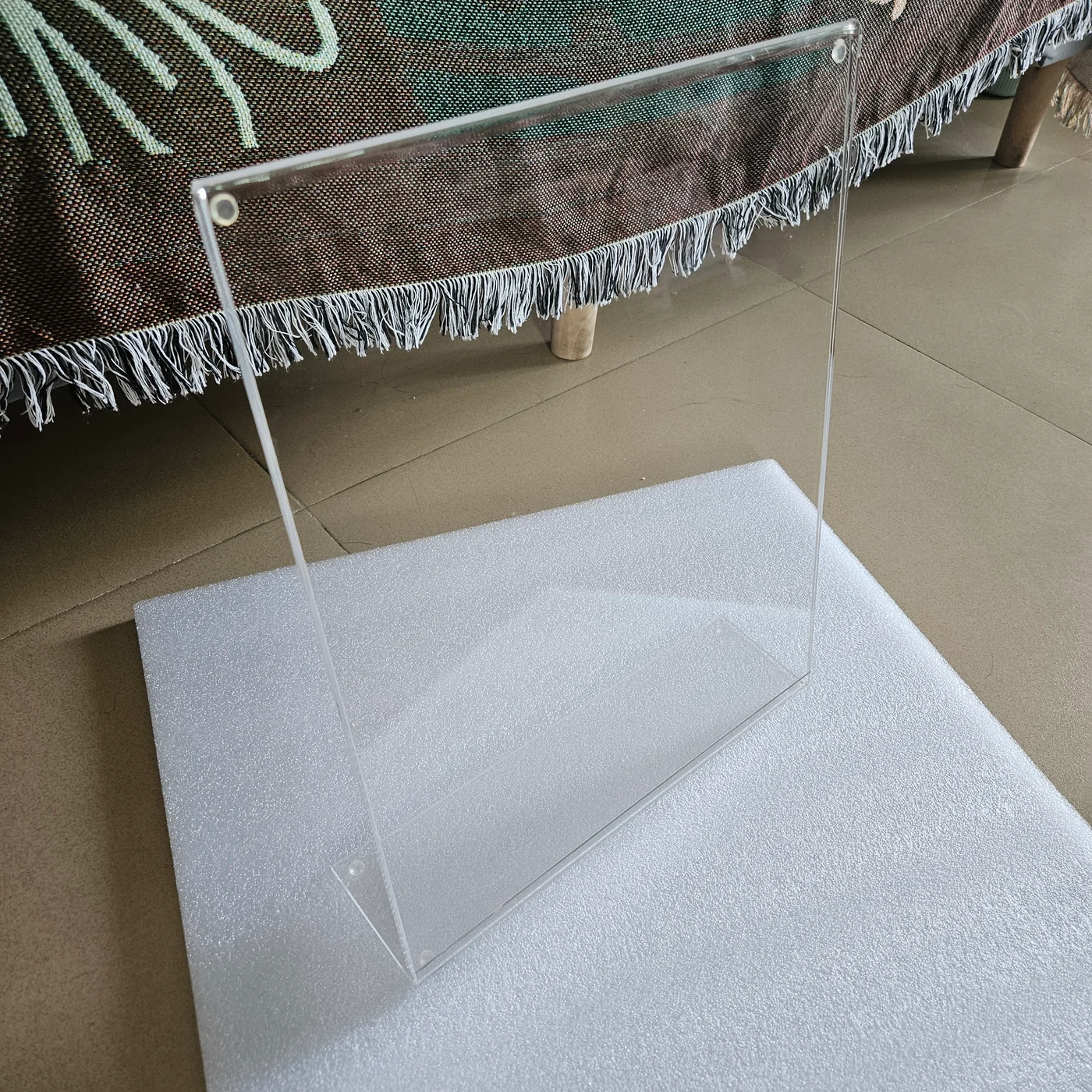
The display needed to accept a printed card that could be changed separately from the acrylic holder. The photographs show the holder with an insert in place and then empty, making the relationship between the card, panel and base easier to see.
- Card format
- 12 × 15 in
- Base in the drawing
- 3 in
- Sample requested
- 4 mm acrylic
How the specification was decided
| Decision | What the project record shows |
|---|---|
| Card and footprint | The brief called for a 12 × 15 inch insert and a holder with a 3 inch base. The graphics went on the removable card. |
| Thickness review | We compared 3 mm and 4 mm acrylic and proposed 4 mm for this format. The quotation considered material use and freight weight. |
| Sample check | The buyer asked for a video of the double-sided card sliding into the sample. The correspondence records dispatch, with the buyer’s fit assessment still open. |
Compare acrylic sign holders for replaceable cards using the real printed insert. The printed versus replaceable sign guide shows how update frequency changes the brief.
A folded display starts as a much larger blank.
We estimated an unfolded size of about 840 × 305 mm for the proposed shape. In our quotation layout, a 2440 × 1220 mm sheet would yield eight pieces. That estimate helped explain the material cost of a holder whose finished face looked relatively simple.
We compared 3 mm and 4 mm acrylic and recommended 4 mm for this larger format. We also explained that the proposed holder would be heavier than the earlier design discussed with the buyer, affecting air freight. The unprinted acrylic body removed one decorating step, but material and freight still needed to be considered together.
Our estimate for this proposed blank and sheet size; actual cutting allowances would still need production confirmation.
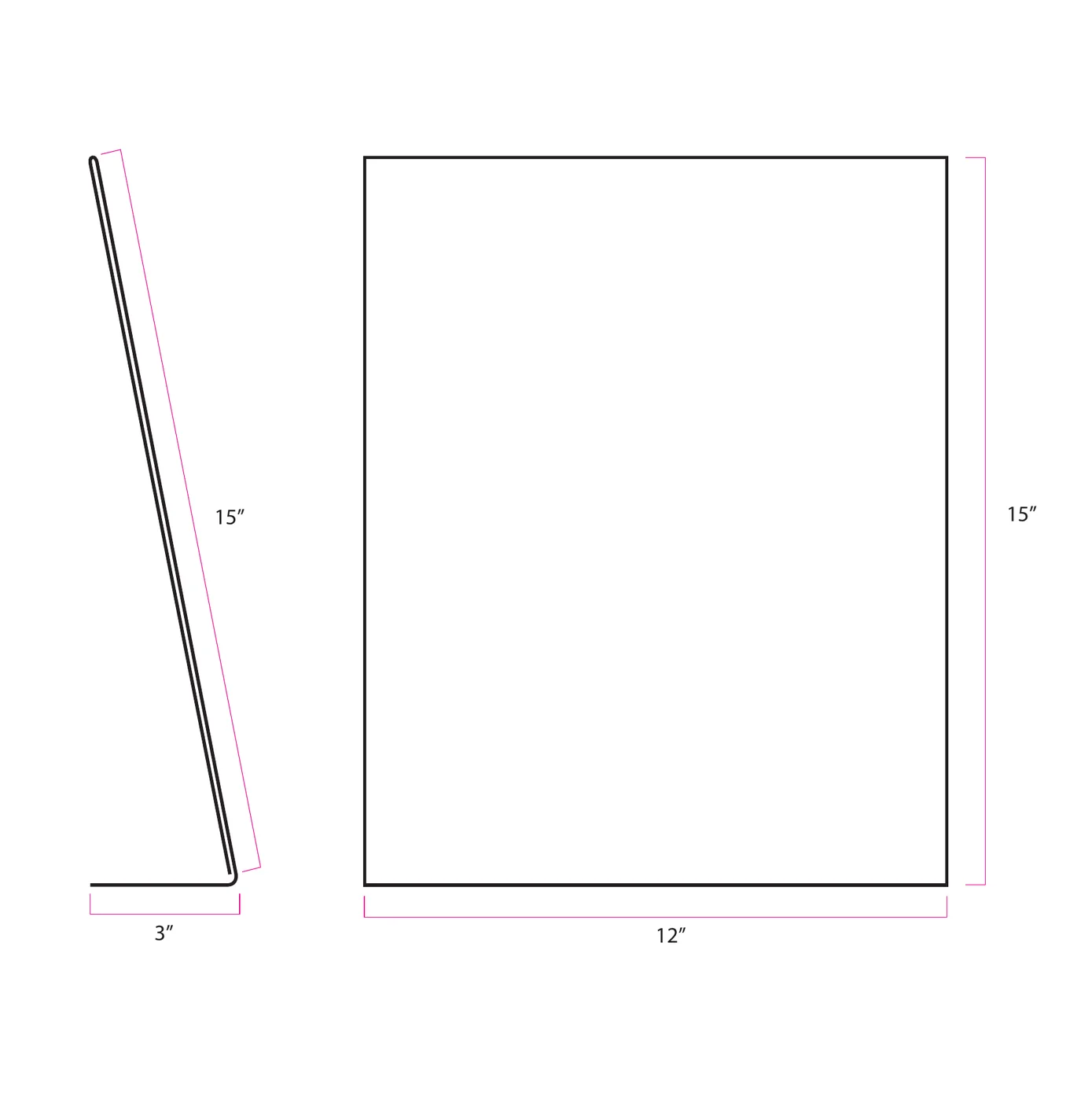
The request was to see the card being inserted.
The buyer supplied artwork for a double-sided 12 × 15 inch card and asked for a video showing it sliding into the acrylic sample. This put the interaction, as well as the appearance, into the sample brief.
We arranged the sample, then supplied a DHL tracking reference on 13 June. The record establishes sample dispatch; it does not include the buyer’s final fit assessment or approval for a production run.
Start with the graphic the holder needs to accept.
For this project, card size, folded shape and thickness belonged in the same discussion. We would use the actual printed insert to review a similar holder before settling the production specification.
Read about acrylic forming methods