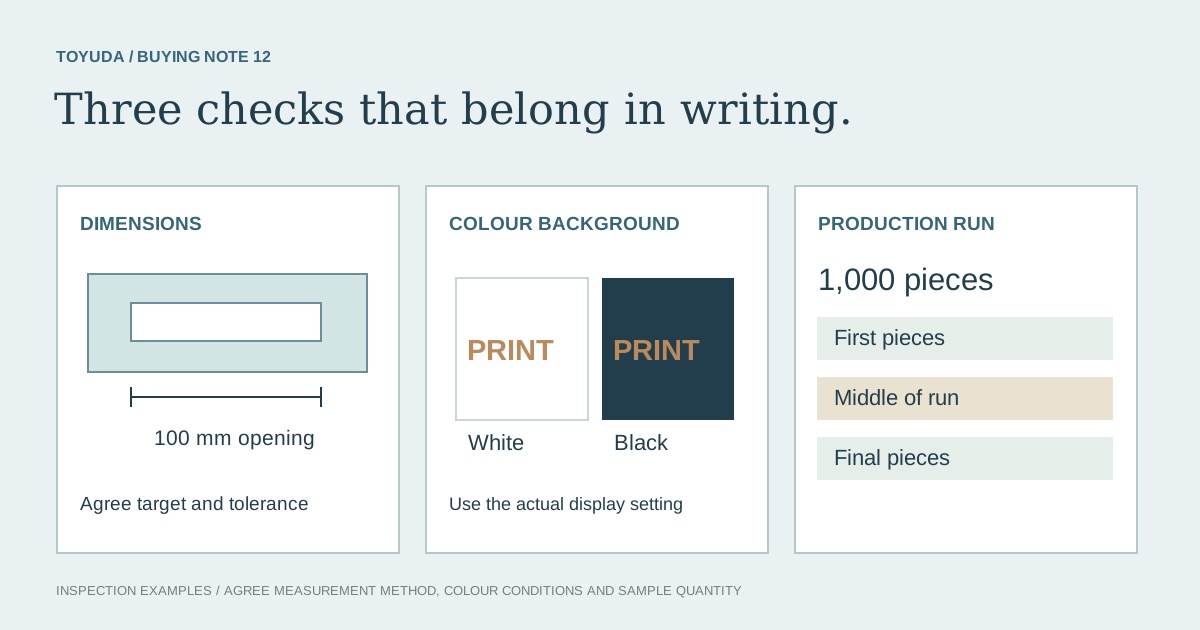
Choose between printed acrylic signs and replaceable insert holders by deciding what information will change, who will change it and how they will reach the display. Then review the reading direction, support and update action with a sample.
Separate lasting branding from information that changes
List the content on the sign and give each element an update requirement. A brand mark, room identifier, price and campaign message may have different lifetimes even when they appear on one panel.
For fixed content, compare a decorated acrylic reference with the artwork and viewing requirements in the brief. For changing content, describe the proposed insert and how it will be replaced. A mixed brief can also be discussed, but confirm which elements are printed on the acrylic and which belong to a removable card.
Name the person who performs the update. They may have access to the front of a counter while the back is against a wall. They may need to change a card without tools or move the holder first. These are useful specification inputs; they do not establish that every insert-holder design can meet them.
Compare the update operation as well as the appearance
A fixed printed message changes through a new reviewed decorating or replacement scope. A replaceable insert changes by exchanging the specified card while retaining the intended holder.
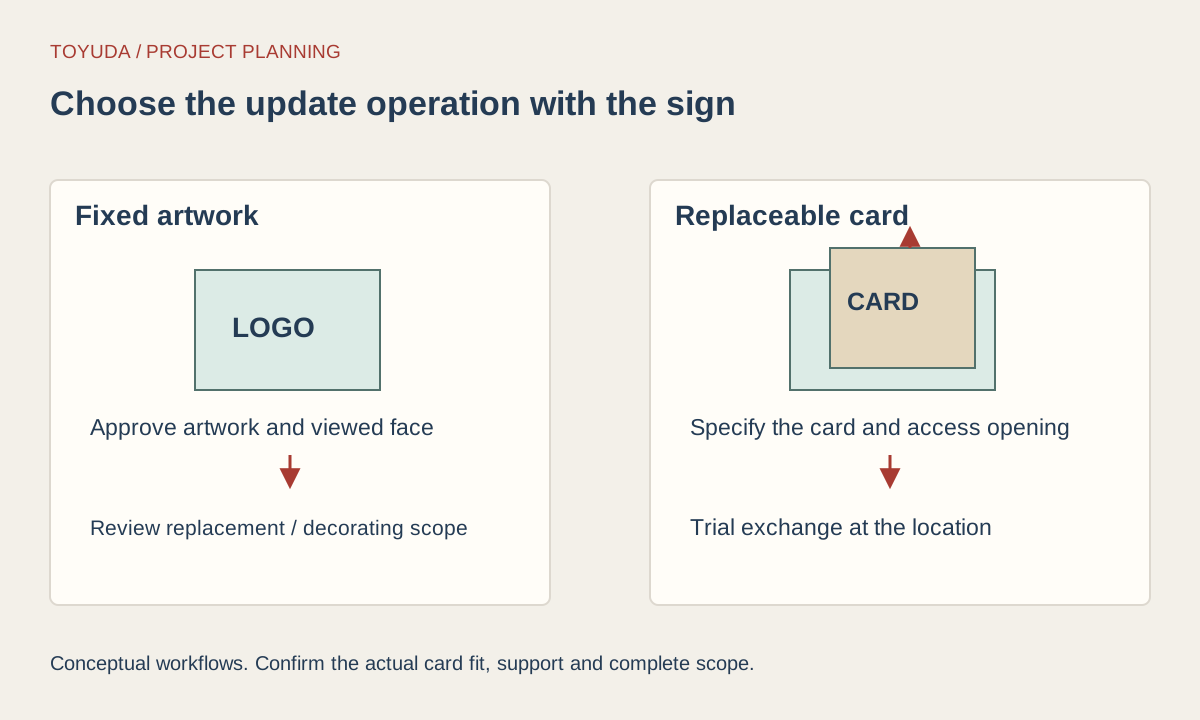
| Question | Fixed print | Replaceable insert |
|---|---|---|
| What changes? | Identify artwork that is intended to remain | Identify the card content and update schedule |
| Who performs the update? | Assign responsibility for the reviewed replacement scope | Name the person and the access they have at the location |
| What needs approval? | Artwork, decorated face, background and support | Card size, thickness, opening, retention, viewing and support |
| What is the full cost? | Confirm decorating, versions, replacement and delivery scope | Confirm holder, cards, print supply and replacement-card scope |
| What must be tested? | Read the finished message from the intended position | Remove and insert the actual card, then read the assembled display |
A replaceable insert can suit changing messages, but it is not automatically cheaper for every project. Card supply, holder construction, artwork versions and update work belong in the quotation comparison.
Use the catalog and sample record for different kinds of evidence
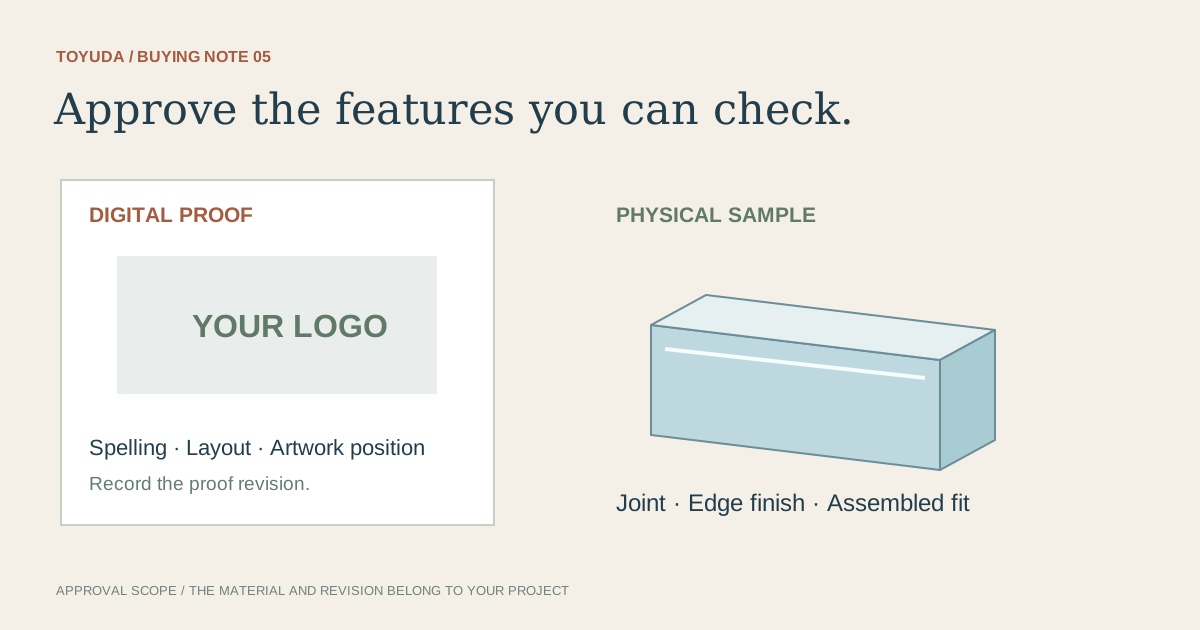
A product photograph can establish a starting appearance. A documented sample request can explain an interaction that the buyer wanted checked. Neither replaces the specification for your new project.
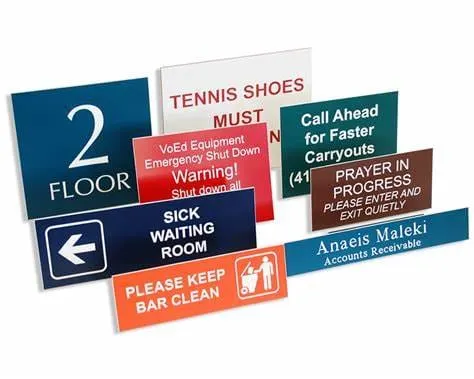
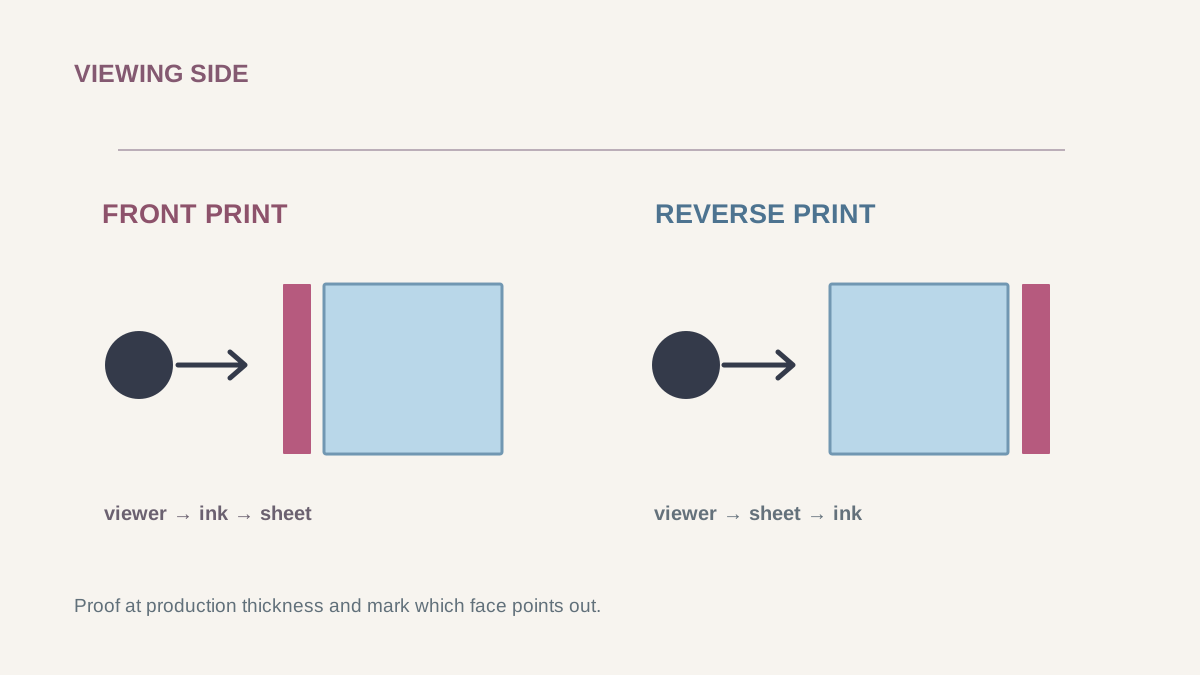
The custom acrylic logo table sign reference provides a starting point for a decorated display. Mark the face carrying the artwork and whether it will be viewed from one or several directions. Use the front and reverse printing guide to define the artwork review.
The replaceable-card display project records a buyer's request to see a card inserted into a sample. A 4 mm acrylic sample was requested and a courier dispatch was documented. The record does not establish final buyer fit approval or bulk production approval, and that thickness is not a recommendation for other holders.
For your brief, request the actual opening direction, clear slot dimensions and card thickness range for review. A photograph of a clear panel does not prove that it has a card pocket, magnetic assembly or a replaceable graphic.
Check reading direction, reflections and installation together
Review the message from the intended viewer's position with the proposed background and lighting. Confirm portrait or landscape orientation and which faces need to remain readable.
Mark the counter footprint or mounting details separately from the visible sign area. Check base stability using the complete assembly. If the holder will be wall mounted, identify the wall, fixing locations and the space needed for an insert to enter or leave; use the mounting brief for those inputs.
Place the sign on the wider counter layout where relevant. Products, price labels and the holder's own base can obstruct one another. A readable artwork file alone does not confirm the reading result at the location.
Trial the update with the actual card and the intended operator
Have the intended operator remove and replace the proposed card at the installation location, or in a representative mock-up. Record access, fit, retention and the final reading result.
Check whether the holder needs to move, which surfaces are handled and where the removed card goes. Keep the card artwork version connected to its dimensions and print supply. If several messages share one holder, trial the intended card variants rather than assuming one successful card approves every thickness or finish.
Retail sign update brief
Project / revision / date:
Lasting content and changing content:
Fixed-print / insert / combined requirement:
Artwork versions and quantities:
Card dimensions, thickness and orientation:
Reading faces, background and lighting:
Counter footprint or mounting details:
Opening direction and space for card exchange:
Operator, update sequence and card supply:
Sample findings and approval status:
Download this blank project record (.txt). Mark unknown entries “To confirm” and retain the approved revision.
Use the sample approval record to document the approved fit and artwork separately.
Two questions about replaceable acrylic signs
Can a photograph confirm the insert opening?
No. Request a drawing or demonstration showing the actual opening, card route and clear space.
Can I specify a custom card size?
Send its actual dimensions, thickness and orientation for review with the proposed holder. Confirm the resulting fit on a sample.
Send the artwork or card brief and update requirements. TOYUDA can coordinate the proposed sign format and sample review with suitable suppliers.
Apply this guide to your project brief
Define the information-update task alongside the visible artwork and installation requirements.
- Acrylic sign holders and signs
Use a format reference while separately confirming the actual insert or printed construction.
Related project records
Prepare your quantity, artwork and delivery details before requesting a quotation.
Compare current product references
Use these formats to apply the guide to a specification. Confirm materials and sample requirements for your project.
- Freestanding Acrylic Table Signs
Compare the sign outline, artwork faces and base stability at the intended viewing angle.