Keep the bulk order consistent with the sample through written acceptance criteria and checks across production.
Make critical dimensions measurable
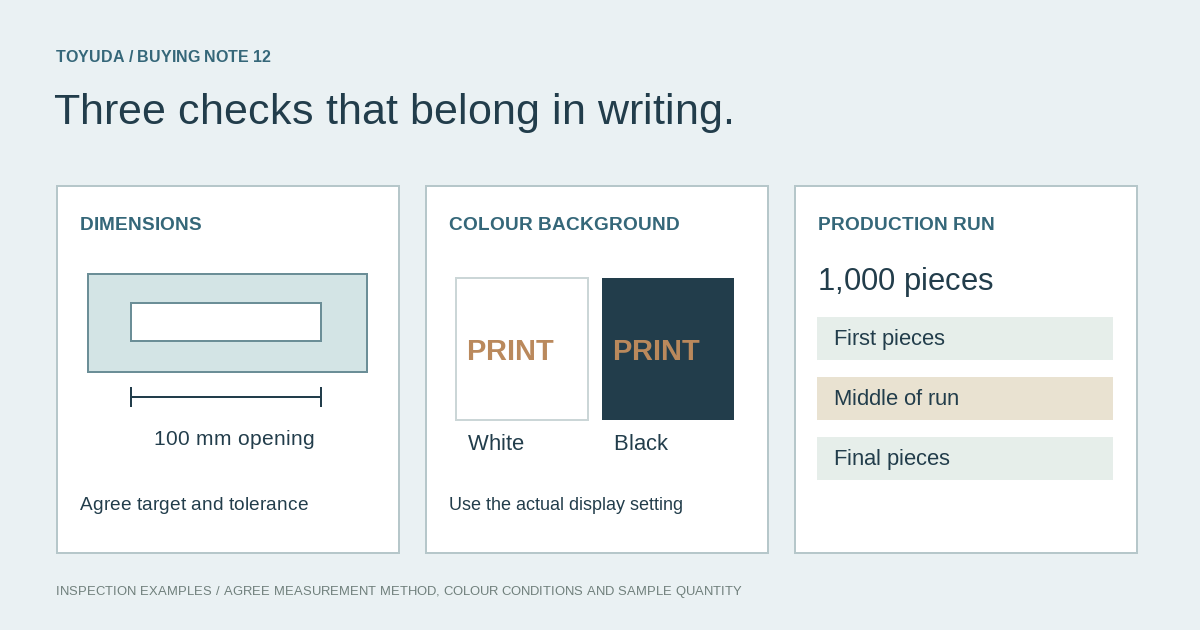
Turn accurate dimensions into measurable requirements. Agree the target, allowable deviation and measuring method for critical slots before production. A 100 mm assembly opening and a decorative edge have different levels of importance.
Define the inspection checks while you review how a custom order progresses. Put sample appearance, critical dimensions and packing in the brief before the batch is made.
Agree the conditions for comparing colour
Agree how colour will be compared. The same print on clear acrylic looks different against a white background and a black background. Specify the actual background the finished product will use.
Check the beginning, middle and end
Agree when to check the run, which batches and cartons to open, and how many units to inspect from each version. Identify who selects the units and where to record the scope actually checked.
How does each SKU connect to the approved reference?
Give each SKU or version a clear link to its approved drawing, artwork and sample. Include the packing label so the correct reference can be used when the goods are inspected or unpacked.
| Check | Compare with | Record in the inspection report |
|---|---|---|
| Sampling scope | Agreed selection and inspection plan | Order size, SKUs, batches and cartons opened, units checked per version and any exclusions |
| Critical dimensions | Drawing revision, agreed measurement points and tolerances | Actual measurements and method, such as lid clearance or usable inside width |
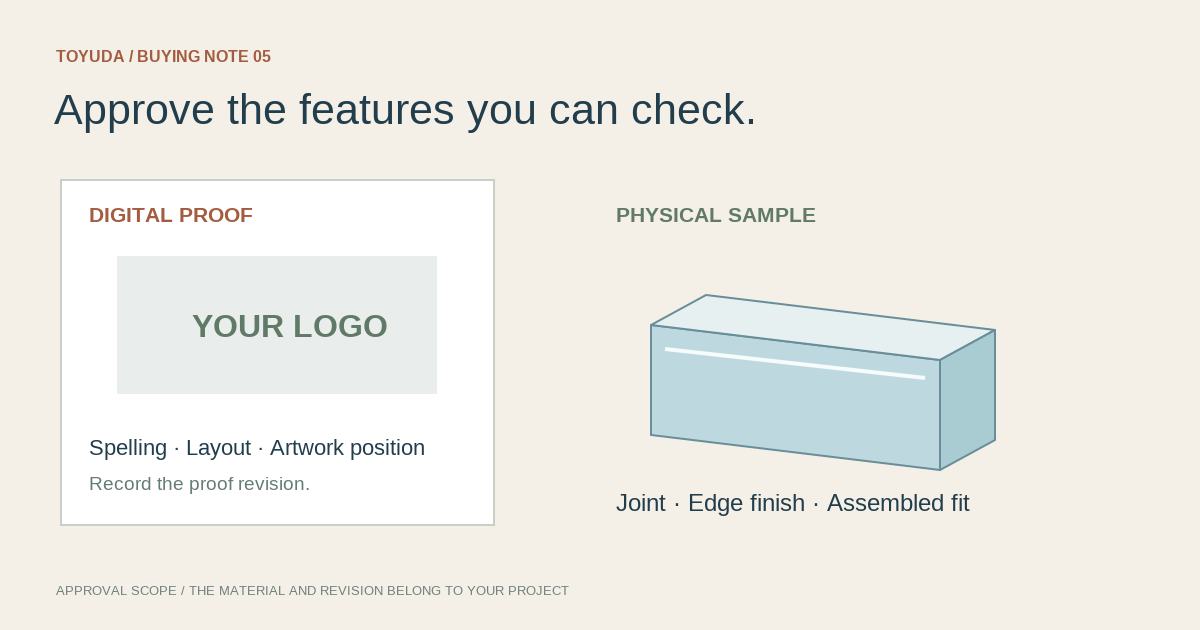
| Artwork version | Approved print file or proof for each SKU | Revision, language, viewing side, placement and photo references |
| Appearance | Retained sample and agreed viewing conditions | Location and extent of marks, scratches, edge defects or visible joint differences |
| Assembly and fit | Approved parts list and assembled sample | Which covers, bases, hinges or inserts were fitted and what happened in use |
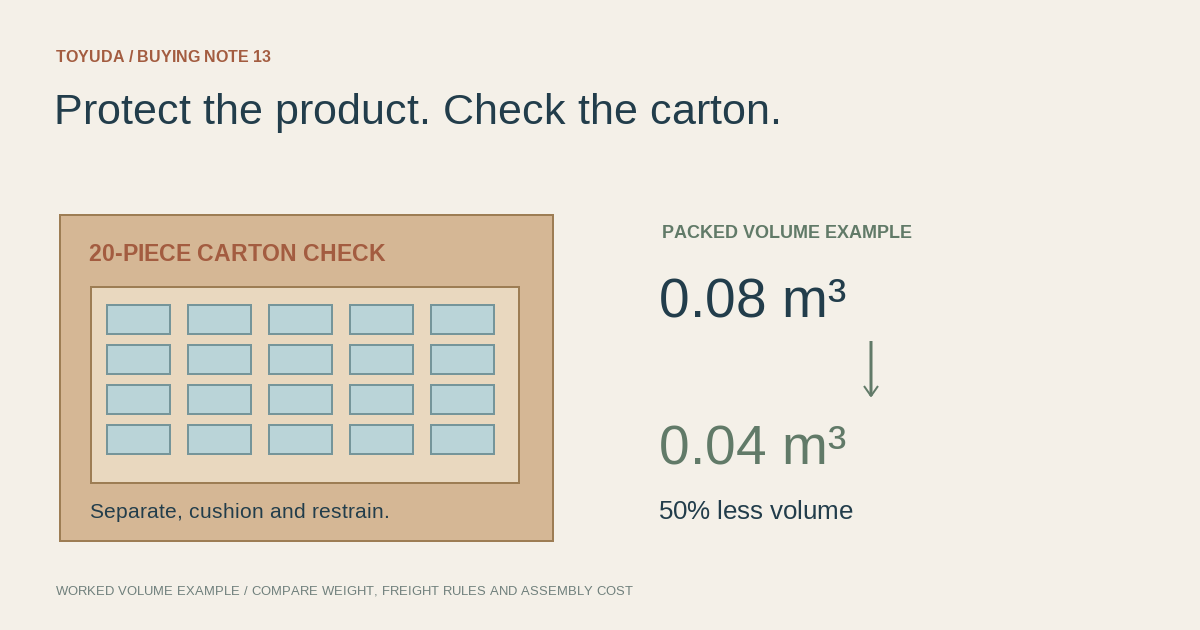
| Carton marks and packing | Approved label layout and packing instruction | Carton ID, SKU and count on the label, contents counted and packed-condition photos |
For a wholesale order of acrylic boxes or display cases, record which lids, bases or inserts were checked together. Add the result and any follow-up action beside each finding. Agree the sampling and acceptance criteria with your supplier for the actual order.
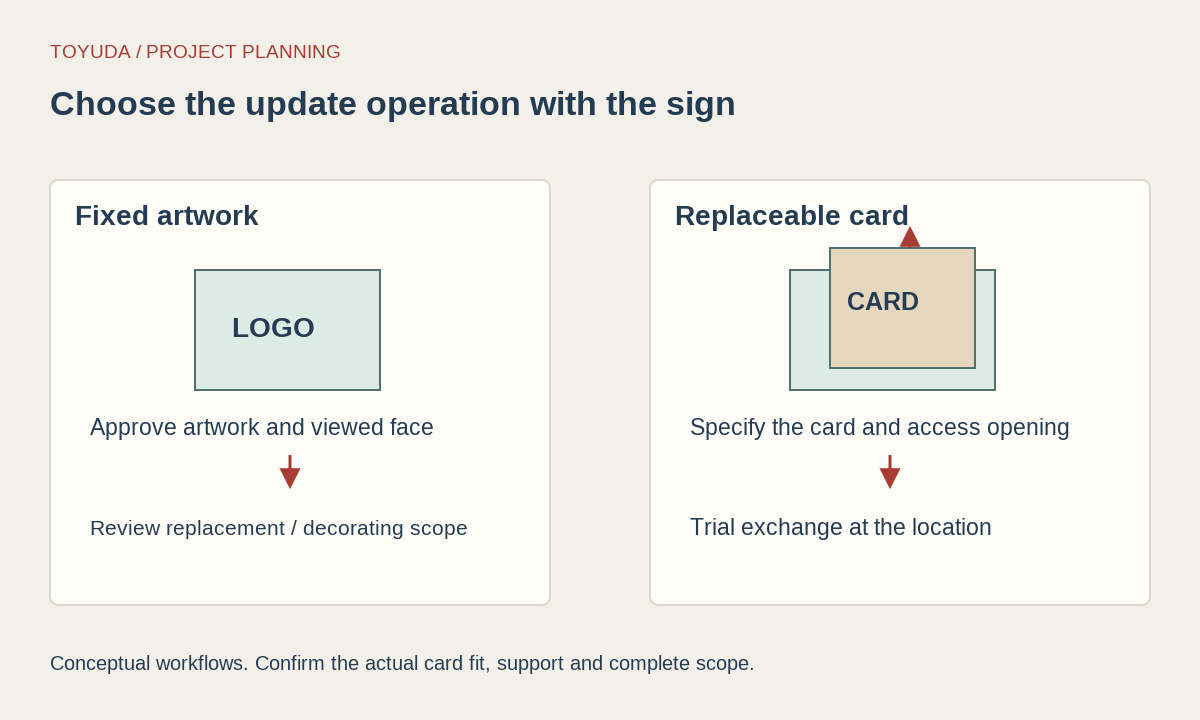
Use the same references named in the sample approval record. For a sign with replaceable inserts, include card and holder versions; for a lash workstation set, identify each board, cover and organizer component.
What happens when a discrepancy is found?
Identify the affected units and record the observation against the agreed criterion before deciding a disposition. Keep the units distinguishable while the named reviewer checks the evidence and proposed action.
Record the SKU, batch or carton, reference revision, measurement method, photo IDs and the scope checked. Then document the agreed action, responsible person and what must be rechecked. If a change affects another SKU or the packing, make that connection explicit.
Close the record with the decision and recheck evidence. Do not silently replace the original finding with an edited photograph or a revised specification. Refer to the project's agreed commercial and claims arrangements for responsibilities and timing, and keep the carton schedule connected to the affected goods.
Apply this guide to your project brief
Agree a checking reference for dimensions, fit, visible surfaces and packing before reviewing the bulk order.
- Acrylic signs and holders
Confirm the artwork, viewing direction, insert access and mounting or base requirements.
- Acrylic boxes and display cases
Define the contents, opening, inside clearance and visible corners for the selected enclosure.
Prepare your quantity, artwork and delivery details before requesting a quotation.
Compare current product references
Use these formats to apply the guide to a specification. Confirm materials and sample requirements for your project.
- Freestanding Acrylic Table Signs
Compare the sign outline, artwork faces and base stability at the intended viewing angle.
- Clear Acrylic Lash Cart Organizer
Compare compartment dimensions and access around the actual tools before reviewing a sample.