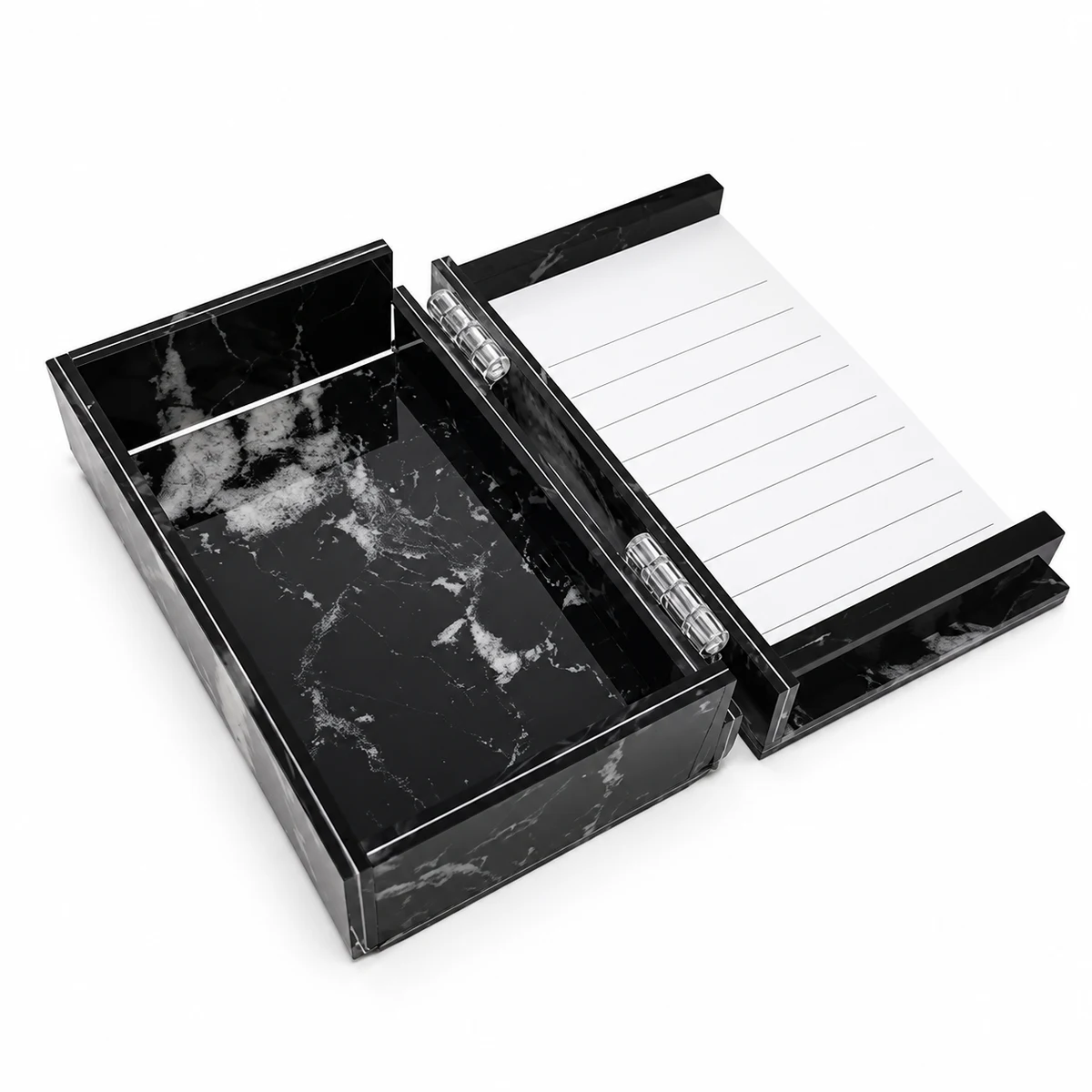
Black Marble-Look Hinged Lash Palette Case
Listed size: 200 x 120 x 45 mm closed. Keep a working palette and a compact storage cavity together in a hinged lash palette case.
Acrylic lash tile storage boxes use upright plates, sliding trays or hinged working cases. Compare how a tile is stored and removed. A shallow cover over one working palette serves a different purpose from a multi-tile storage box.
Listed size: 200 x 120 x 45 mm closed. Keep a working palette and a compact storage cavity together in a hinged lash palette case.
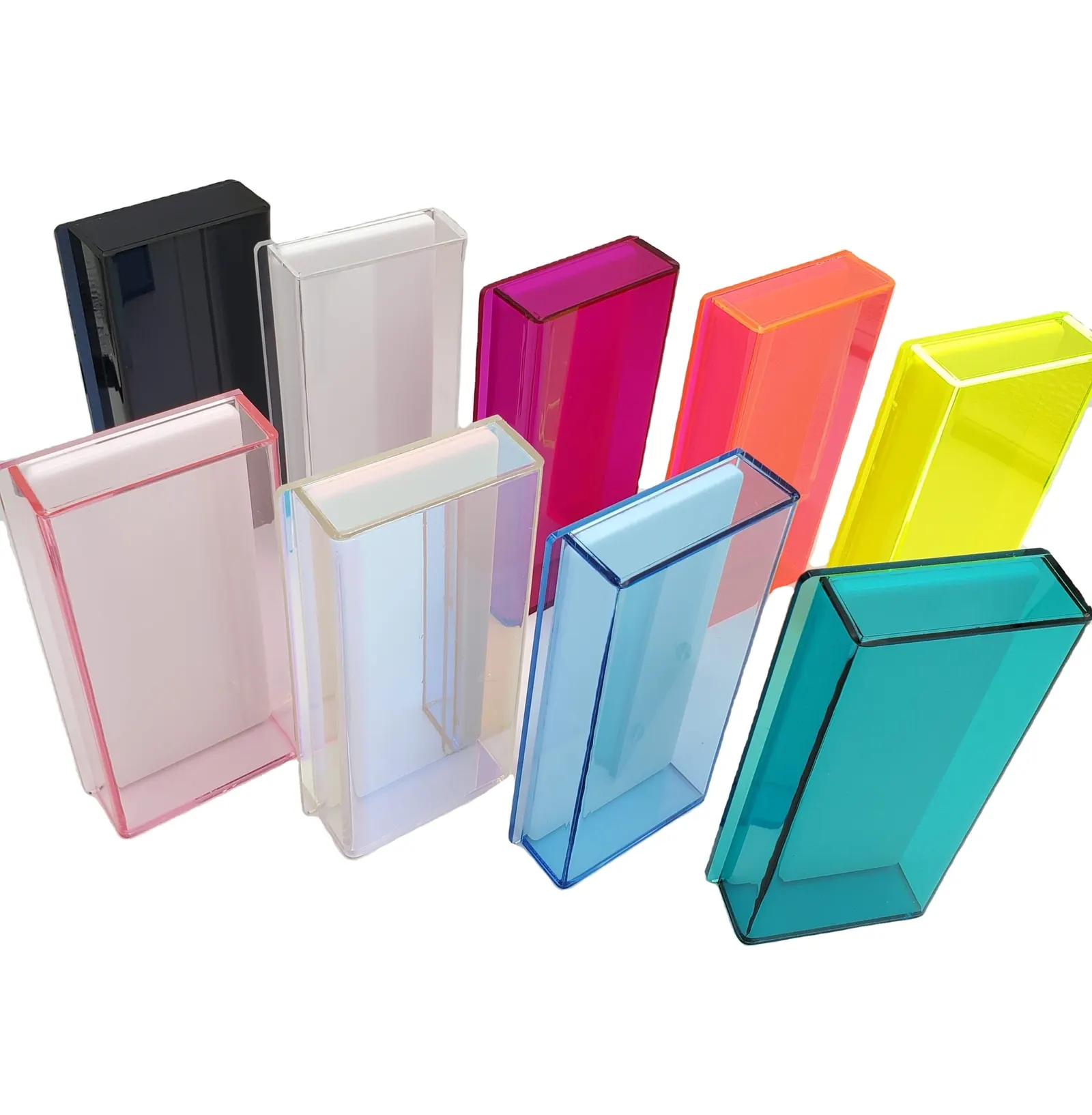
Listed size: 150 × 75 mm — Covered acrylic lash tiles in a choice of colors for arranging extension strips and keeping the working palette together between appointments.
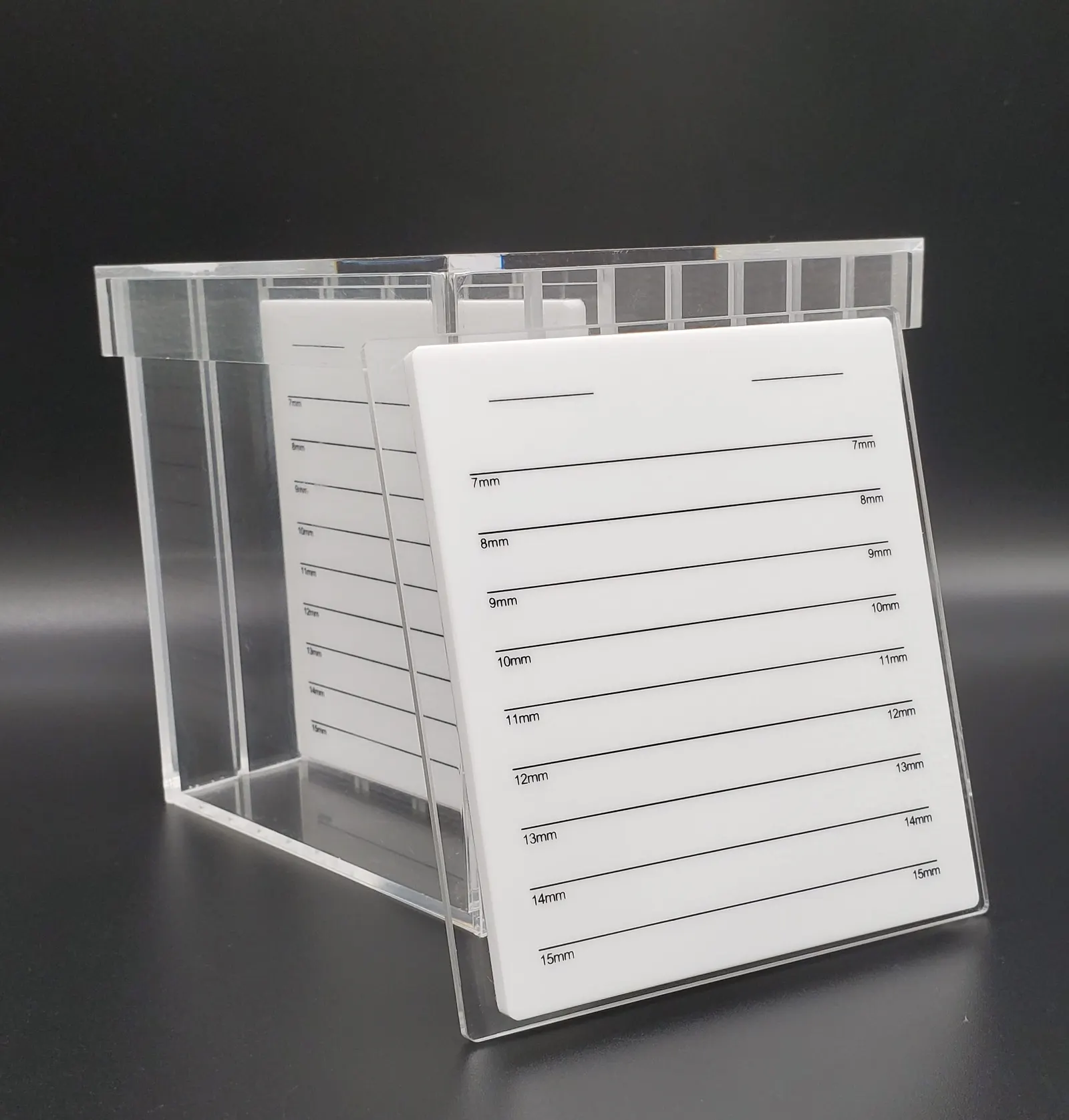
Listed size: 125 × 140 × 130 mm — A transparent acrylic lash box holds removable light-colored tiles beneath a clear lid for visible strip storage.
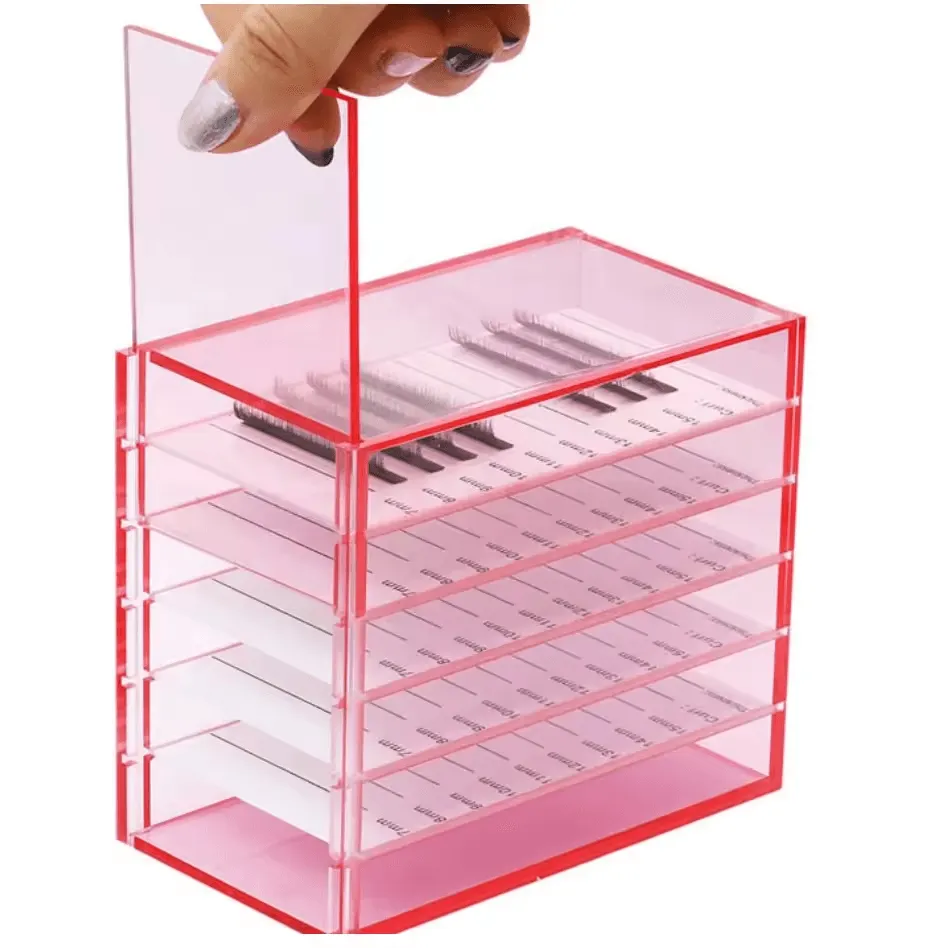
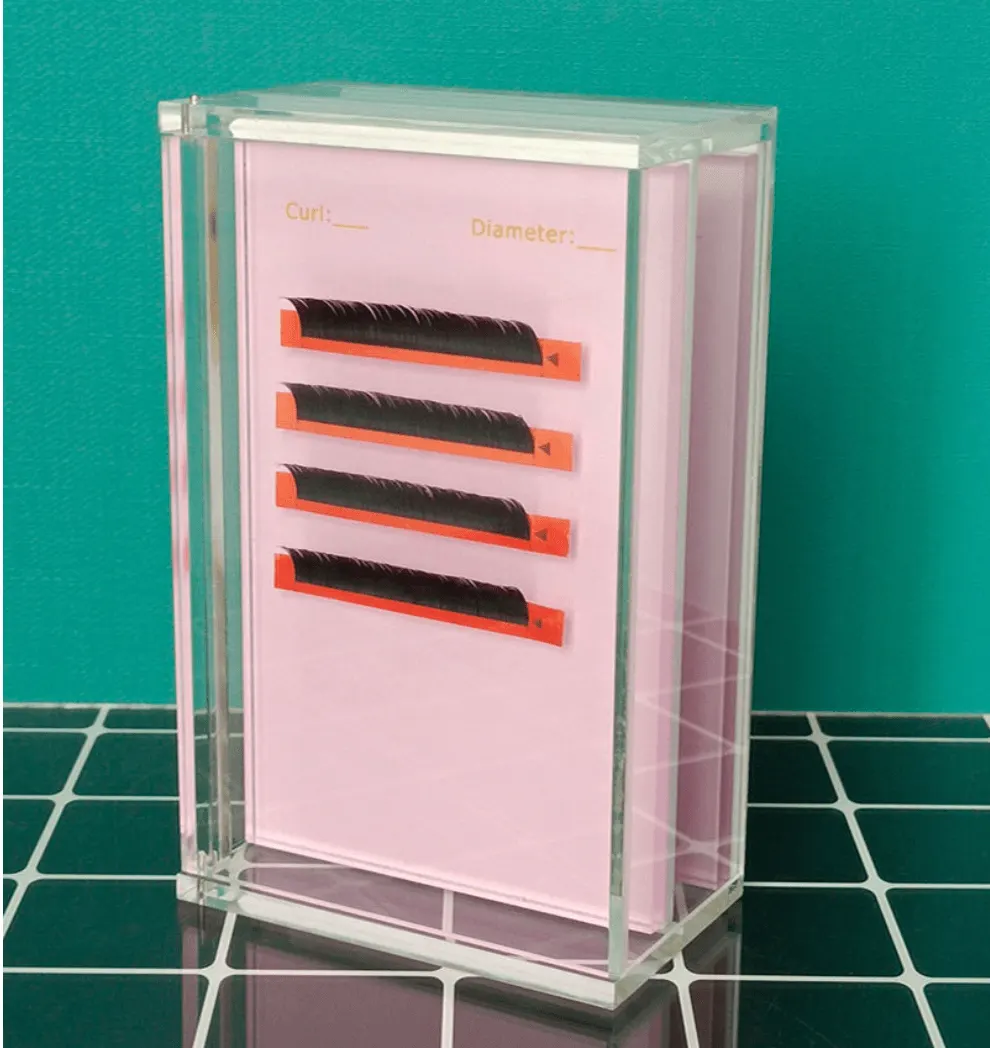
Listed size: 130 × 110 × 70 mm — A pink lash storage box groups removable tiles behind transparent faces, with different tile arrangements shown in the gallery.
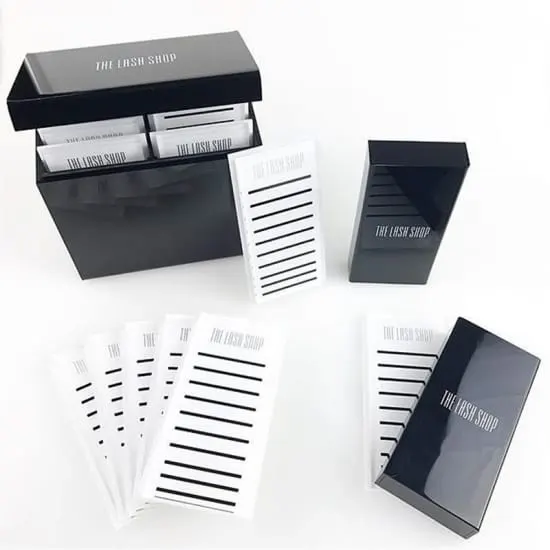
A black acrylic lash box stores removable strip tiles inside a covered body for an organized salon palette set.
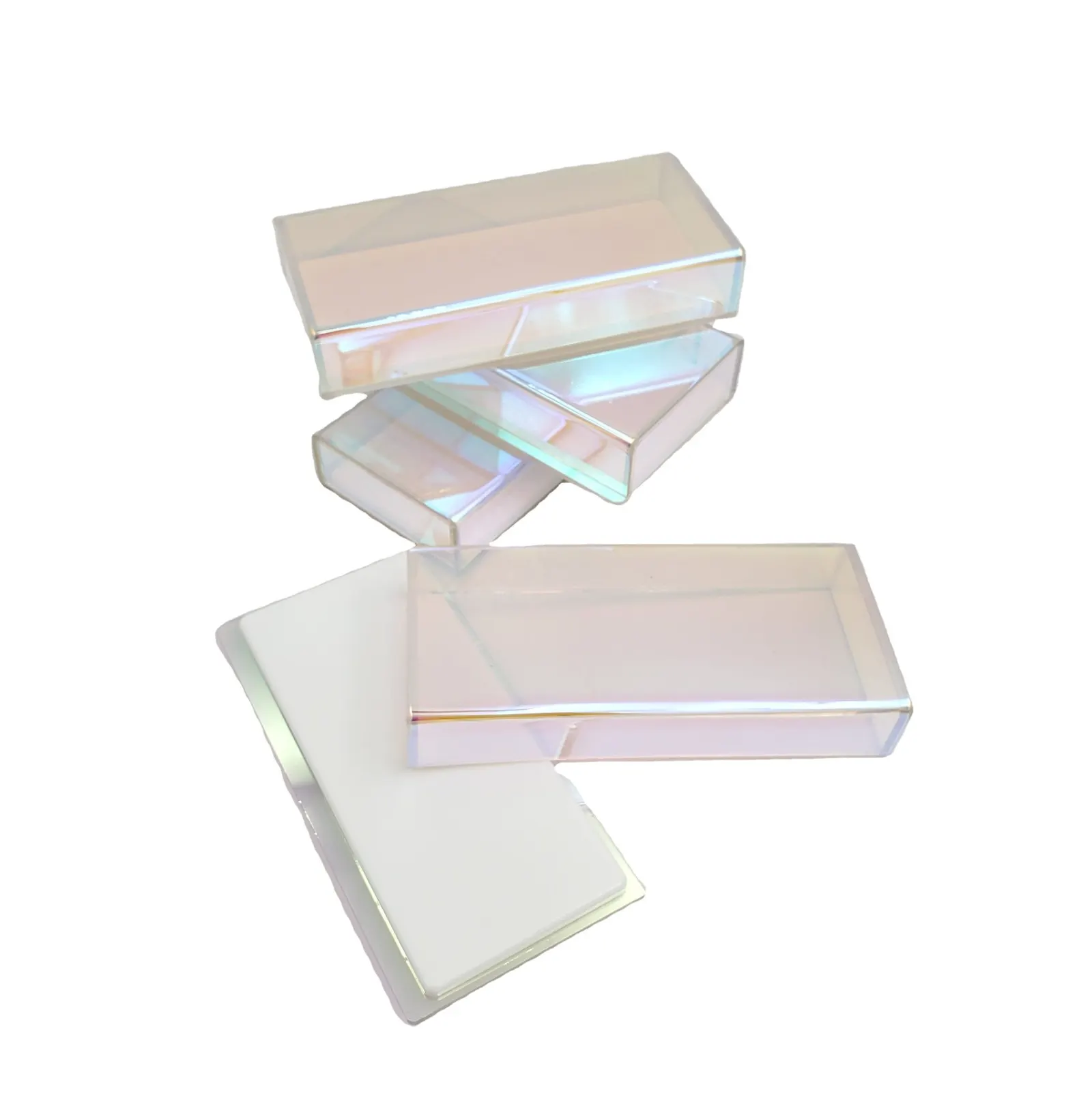
Listed size: 150 × 75 mm — Iridescent lash tiles with clear covers keep extension-strip palettes visible as part of a compact salon workstation setup.
Listed size: 135 × 75 × 45 mm — A clear hinged lash case holds a removable lash tile, keeping the palette visible when the lid is closed.
A shallow cover protects the space above one working face. A multi-tile box needs loaded tile envelopes, position spacing and individual removal paths.
A lifted cover needs grip and seating clearance. A hinged case also needs space for lid travel and access with neighboring equipment in place.
Black, pink, clear and iridescent references change appearance and visibility. Select labels, artwork and actual layout without inferring capacity from color or old names.
Load the intended strips and tiles, operate the selected cover and remove individual palettes. Review labels, loaded height and agreed material-compatible care.
Material availability, decoration, sample cost and timing are confirmed for each project.
A reference photo and an approximate brief are enough to begin.
Use a custom acrylic sample checklist for dimensions, viewing faces, printed colour, fit and packing. Record changes on the production drawing.
MATERIAL & DESIGN GUIDECompare lash tiles, storage boxes and station organizers by function, component fit and artwork. Download a brief for your private-label sample review.
MATERIAL & DESIGN GUIDEFront and reverse printing change the viewing order, surface exposure and artwork proof you need to approve.
MATERIAL & DESIGN GUIDEA short, specific cleaning handover prevents the most common confusion between acrylic, glass and decorated surfaces.