Acrylic sign holder: comparing thickness before sampling
An overseas buyer wanted a magnetic acrylic sign holder quoted. The exchange moved from two sheet-thickness options to a request for a pre-production sample. This account follows the documented steps, without treating a possible order as a completed one.
- Correspondence
- August–September 2023
- Product
- Magnetic acrylic sign holder
- Last documented step
- Sample requested
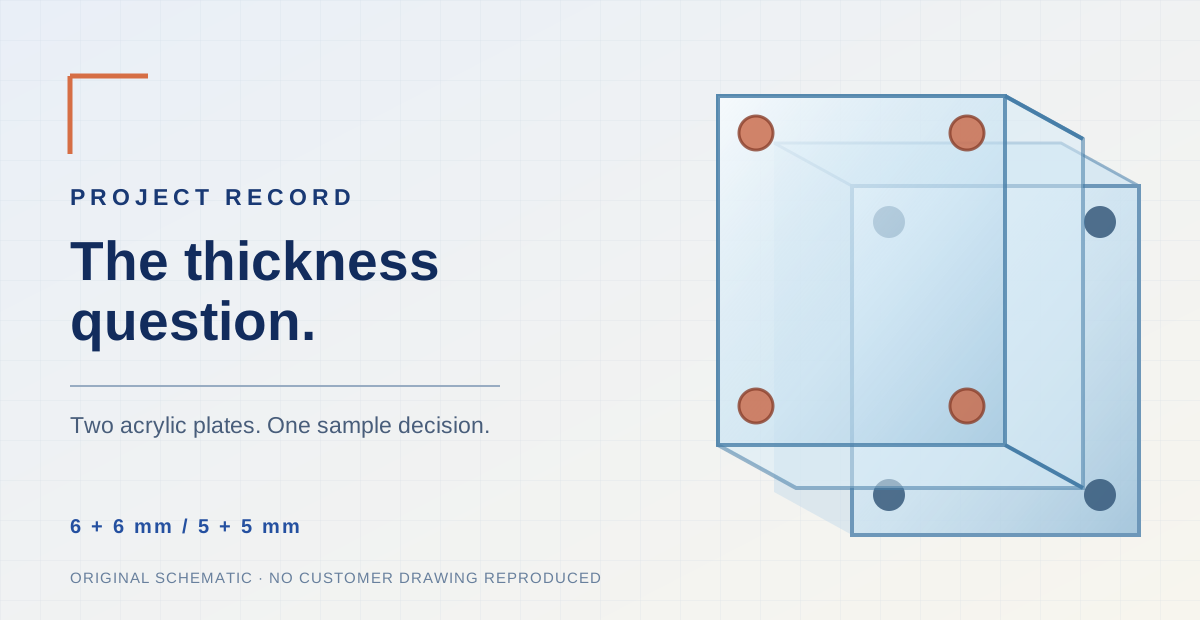
A familiar format, with one important measurement to settle.
In August 2023, a buyer asked TOYUDA to quote a magnetic acrylic sign holder at two purchasing volumes. The earlier product specification in the exchange used two nominal 6 mm plates. TOYUDA priced that construction and offered a second option using two nominal 5 mm plates.
Rather than presenting either as an exact 12 mm or 10 mm assembly, the reply called out sheet-thickness tolerance. That distinction became useful when the buyer asked for a sample of the thicker option.
Nominal sheet size versus expected assembly.
The quote described an assembled thickness of approximately 11 mm.
The quote described an assembled thickness of approximately 9 mm.
These were estimates in the correspondence, not measured results from an approved sample. The available thread does not include a final drawing or inspection record.
How the sample became the next decision.
Initial inquiry and quote
The buyer requested pricing. TOYUDA compared the two thickness builds and estimated a production window of roughly 15–18 days.
Pre-production sample discussed
The buyer asked how quickly a sample of the 6 + 6 mm option could be prepared. TOYUDA estimated about 3–5 days for sample preparation.
Approval still pending
The buyer said the proposal was still with its client for approval. The email did not confirm that a sample had been commissioned at this point.
Sample requested before an order decision
The buyer returned to the 6 + 6 mm option and requested a pre-production sample to support approval of a possible batch order. Supplier onboarding and invoice arrangements were also discussed.
A clear next step, not a claimed delivery.
The provided correspondence ends with the sample request and onboarding details. It does not establish that a sample was shipped, approved or followed by a production order. The practical lesson is narrower and more useful: when a holder is made from stacked acrylic plates, state both the nominal sheet specification and the expected assembled thickness before sample approval.