Pause before reaching for a stronger cleaner
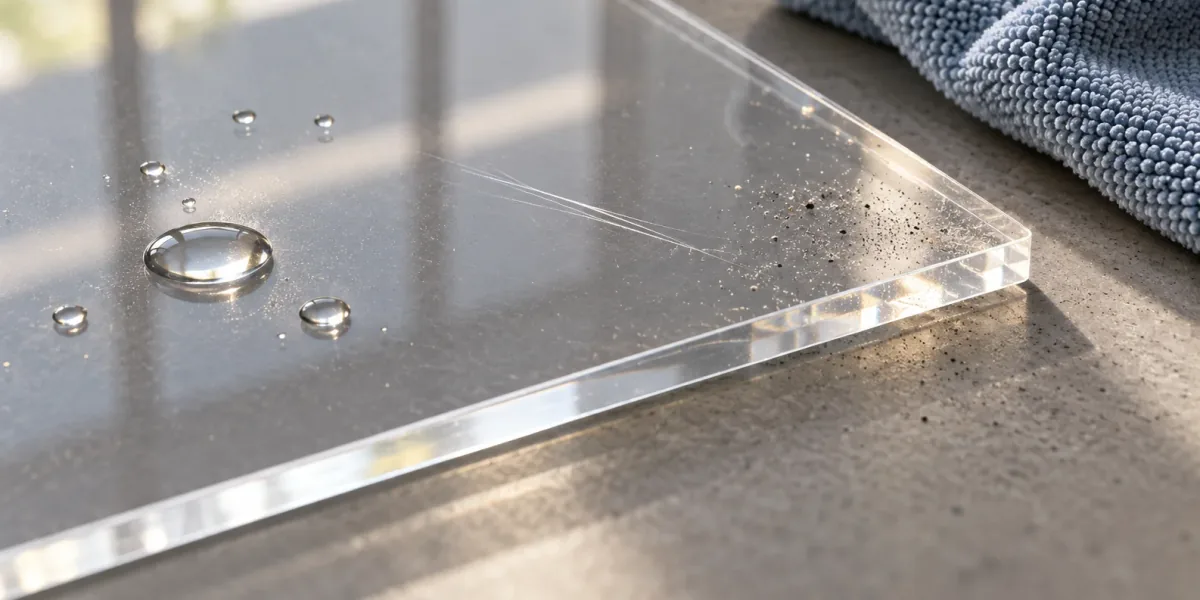
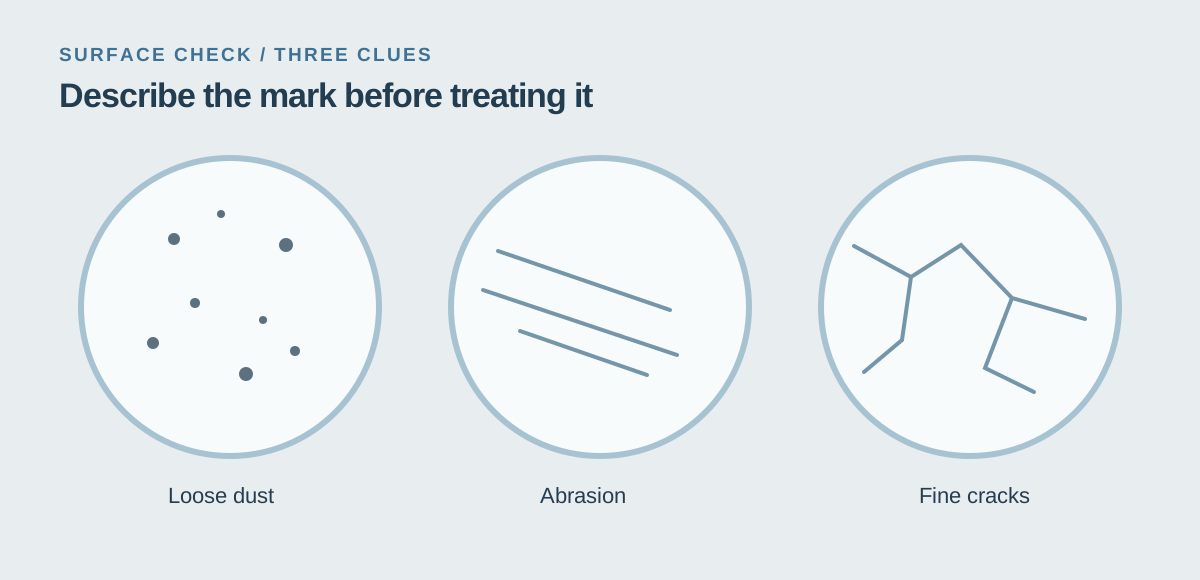
A clear display can look dull for several reasons. Loose dust, residue, surface scratches and fine cracks are different conditions. Treating them all as dirt can make diagnosis harder and may make the surface worse.
Look at the panel under diffuse light and then from an angle. Note whether the mark is loose, a smear, a line on the surface or a network of fine lines. Photograph it before attempting a repair. If the product has printing, a coating or a bonded joint, the care instructions need to cover those features too.
Four questions that come up after delivery
Can I wipe the dust off with a dry cloth?
For standard acrylic sheet, ACRYLITE recommends a soft damp cloth and warns that dry or gritty cloths can scratch the surface. Remove loose particles gently rather than rubbing them across the panel. Use a clean section of cloth for the next pass. ACRYLITE care guidance.
Is ordinary window cleaner suitable?
Do not assume that a product intended for glass is suitable for acrylic. The same manufacturer’s guide warns against window-cleaning sprays, abrasive compounds and several common solvents. Check the instructions for the exact material and finish before choosing a cleaning product.
Will more cleaning remove a cloudy patch?
Not necessarily. A residue and an abraded surface can both look cloudy, but they need different responses. If a gentle approved cleaning method does not resolve the mark, stop and ask the supplier to assess it. Keep a note of what was used, the contact time and where the mark appears.
Can scratches or fine cracks always be polished out?
There is no universal repair suitable for every product. Polishing can change the surface, affect a printed area or be inappropriate for a coating. Fine cracking needs investigation rather than cosmetic treatment alone. Ask about the specific component before authorizing a repair.
A gentle routine, with the finish in mind
For ordinary uncoated acrylic, the manufacturer’s basic washing approach uses mild soap or detergent with lukewarm water and light pressure, followed by a clean-water rinse. Follow the product-specific guidance for drying and for any decorated or assembled areas.
- Use a clean, soft cloth that has not picked up grit from a workbench.
- Keep labels on cleaning products so the contents can be checked later.
- Support a small display while cleaning it instead of pulling on a thin edge.
- Keep unapproved cleaning chemicals away from the display and its storage area.
A useful care card is specific
If the product will move from a warehouse to a shop or an event team, include care instructions with the handover. Name the approved cleaning method, explain how to remove protective material, and identify any finish that needs special treatment.
Add a contact route for unexpected marks. A photograph of the complete product, a close-up, its batch reference and the cleaning history will usually be more useful than “the acrylic has gone cloudy.” That information helps the supplier separate a maintenance question from a material or production issue.