A freshly cut edge is easy to admire. The harder question is what happens to that edge in the next operation.
SHOP FLOOR / PROCESS CHOICE
Choose for the finished part
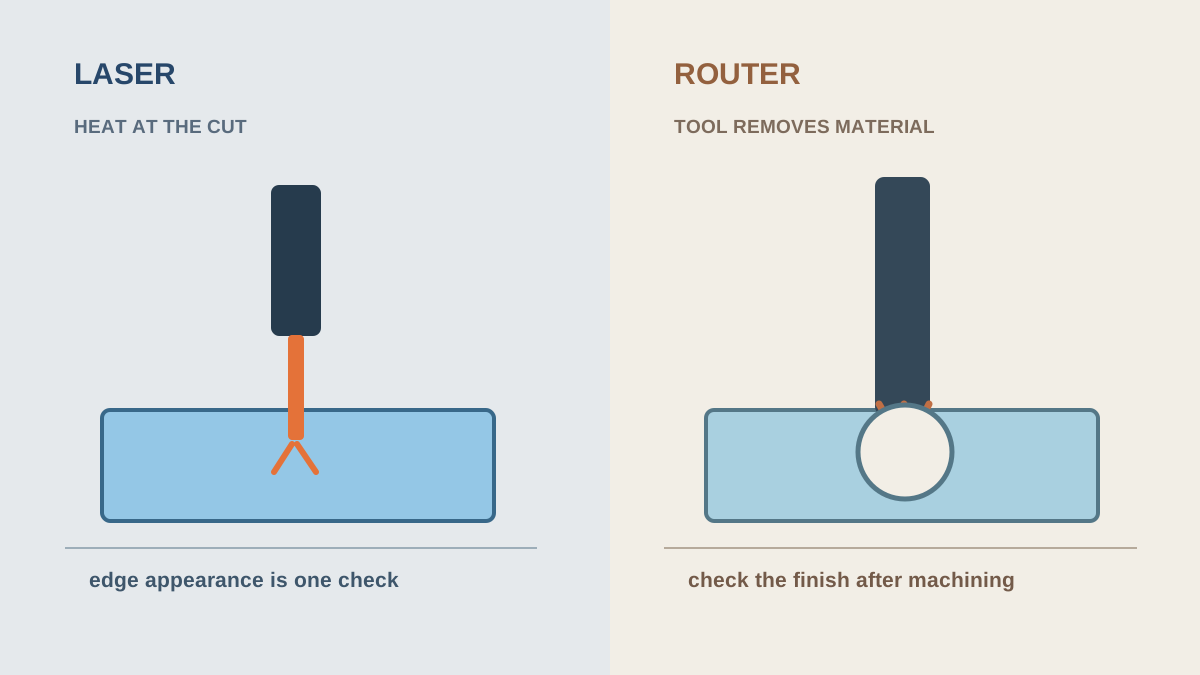
Fine outline, heat at the edge
Laser cutting can produce small details and a glossy-looking edge straight from the machine. Heat can leave stress there. If that edge will later be bent or cemented, its first appearance is only part of the assessment.
Slots, pockets, controlled geometry
CNC routing removes material with a rotating tool. Bit choice, feed, support and finishing affect the result. A routed edge on a clear display may need another finishing step.
A tight slot or small inside corner needs a realistic radius and tolerance. Artwork drawn with a perfectly sharp corner does not automatically become a workable physical part.
THE APPROVAL SAMPLE
Include the awkward detail
Send the fabricator the sheet type, thickness, exposed edges, joint locations and bend lines. Ask the sample to include the smallest cutout and the most visible edge, then carry it through any joining or forming that the production part will receive.