“Clear acrylic, 3 mm” sounds like a complete material description. For a display that must slot together, carry a logo and arrive without surface damage, it is only the beginning.
Two routes to a clear sheet
Acrylic sheet is often specified as PMMA. Cast and extruded describe production routes, rather than two universal quality grades. Cell casting forms individual sheets in a mould. Extrusion produces sheet continuously. The resulting materials can respond differently when a fabricator cuts, heats or joins them.
For its own products, ACRYLITE identifies tighter thickness tolerance as an advantage of extruded sheet, while cast sheet offers a wider thickness range and advantages in some machining applications. Those are useful starting points, not a substitute for the data sheet of the actual grade being quoted. Read the manufacturer’s comparison.
Compare the decisions that affect your part
| Project question | Why the sheet matters | What to request |
|---|---|---|
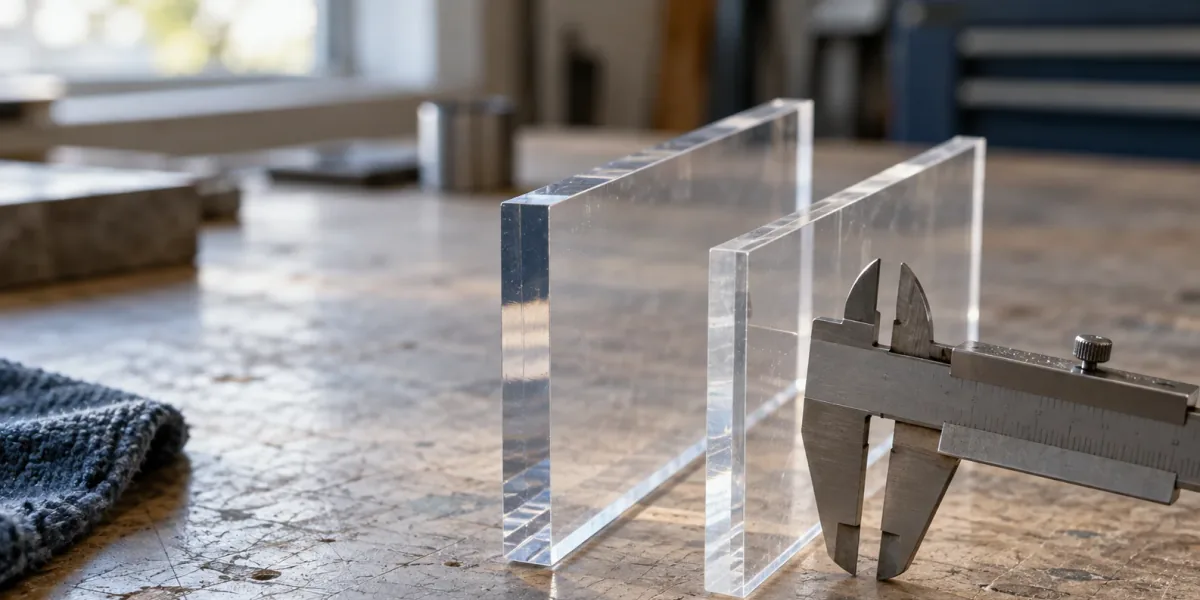
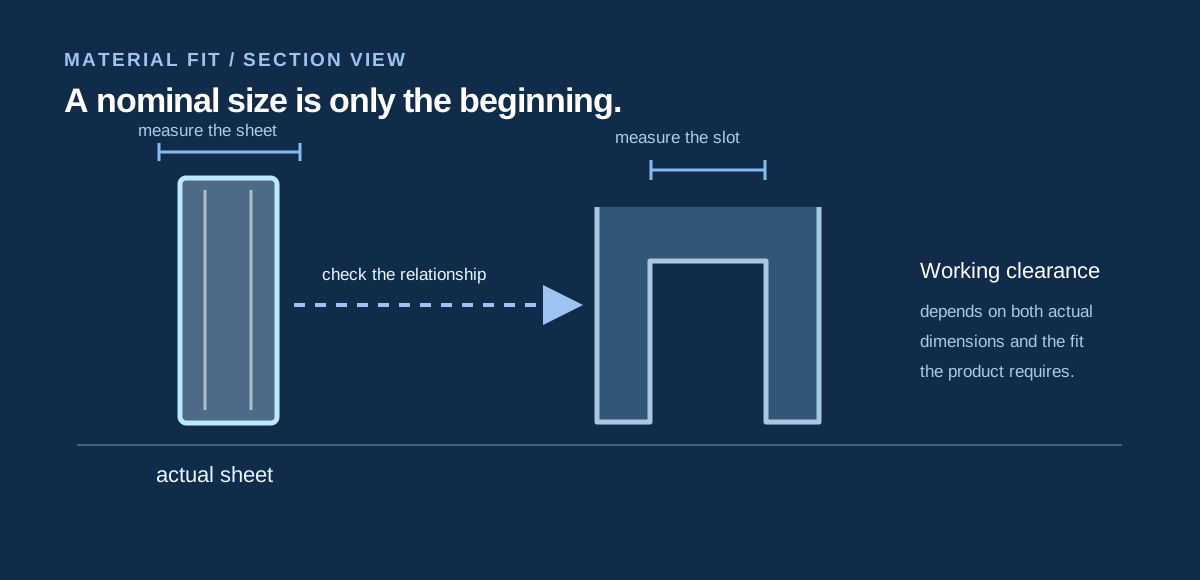
| Does a tab fit into a slot? | Thickness variation changes the fit. | Measured thickness range and a fit sample. |
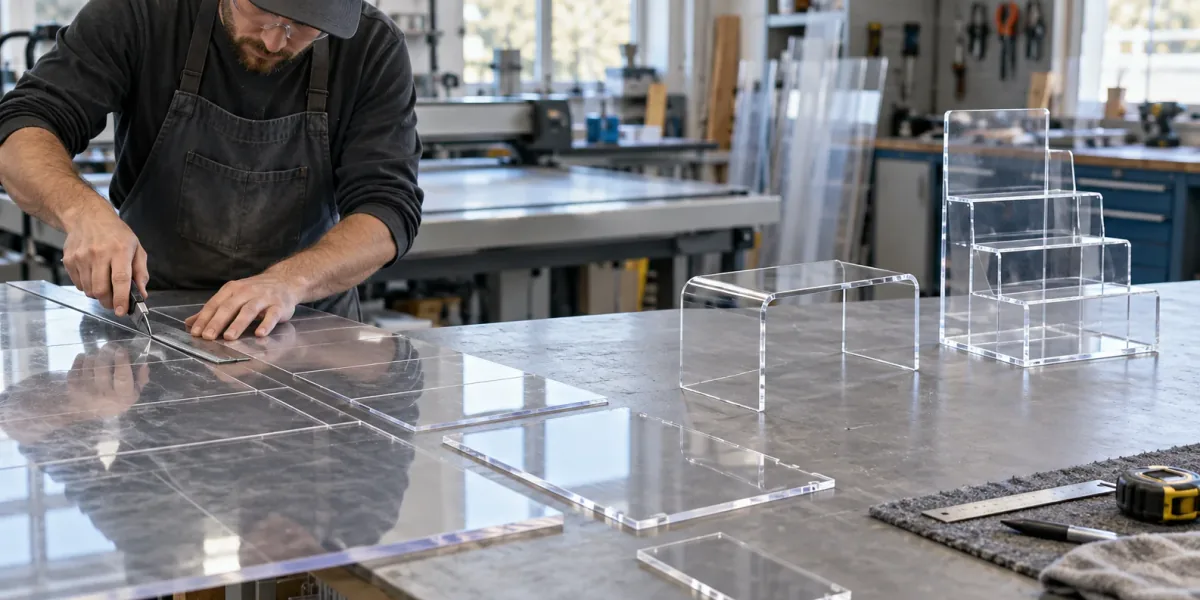
| Will an edge stay visible? | Cutting and finishing affect its appearance. | An edge sample made by the proposed process. |
| Will the part be bent? | The material and forming route must work together. | A formed sample, including the bend and adjacent faces. |
| Is color important? | Availability depends on grade, thickness and order scope. | A physical color reference in the intended thickness. |
A display-box example
Imagine a countertop organizer with removable dividers. Its important requirement is not simply “premium acrylic.” The dividers must slide into their grooves, remain upright during use and be removable without forcing them. A sample built from a different sheet batch might fit differently even when both invoices use the same nominal thickness.
Ask the supplier to identify the critical fit on the drawing. Review a complete assembly rather than only a loose flat sample. Try the intended products inside it, remove and replace the dividers, and check whether the finished edges feel appropriate for routine handling. These observations give the material choice a practical purpose.
Make the material brief specific
Record the sheet grade, color, nominal thickness and acceptable variation. Add the finished dimensions, exposed edges, expected contact materials and any parts that must fit together. If a specification is still open, mark it as a question rather than silently treating a reference photograph as the specification.
Finally, connect the approved sample to a drawing revision. If the supplier proposes a different sheet grade later, review what changes in fabrication and finished performance before accepting the substitution. The strongest comparison is between two defined production proposals for your part.