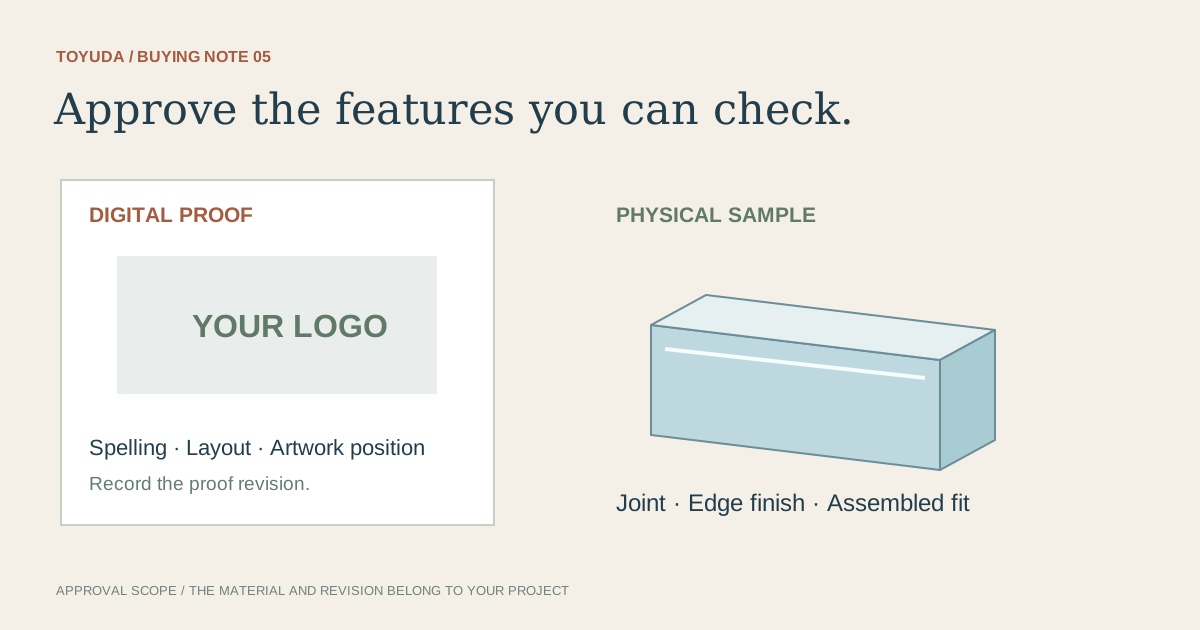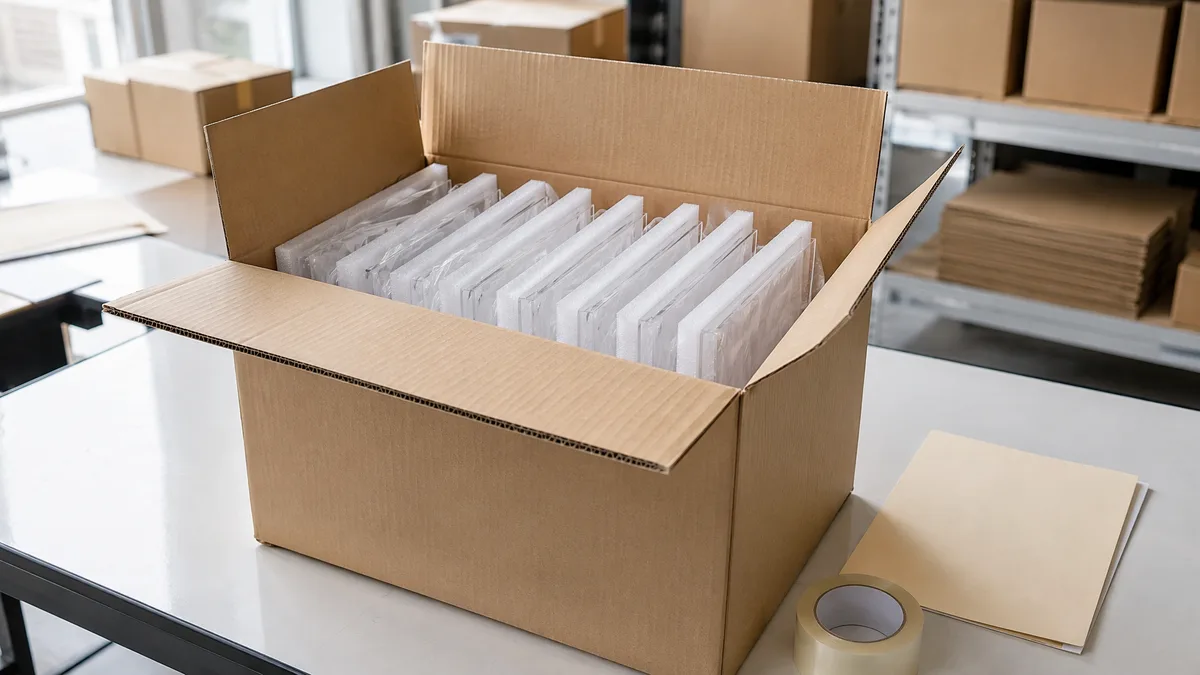
To buy a recycled acrylic display, name the parts that need recycled PMMA, set a minimum percentage and define the evidence you will accept. Approve the actual sheet grade on a finished sample before you release production.
What to compare in recycled PMMA sheet grades
Whether you are sourcing a single riser or custom acrylic stands for a store rollout, start by defining thickness, dimensions, finish, support and appearance under the intended lighting. Then add the recycled-content requirement to the same drawing and quote request.
Some cast acrylic grades are made from recovered methyl methacrylate monomer (rMMA). The label can describe the monomer feedstock, the sheet or a specific component. Ask the supplier to define the basis of the percentage. Compare how the proposed grade fits the project. Compare cast and extruded sheet for custom displays.
- Clarity and color. Review the proposed grade at the final thickness. Check clear panels against a white background and on the actual display. A grade marketed as clear can still look different next to an approved part.
- Consistency across orders. For a rollout or reorder, keep an approved reference and ask how lots are identified. Agree how much variation is acceptable across parts displayed together.
- Thickness, finish and stock. Confirm sheet dimensions, available thicknesses and finishes for the named grade. Check availability for the full order before confirming the production date.
- Cutting, bonding and decoration. Ask for a sample that includes the real joint, edge finish and print. The substrate can affect the appearance of white ink or reverse-printed artwork. Review front and reverse printing on acrylic.
How to verify recycled acrylic content
| Check | What to ask | What to retain |
|---|---|---|
| Recycled share | What percentage is claimed, on what basis, and how much is pre-consumer or post-consumer if specified? | A dated declaration or certificate for the quoted grade. Check the scope and validity of any certificate. |
| Traceability | How will the material supplied for this order be tied to the approved grade? | A lot reference, sheet label, delivery record or other agreed link between the grade and the order. |
| Appearance | How does the sheet look after the specified cut, polish, bend, bond or print? | An approved sample in the intended thickness and finish, viewed under the relevant lighting. |
| Availability | Can this grade be supplied in the required size, thickness and quantity? | A stock confirmation or lead time for the material and a written substitution rule. |
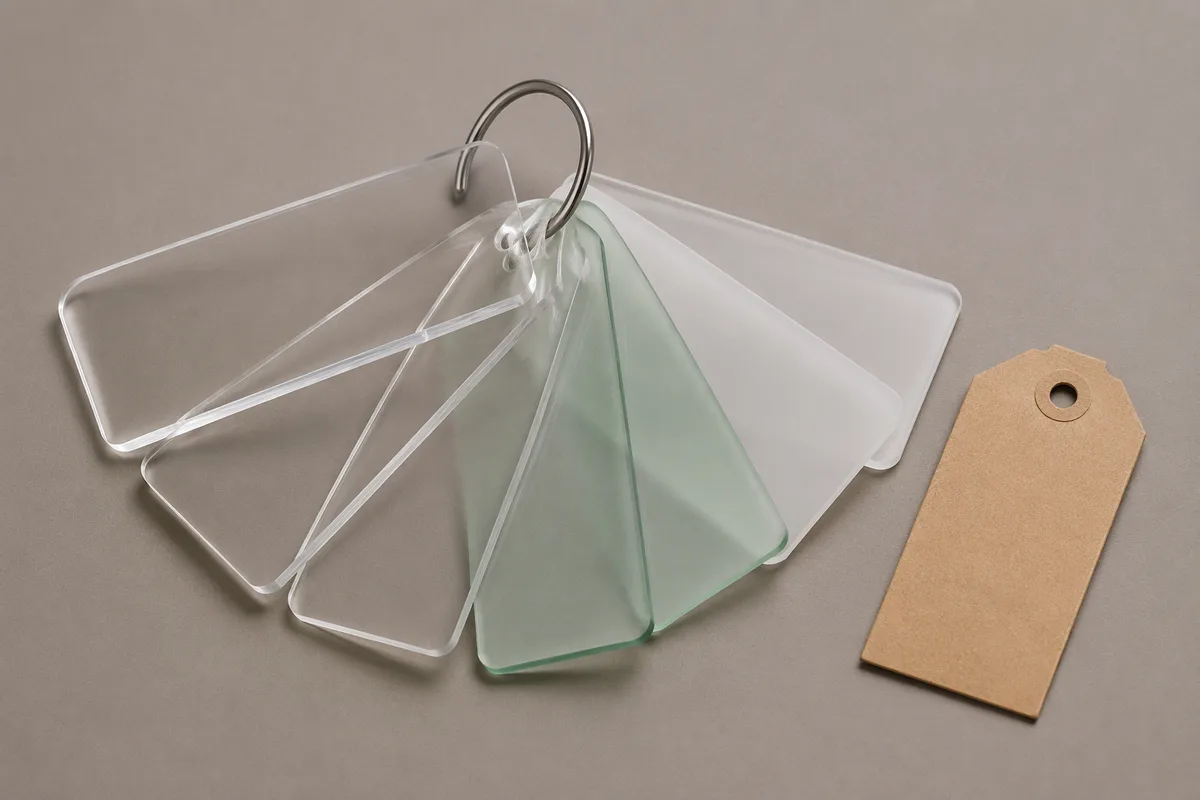
Recrylic is one commercial example of recycled cast acrylic. Its product specification lists standard finishes, colors and available thicknesses. Use a published spec to shortlist a grade and ask for documentation that covers the material offered for your order.
Choose which parts need recycled content
On a mixed-material display, a recycled acrylic sign face might be feasible while the base, fasteners or clear viewing panel use other materials. Mark the requirement on the bill of materials by part number. A statement about a recycled face panel describes that panel. A percentage claim about the finished display needs evidence for the finished display. For U.S. marketing, the FTC Green Guides explain how to qualify partial recycled-content claims.
Get the material declaration and stock position during quoting. Approve a fabricated sample, record the grade on the purchase order and agree when substitutions require fresh approval. For a multi-store program, also agree what happens if the same grade is unavailable for later runs. Use the custom acrylic sample approval checklist.
What to put in your recycled acrylic RFQ
- Mark the covered parts on the drawing and give the dimensions, thickness and intended use.
- State the minimum recycled share and the basis for measuring it. Specify post-consumer content separately if your program requires it.
- Set the color, clarity, edge finish and artwork targets. Include the sample or swatch that defines acceptance.
- Name the material documents you need, when you need them and how they should reference the grade and order.
- Specify who approves changes. Decide whether to wait for the specified grade, approve an alternative or split the material requirement by part.
For example, a retail riser brief might require the two visible side panels to use a named recycled-content grade, with tint approved against a finished sample. The base can be quoted separately. This gives both suppliers the same scope to price. See the full custom acrylic RFQ checklist.
Recycled acrylic display FAQs
Is recycled acrylic as clear as virgin acrylic?
Some recycled cast grades have high light transmission. Compare the grade data and inspect the intended thickness, polished edge and print under your display lighting.
Can only part of a display use recycled acrylic?
Yes. Identify the recycled components on the drawing and limit any public claim to the scope supported by the documentation.
Does recycled acrylic cost more?
Pricing depends on the grade, stock, required thickness, fabrication and order quantity. Compare proposals on the same specification and include the cost of evidence and sampling.
Can recycled acrylic be used outdoors?
Check the specific grade's outdoor and UV performance, along with the mounting and cleaning requirements. Review the outdoor acrylic checklist.
Request a quote for a recycled-content display
Send the drawing, target quantity and delivery date. Mark the parts that need recycled sheet and include the grade, recycled share and documents you require. We can use that brief to discuss material and sampling options with suppliers. Send a recycled-content project brief.
Browse custom acrylic displays to choose a starting design.