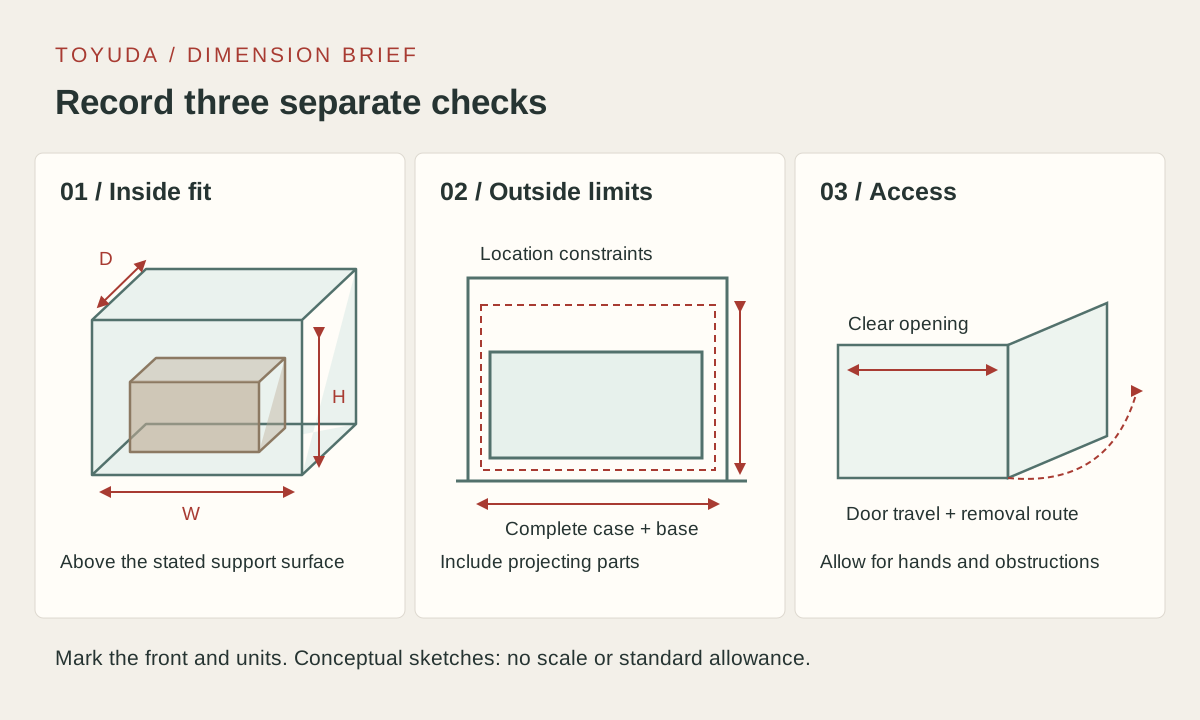
Specify a model display case by locating the complete model on the base, then checking usable cover space and the route for lifting it. Scale alone is not enough: mirrors, aerials, a plinth or the preferred viewing angle can change the envelope.
Position the complete model on a plan of the base
Start with the actual assembled model and any display plinth. Mark its full footprint, tallest feature and preferred front on a base plan. Record any detachable feature that will remain fitted during display. If several versions share a case, keep a separate envelope for each.
The existing measurement guide covers inside, outside and access dimensions. This guide adds the interface between the model position, the base and the removable cover.
Separate positioning from retention
Decide whether the model simply rests on a marked position, sits in a recess or needs a separately designed attachment. Record permitted contact areas and any restrictions from the owner or model supplier. Do not drill or clamp a valuable model on the basis of a generic case photo.
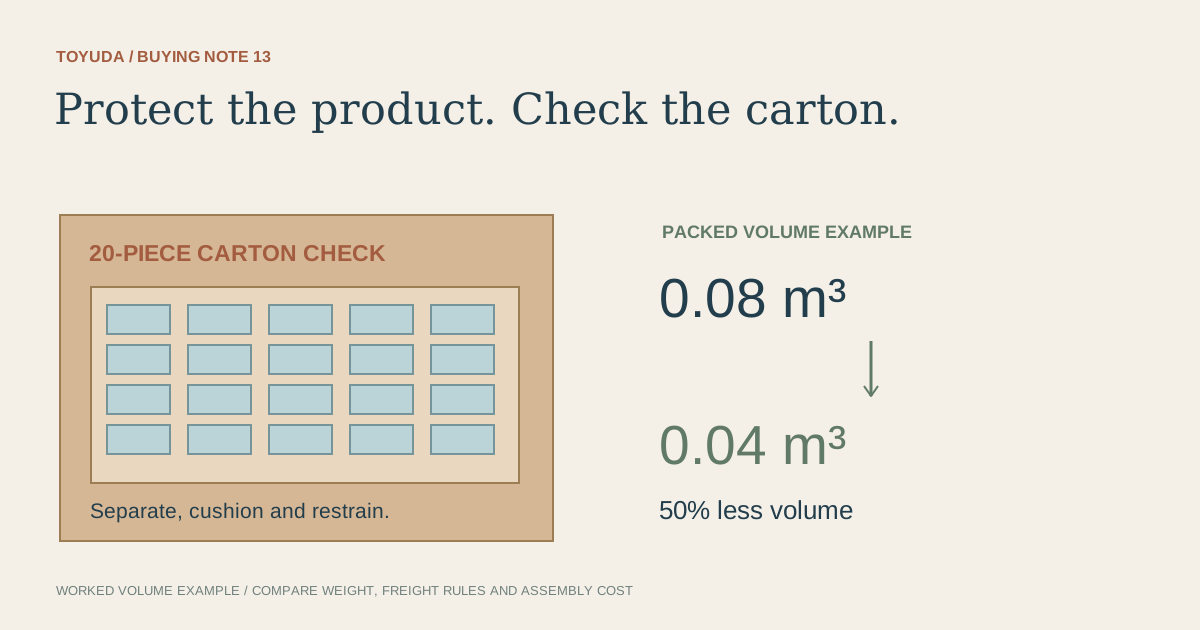
A location mark helps repeat the display position but does not restrain the model during transport. If the complete display will be moved, request a specific handling and packing review. Keep model attachment, cover location and shipping restraint as separate drawing features.
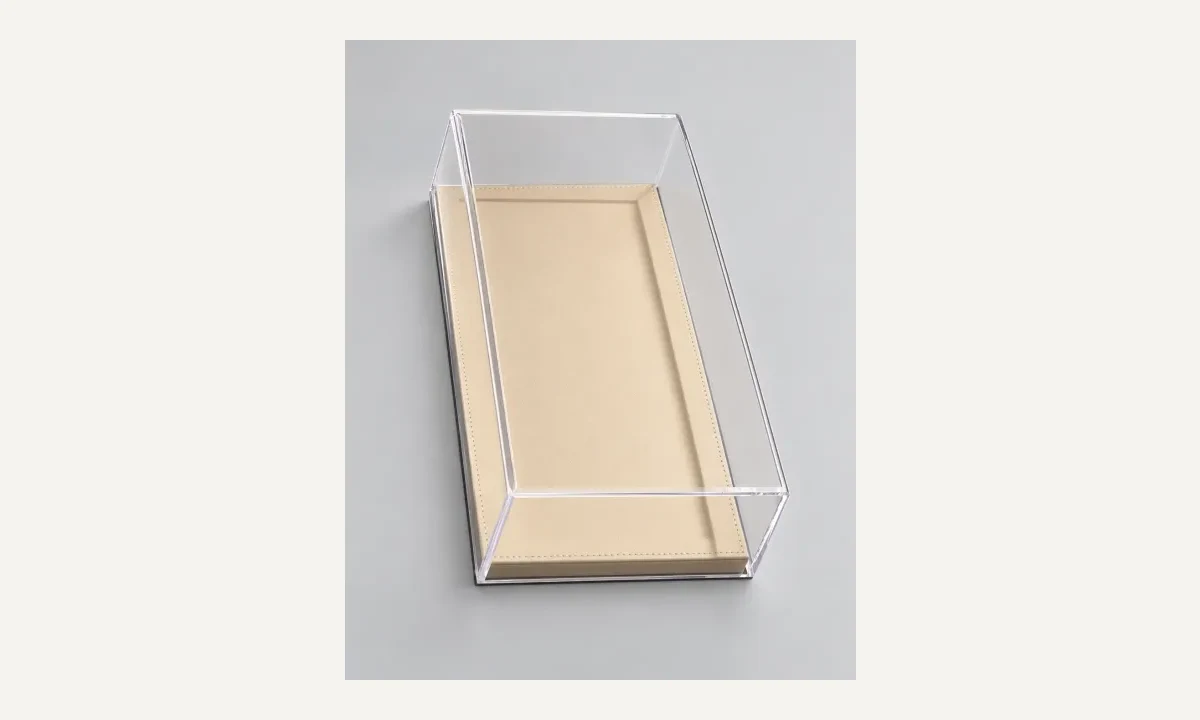
Confirm base materials and the cover-to-base seating arrangement with the supplier. The reference photograph shows a separate base; it does not establish a groove depth, fastening method or interchangeable base specification.
Check the cover path around projecting details
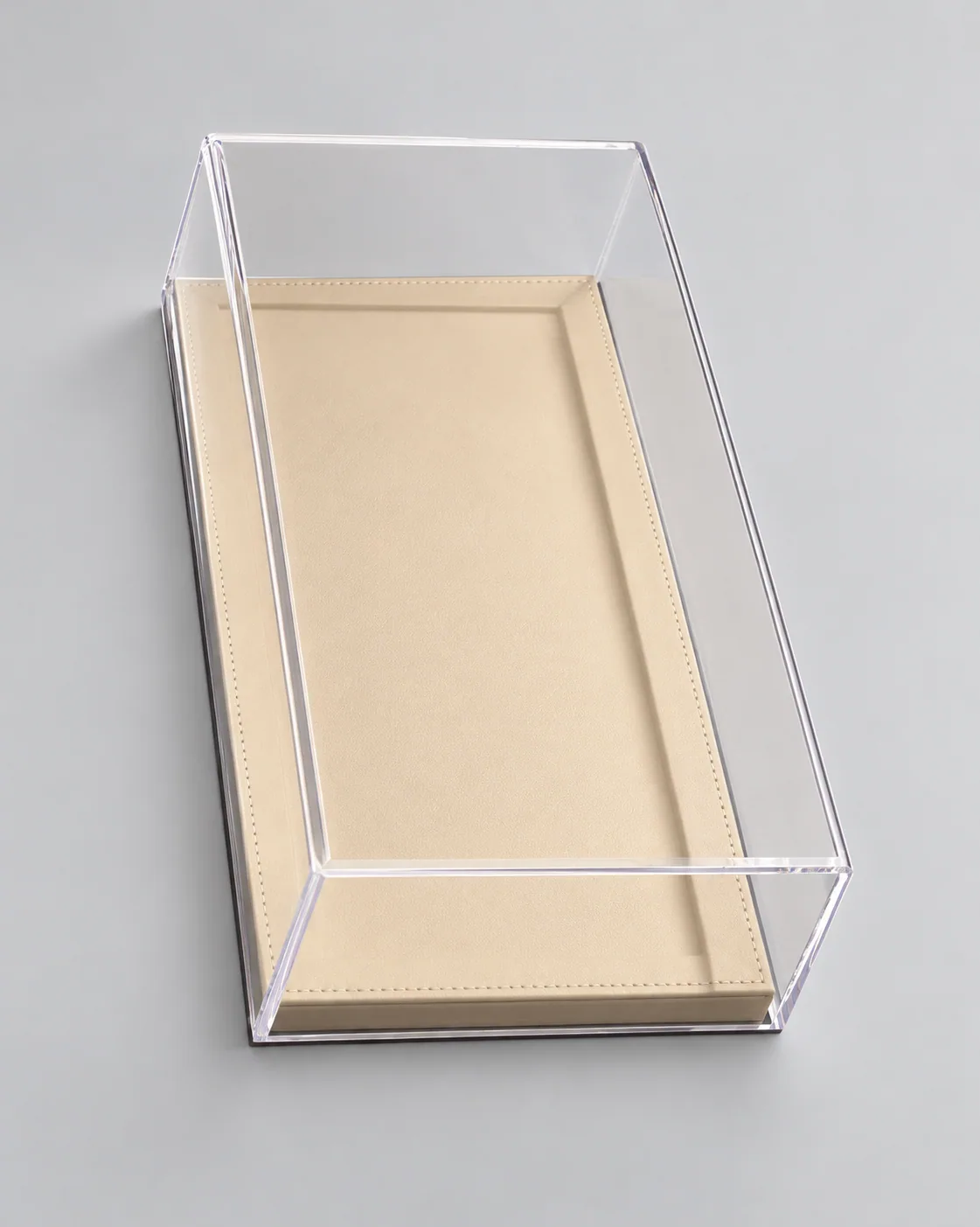
Show the cover footprint over the proposed model position. Then trace the full lifting and lowering route, including the hands used to grip it. Check shelves above, wall proximity and neighbouring displays.
Use a representative sample to observe whether the cover approaches projecting details as it moves. Record where the operator stands and whether the base or model must be moved first. A final inside clearance measurement cannot describe a tilted or obstructed removal path.
| Feature | Decision | Separate check |
|---|---|---|
| Model position | Front direction, footprint and permitted contact | Full assembled model envelope |
| Base | Resting, recess or proposed attachment | Material, finish and attachment authorization |
| Cover | Seating arrangement and grip | Complete removal/lowering path |
| Transport | Model inside or packed separately | Dedicated restraint and pack review |
Approve the display arrangement and packing scope
Keep a top and side photo of the agreed model position with the model ID, cover and base revisions. Record fit, visibility, seating and removal observations against agreed acceptance criteria.
If reduced dust exposure, UV filtering or a sealing function is required, ask for a separately specified construction and supporting evidence. The cover-and-base image proves none of those ratings. When shipping the case, agree whether the model travels inside or separately and how the cover and base are protected.
Download the project record
Use this blank record for the enquiry and agreed sample review. Mark unverified entries “To confirm” and retain the approved revision.
Acrylic Model Display Cases: Base, Position and Cover Removal
Model ID, assembled condition and complete envelope:
Preferred front and base position sketch:
Permitted contact and attachment restrictions:
Base and cover materials and drawing revisions:
Cover-to-base seating proposal:
Removal route, grip and nearby obstructions:
Sample observations and approval scope:
Model shipment condition and packing responsibility:
Download this blank project record (.txt). Mark unknown entries “To confirm” and retain the approved revision.
Specification questions
Does a locating recess make the case safe to ship with the model inside?
No. Display positioning and transport restraint need separate review for the actual model and route.
Can I size a case from model scale alone?
Measure the complete assembled model, projecting details, plinth and removal path.
Send the reference and project record. TOYUDA is a trading and supply-chain coordination partner and can coordinate specification and sample reviews with suitable suppliers.
Apply this guide to your project brief
Use the recorded interface and review conditions when comparing the proposed reference.
- Model display interfaces references
Confirm the actual construction, dimensions and approval scope for the project.
Prepare your quantity, artwork and delivery details before requesting a quotation.