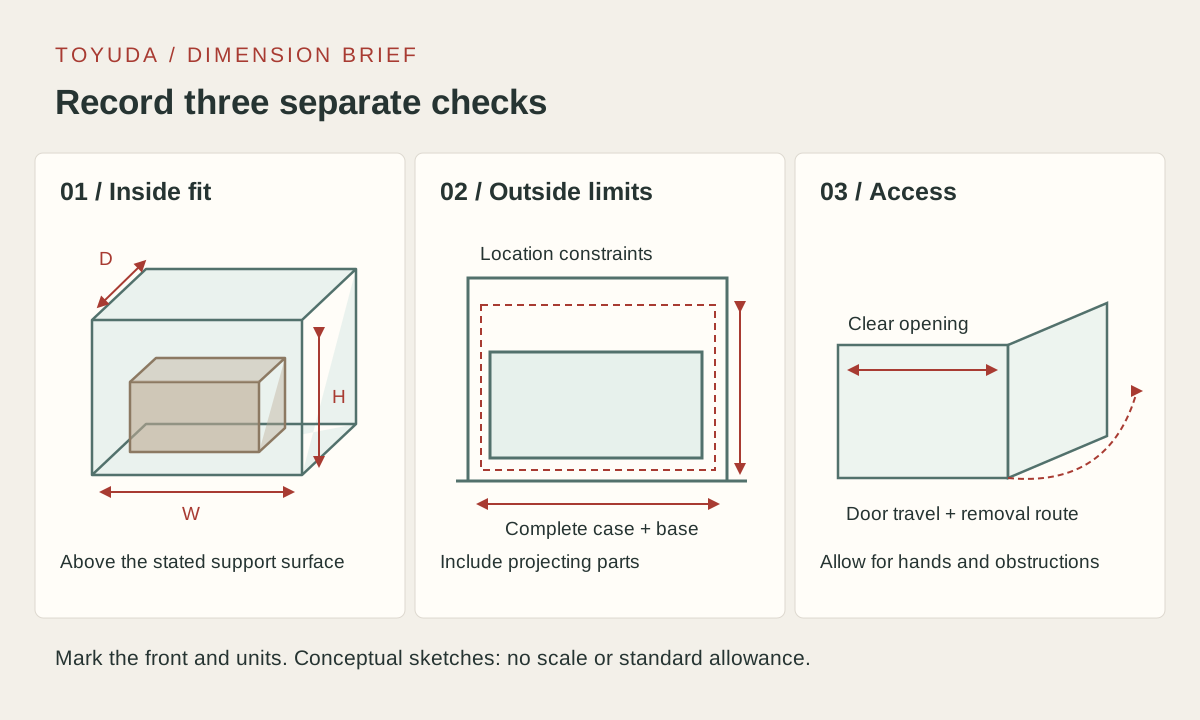
To size a custom acrylic display case, measure the complete object in its final display position. Record usable inside space, maximum outside size allowed by the location, and space for opening and removal; include the base and narrowest access opening on the drawing.
Separate inside fit, outside limits and access
Write down these three checks separately. A case can have enough room around an object once closed while its doorway is too small to get that object inside.
- Usable inside dimensions
- The clear width, depth and height available to the contents in the assembled case. Identify the supporting surface from which height is measured, and any inward-projecting lip, divider or hardware.
- Maximum outside dimensions
- The space the finished case may occupy at your location, including its base and projecting fittings. Mark the shelf edge, nearby wall and any overhead limit. This is a constraint from your site.
- Clear opening and operating space
- The narrowest unobstructed opening on the insertion route, plus space outside the closed case for the door, removable cover and your hands during handling.
Use one labelled viewing direction: W is left to right across the chosen front, D runs front to back, and H runs upward from the stated support surface. Put the units beside every set of measurements and mark the front on a sketch.
Measure the complete contents in display position
Record the largest occupied width, depth and height with every component that will stay inside the case. Measure the assembled arrangement, including an object's own stand, mounting board or insert.
A model may extend beyond its wheels at the mirrors or antenna. A pair of shoes occupies a different envelope when angled on a stand. For several items, arrange the full group and measure its outermost points. Photograph the arrangement from the front, side and above, with the measurement points marked.
Distinguish the object's stand from a base supplied as part of the case. State whether an insert sits on top of that case base or within a recess. Ask the supplier to show the resulting support surface and usable height on the assembly drawing.
Keep measured contents and requested inside space in different fields. Agree room for appearance, projections and handling for the actual design; there is no single clearance to add to every acrylic display case.
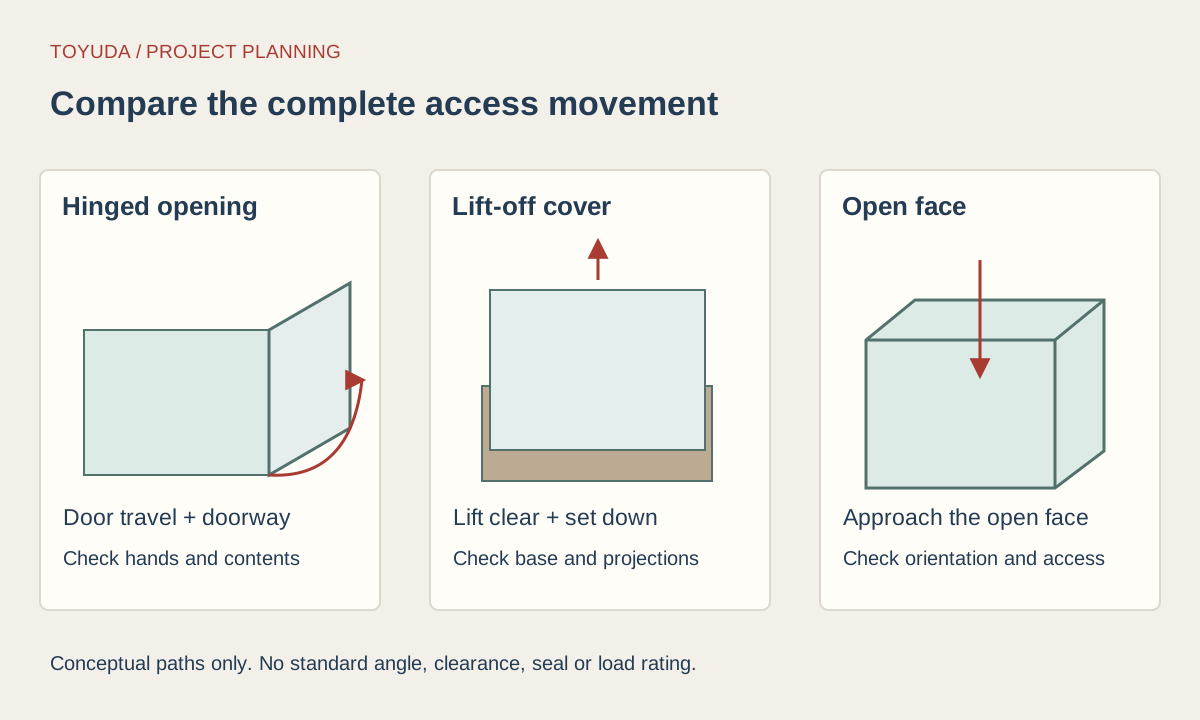
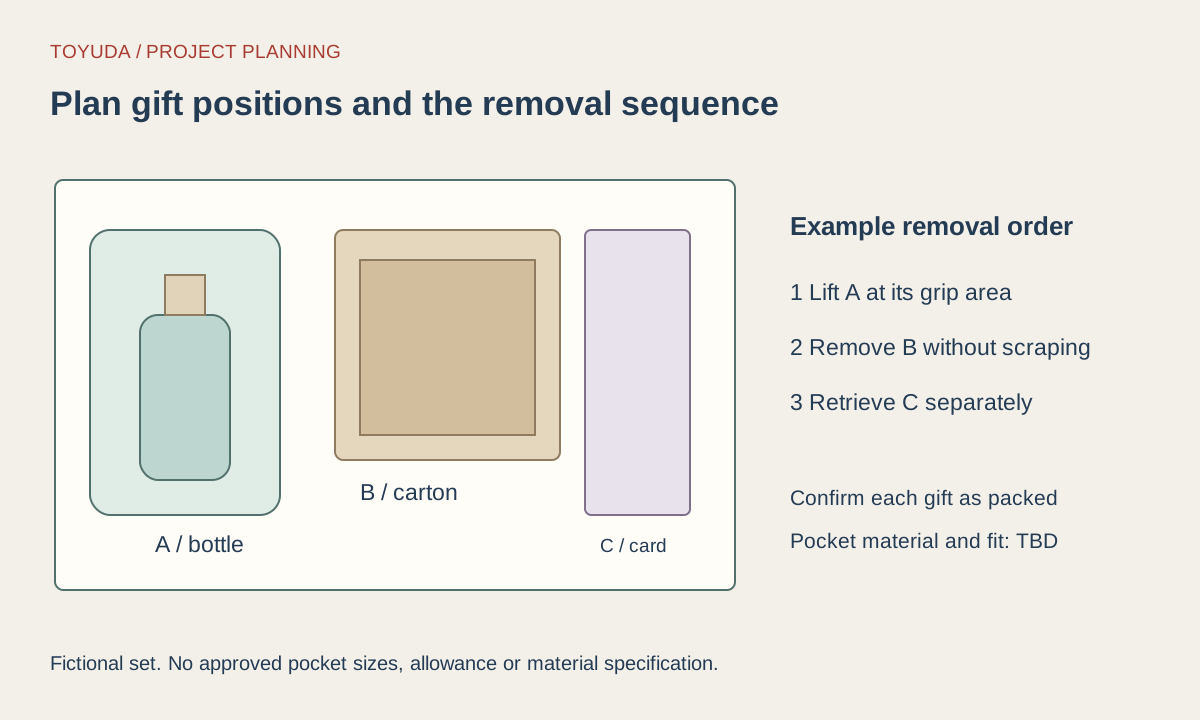
Once the dimensions are recorded, compare the hinged, lift-off and open-face access options. If gifts sit in fitted pockets, add the gift set and insert layout to the same drawing review.
Check the measurement points for your reference format
A removable cover, hinged case and open box need different access checks. Use the catalog references below to explain the intended format, then confirm the proposed construction on a drawing.
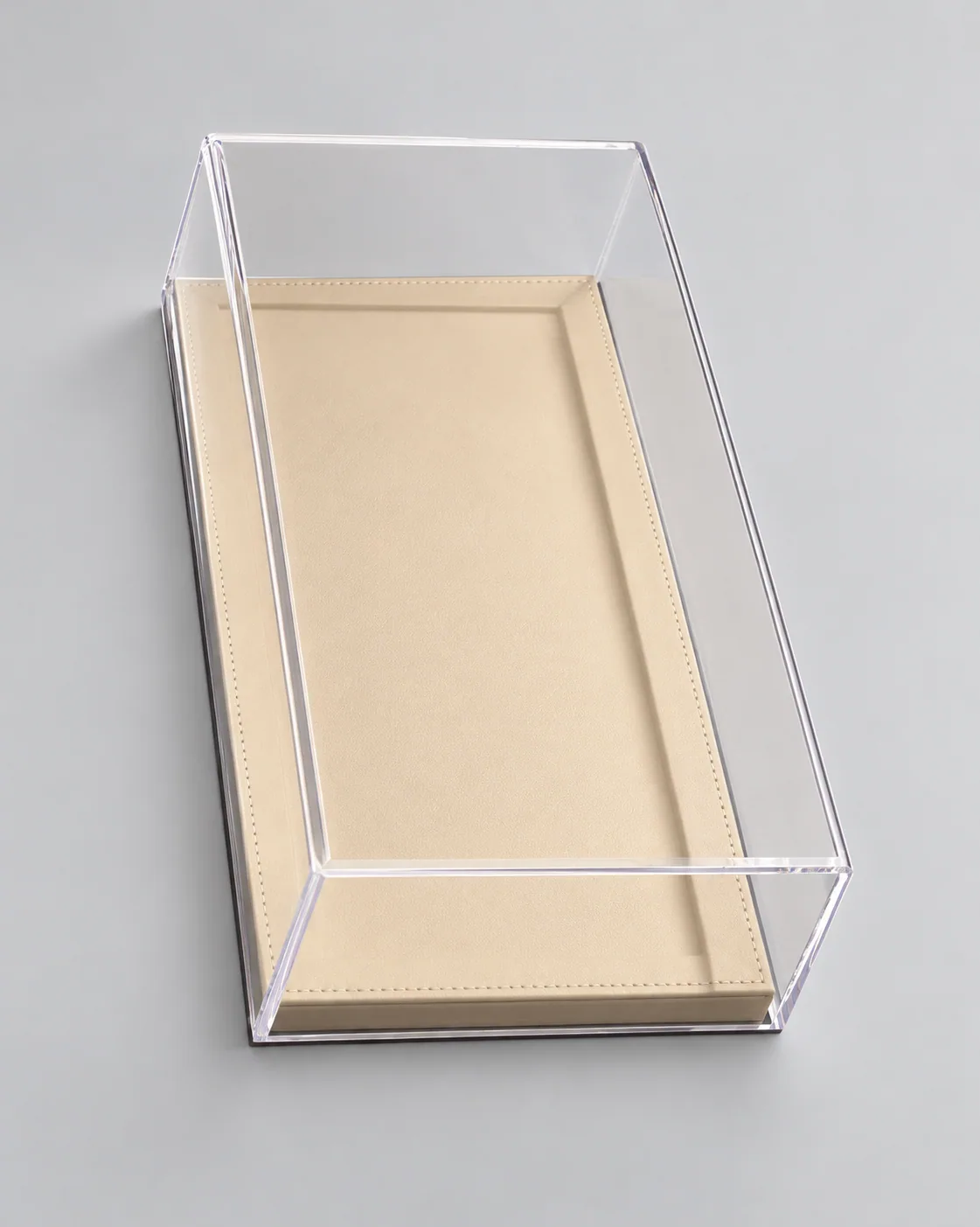
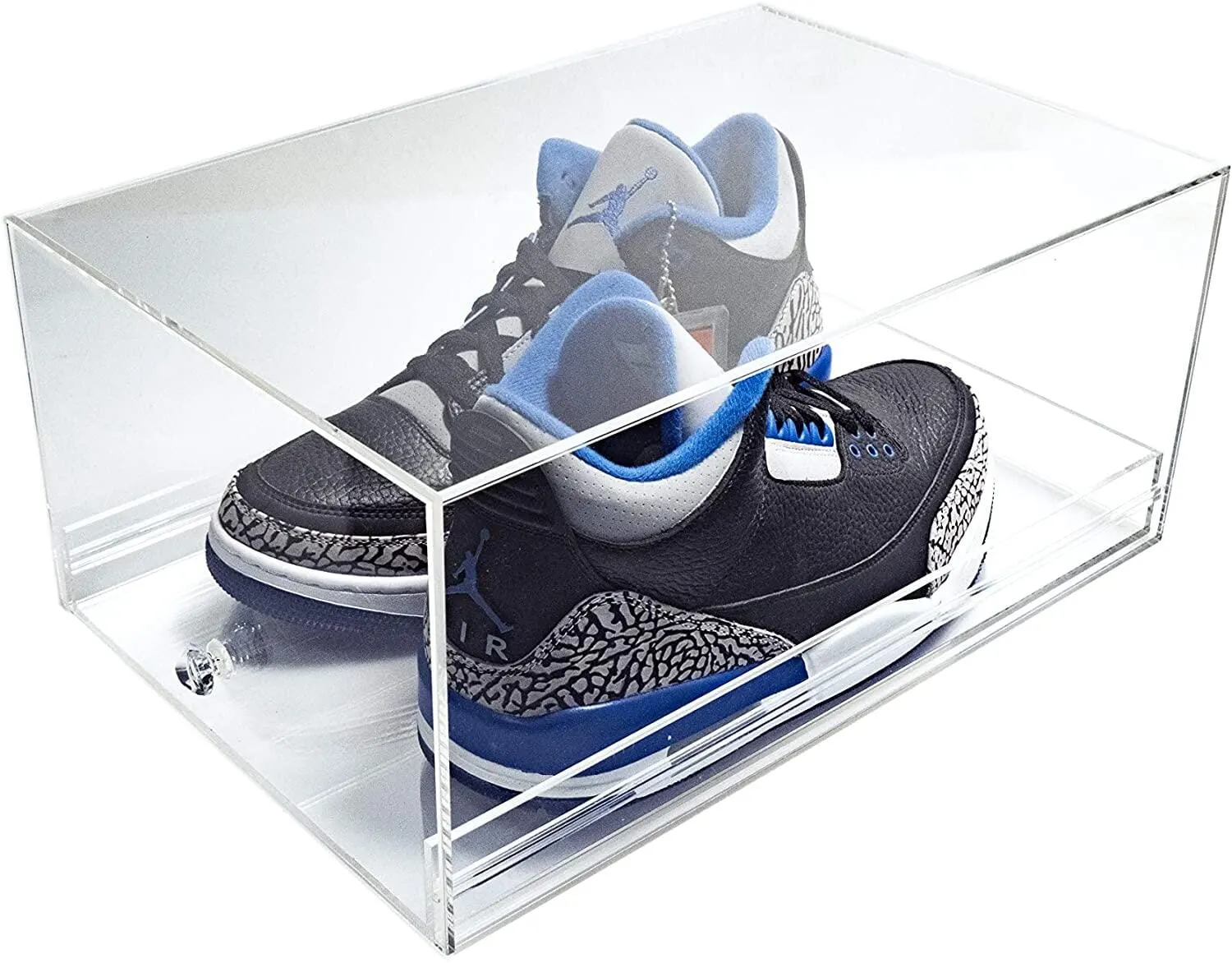
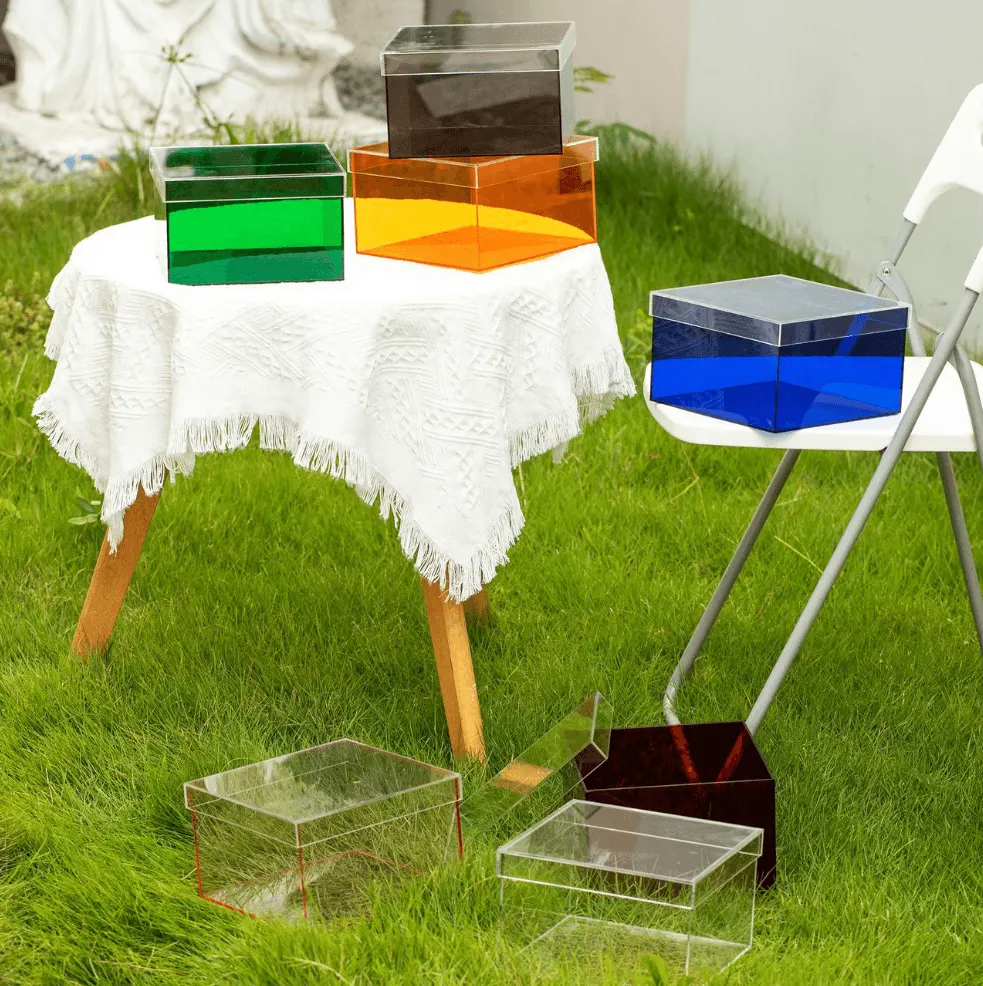
| Reference format | Inside fit to record | Access to check | Outside limit to show |
|---|---|---|---|
| Model-car display cover | The complete model and stand; the usable height above the proposed base. | The path for lowering and lifting the cover, including any base lip and delicate projections. | The base footprint and space above or beside the case to lift and set down the cover. |
| Hinged shoe case | The pair in its intended pose, with any shoe stands or inserts. | The narrowest opening with the door open; hinge and latch intrusion; the route for hands and shoes. | The closed case footprint plus the door's required opening space and nearby obstructions. |
| Colored open display box | The contents and any insert in the specified open-side orientation. | The clear opening and hand access for putting items in and taking them out. | The complete box footprint, overhead access and nearby displays. |
These are appearance and format references. Their photographs do not establish dimensions, base materials, load capacity or a standard allowance. An open box used upside down as a support needs a separate load and stability review.
A filled record can show what still needs confirmation
This fictional example records an object and a location constraint without guessing the case size. It is a worksheet demonstration, with no connection to a customer order or catalog specification.
| Field | Example entry |
|---|---|
| Orientation and units | Front marked on sketch A; W × D × H; millimeters (mm). |
| Measured contents | 240 × 120 × 90 mm, including the object's own stand; measured in final display position. |
| Maximum outside size at location | 300 × 180 × 160 mm available for the complete closed case and base. |
| Required usable inside size | To confirm after reviewing the contents and desired spacing. |
| Opening and handling space | To confirm at the location with the proposed opening method. |
| Next check | Review a dimensioned assembly drawing, then trial-fit the actual object. |
The difference between these two measured envelopes is not an approved wall thickness or clearance. The base, joints, hardware and access path still need space. If the contents and location cannot accommodate the proposed construction, revise the layout or format before approval.
Copy this dimension brief for your supplier
Fill in what you have measured and mark uncertain entries To confirm. Keep photographs and sketches under the same revision so the supplier can distinguish facts from requests.
DISPLAY CASE DIMENSION BRIEF
Project / revision / date:
Reference product or format:
Front / open side marked on sketch:
Units and dimension order (W x D x H):
Measured contents, including own stand / insert:
Measurement points and support surface:
Requested usable inside dimensions:
Maximum outside W x D x H at location:
Location sketch and nearby obstructions:
Case base / lid / opening requirements:
Minimum clear opening needed:
Space available for opening / cover removal / hands:
Contents weight and intended support / load:
Quantity by size or version:
Attached photos / sketch revision:
Still to confirm with supplier:
Download the blank dimension brief (.txt). Add artwork, packing and destination details using the custom acrylic RFQ checklist.
Confirm the assembly drawing, then trial-fit the sample
Approve a drawing that labels usable inside dimensions, complete outside dimensions and the clear opening. Agree the tolerances and how each dimension will be checked before production.
- Check the front, units, revision and height datum against your measurement record. Identify the base, inward projections and opening direction.
- Have the supplier show the proposed opening movement and removal route. Check those against the shelf, wall and overhead space at the location.
- Fit the actual contents and inserts in a representative assembled sample. Open, close, insert and remove them in the intended sequence; record the result and any revisions.
Dimensions are one input to thickness and support selection. Review box seams and fit separately, then record the agreed checks in your sample approval.
Two measurement questions
Can I send measurements in inches?
Yes. Label them clearly and retain the original values; 1 inch equals exactly 25.4 mm. Confirm one set of units and any rounding on the approval drawing.
Can I start with a reference photograph?
Yes, a photograph or sketch can start the discussion. Mark its orientation and known measurements; verify the remaining dimensions rather than estimating scale from the picture.
Send TOYUDA your dimension brief and reference images. As a trading and supply-chain coordination partner, we can discuss the proposed format and coordinate specification and sample review with suitable suppliers.
Apply this guide to your project brief
Send the completed dimension record with a format reference so the proposed inside fit, opening and outside size can be reviewed together.
- Acrylic boxes and display cases
Compare the intended enclosure with the contents, installation space and access requirements in your brief.
Prepare your quantity, artwork and delivery details before requesting a quotation.
Compare current product references
Use these formats to apply the guide to a specification. Confirm materials and sample requirements for your project.
- Custom Acrylic Display Case for Model Cars
Check contents clearance, lid access and protection of visible faces on an enclosed display.
- Clear Acrylic Shoe Display Boxes
Compare the hinged opening, usable inside space and handling of a clear display case.