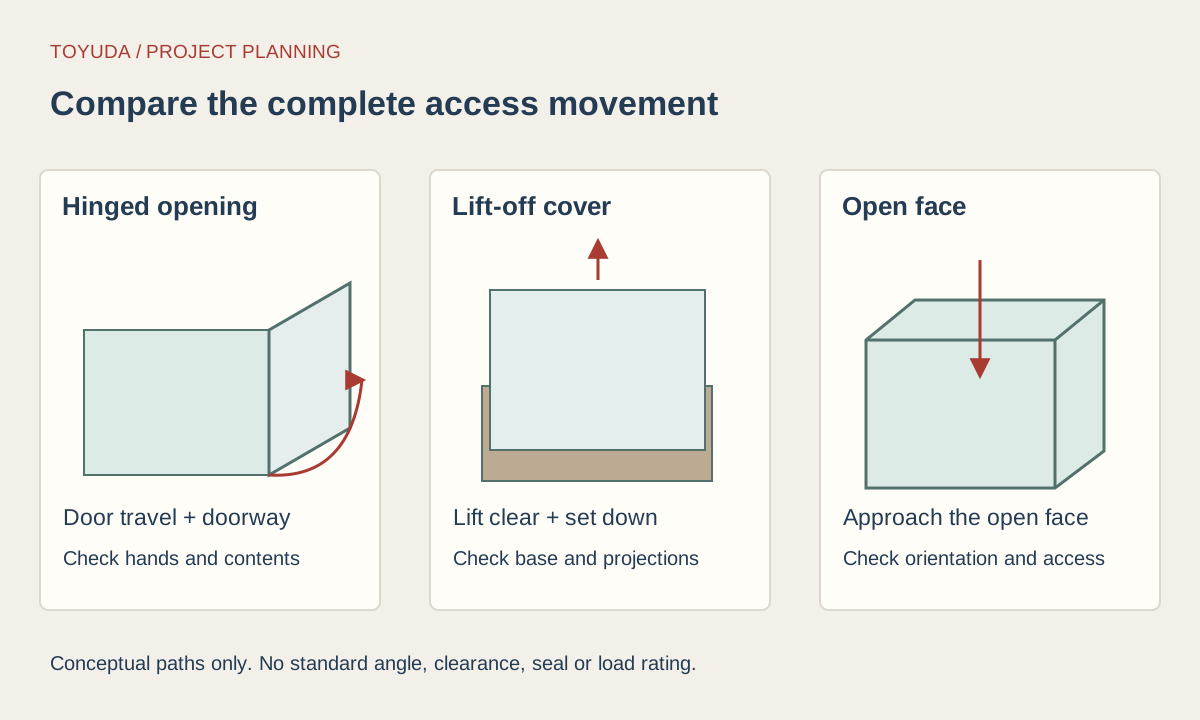
Choose an acrylic box opening around how the contents will be accessed and the space around the display. Compare the hinge movement, cover-removal path and open face with the actual object before approving a format.
Start with the access task, then compare acrylic box lid types
Write down who opens the display, what they remove and where they stand. A staff member changing a model between campaigns has a different task from a shopper reaching for a product throughout the day.
Describe the whole action: approach, open, grip the object, remove it, return it and close the display. Include hands, packaging and the object's own stand. If two people must handle a cover, put that requirement into the brief rather than assuming the counter team can manage it.
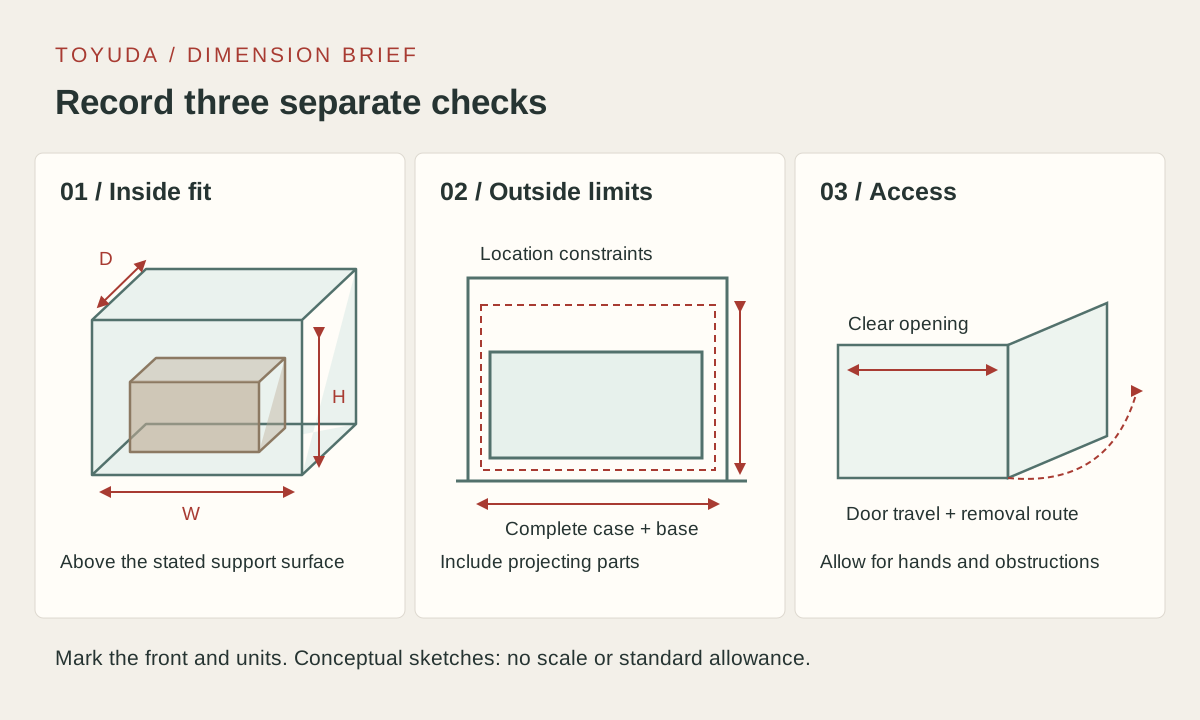
Keep dimensions and opening selection connected. The display-case measurement guide records usable inside space, outside limits and the narrowest clear opening. This guide helps you choose which movement that drawing needs to show.
A hinged opening needs room for the door and the object
A hinge keeps the moving panel attached, but the doorway and door travel still need separate checks. Show the hinge side, latch position, proposed opening angle and nearby obstructions on the drawing.
The hinged shoe display case is a useful format reference. Trial-fit the pair in its intended pose, including any stand. Then remove it through the actual opening with the door in its usable position. Internal width alone does not establish that shoes or hands can pass the frame and fittings.
Check what happens beside a wall or another display. A door that opens freely on a workbench may meet an obstruction at the location. For repeated access, ask the supplier how the selected hardware, panel and fastening arrangement should be checked during sample review. Agree the use conditions rather than inventing a universal cycle-life requirement.
A lift-off cover needs a removal route and a resting place
A separate cover can expose the contents after removal. It also needs space to rise clear of the object and a suitable place to put it while the display is open.
Use the model-car display cover to explain the appearance you want. Confirm the base interface and the direction in which the proposed cover comes off. An antenna, mirror or projecting display stand can obstruct that path even when the closed cover has enough usable inside space.
Draw both the closed arrangement and the handling position. Show any overhead shelf and the support used for the removed cover. A removable cover does not by itself establish magnetic retention, a secure carrying connection, a dust rating or a seal. Put any such requirement into a separate specification for supplier review.
An open face suits direct access when enclosure is unnecessary
An open box removes the lid-opening action. It leaves the contents accessible through the designated open face, so that direction and the intended handling need to be clear.
The colored open display boxes provide an appearance reference. Specify whether the open face points up, forward or in another reviewed direction. If a box is inverted to support products, the use changes: the supporting panel, actual load and stability need a separate review.
Open access also changes the exposure of the contents and the cleaning task. Discuss the environment and the required care routine. Choose an enclosed alternative if enclosure is a project requirement, then define how that enclosure must perform; a photograph cannot establish protection against dust or liquid.
Compare the same open–remove–return–close sequence
Use one real object and one location for the comparison. Record what blocks each movement rather than ranking lid names in the abstract.
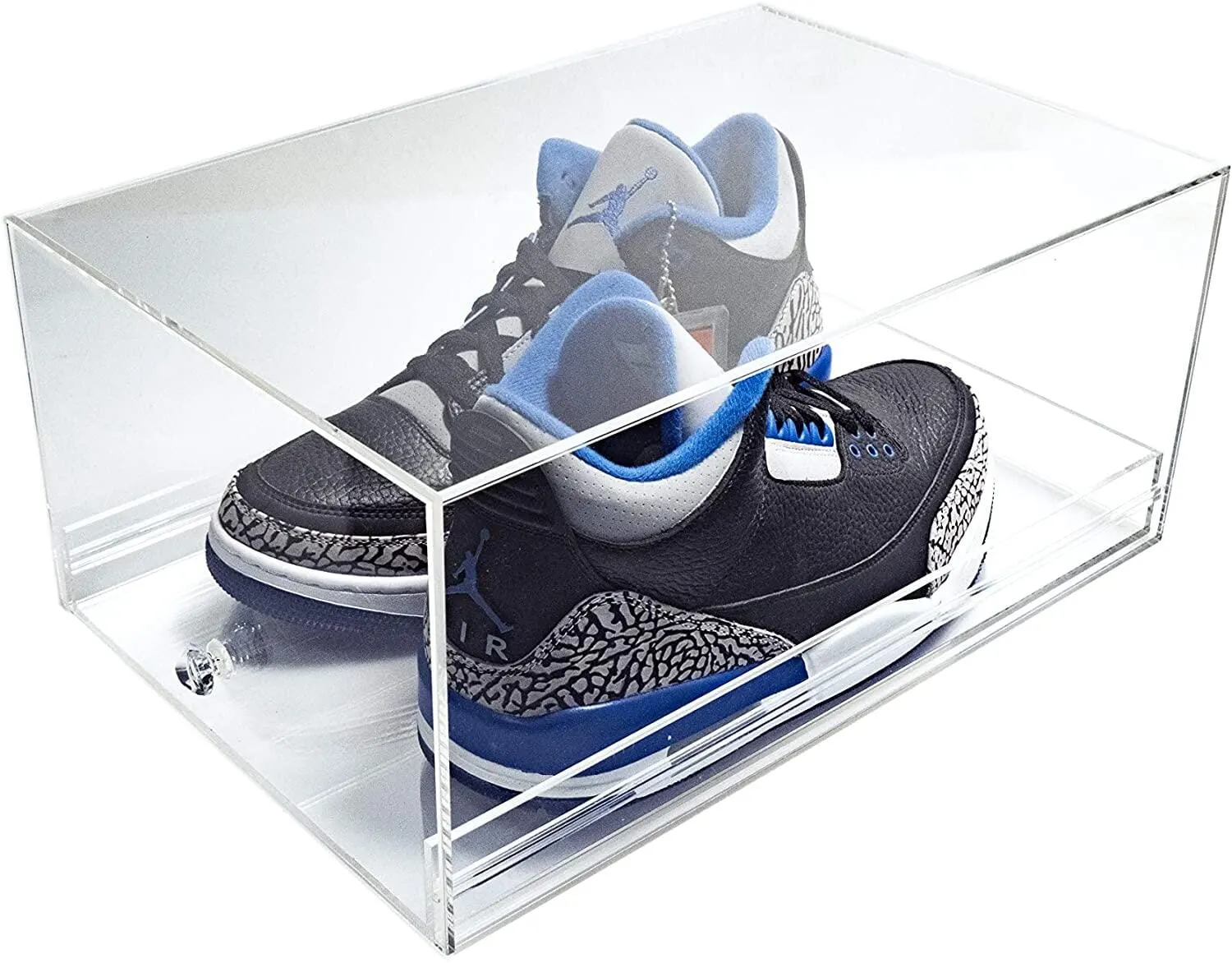
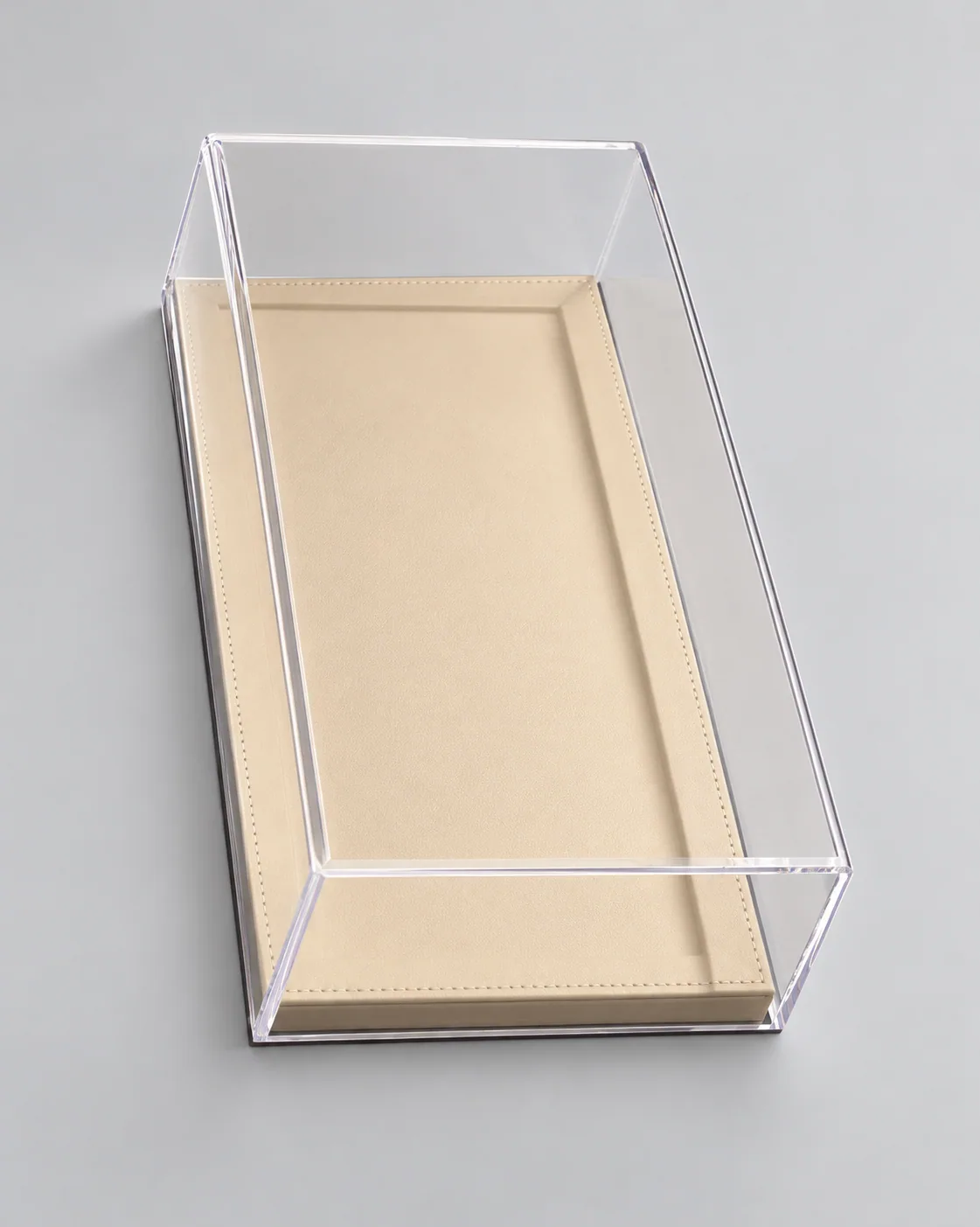
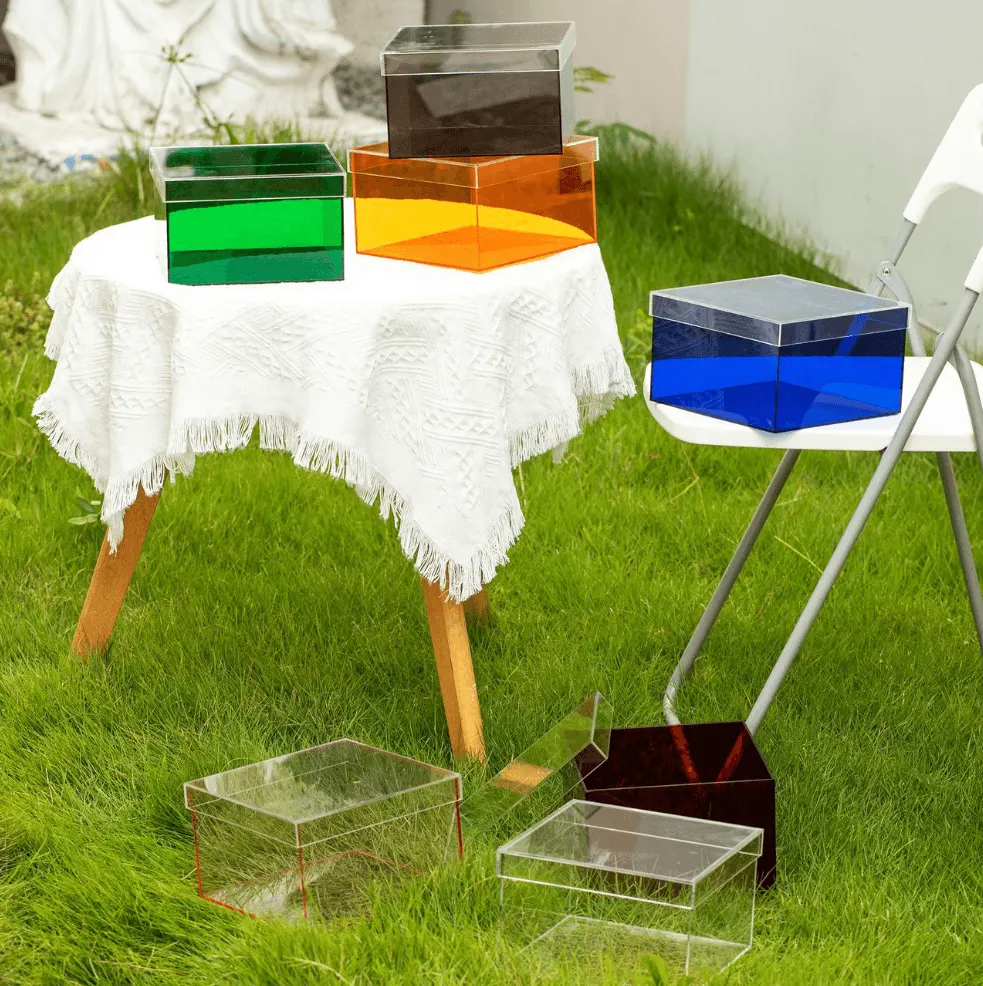
| Format | Movement to draw | What to trial-fit | What remains separate |
|---|---|---|---|
| Hinged | Door travel and clear doorway | Hands and contents passing hinges, frame and latch | Hardware suitability, retention and any protection requirement |
| Lift-off | Cover rising clear and moving to its resting place | Cover clearing the base and all projections | Base construction, lifting method and any retention |
| Open face | Approach and withdrawal through the intended face | Grip, inserts and nearby products | Exposed contents, care and support if used as a plinth |
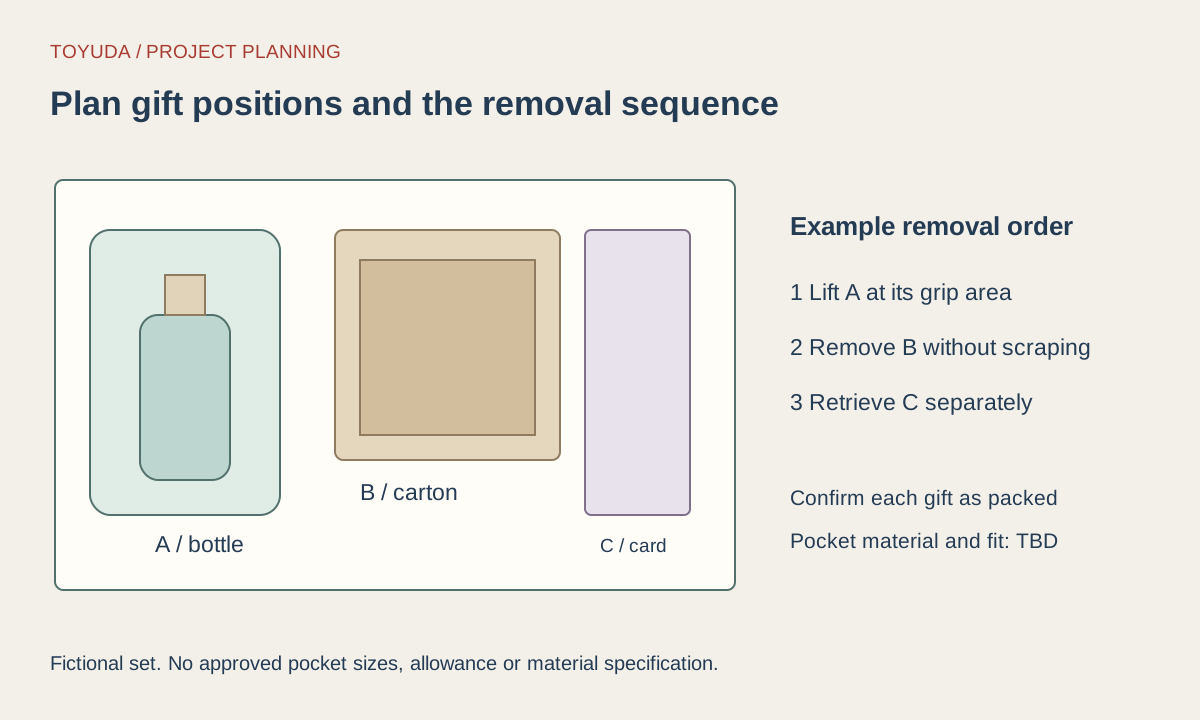
If gifts sit in fitted pockets, add the gift-insert layout to the same access test. Removing the lid and extracting an item from an insert are different movements, and both need to work.
Record the movement that the sample must demonstrate
Ask for an assembly drawing and a representative sample that demonstrate the agreed sequence at the intended location. Photograph or record the check under one revision.
Opening trial record
Project / revision / date:
Reference format and opening direction:
Actual contents and their orientation:
Closed outside limits:
Narrowest clear opening:
Door / cover movement and nearby obstructions:
Grip and removal route:
Place for a detached cover:
Check result and unresolved points:
Reviewer and next action:
Download this blank project record (.txt). Mark unknown entries “To confirm” and retain the approved revision.
Use the sample approval record to distinguish what passed from what still needs revision. An appearance approval alone does not settle opening fit.
Two questions about acrylic box openings
Does a separate lid mean a magnetic closure?
No. A separate lid describes a removable part. Confirm the actual retention method, base interface and fittings on the proposed drawing.
Does every acrylic display box include a lid?
No. The catalog includes open formats as well as enclosed cases. Identify the selected reference and the opening you require.
Send your opening requirements and reference images with the contents, access frequency and surrounding space. TOYUDA can coordinate a specification and sample review with suitable suppliers.
Apply this guide to your project brief
Use the access trial to define the opening and handling requirements of the proposed case.
- Acrylic boxes and display cases
Compare the intended opening with the actual contents and surrounding space.
Prepare your quantity, artwork and delivery details before requesting a quotation.
Compare current product references
Use these formats to apply the guide to a specification. Confirm materials and sample requirements for your project.
- Clear Acrylic Shoe Display Boxes
Compare the hinged opening, usable inside space and handling of a clear display case.
- Custom Acrylic Display Case for Model Cars
Check contents clearance, lid access and protection of visible faces on an enclosed display.