Plan custom acrylic gift box inserts around the complete gift set, including packed dimensions, weight and the route for removing each item. Confirm the usable interior, opening and any carrying requirements with the actual contents.
Build an inventory before drawing the insert
List every item that will be presented in the box, including retail sleeves, cards and accessories. Measure them as they will arrive for assembly; a bare bottle and the same bottle in a carton need different pockets.
Give each item a reference, quantity, occupied dimensions, weight and intended orientation. Mark delicate caps, decorated faces and any area that should remain visible. Use photographs with the measurement points labelled. The inside-space measurement brief helps distinguish the contents envelope from the proposed case dimensions.
Decide who supplies and packs the gifts. If their final packaging is still changing, identify that uncertainty before an insert is approved. Keep the gift list and insert drawing under a shared revision so that a later bottle or sleeve change reaches the person reviewing the fit.
Arrange the presentation and the removal sequence together
Place the intended items on a full-size paper layout before deciding pocket positions. Check what the recipient sees when the box opens and how their fingers reach each item.
A pocket may locate an item while making it difficult to grip. Discuss the exposed area, finger access or another proposed removal feature with the supplier. The shape and depth of that feature depend on the gift and insert construction; there is no universal pocket allowance to add to every item.
Keep heavy and fragile items in view during the layout review. Record the contact points and the orientation in which the complete set will be handled. A presentation arrangement alone does not establish resistance to movement during delivery. The insert and the transport pack need their own agreed review.
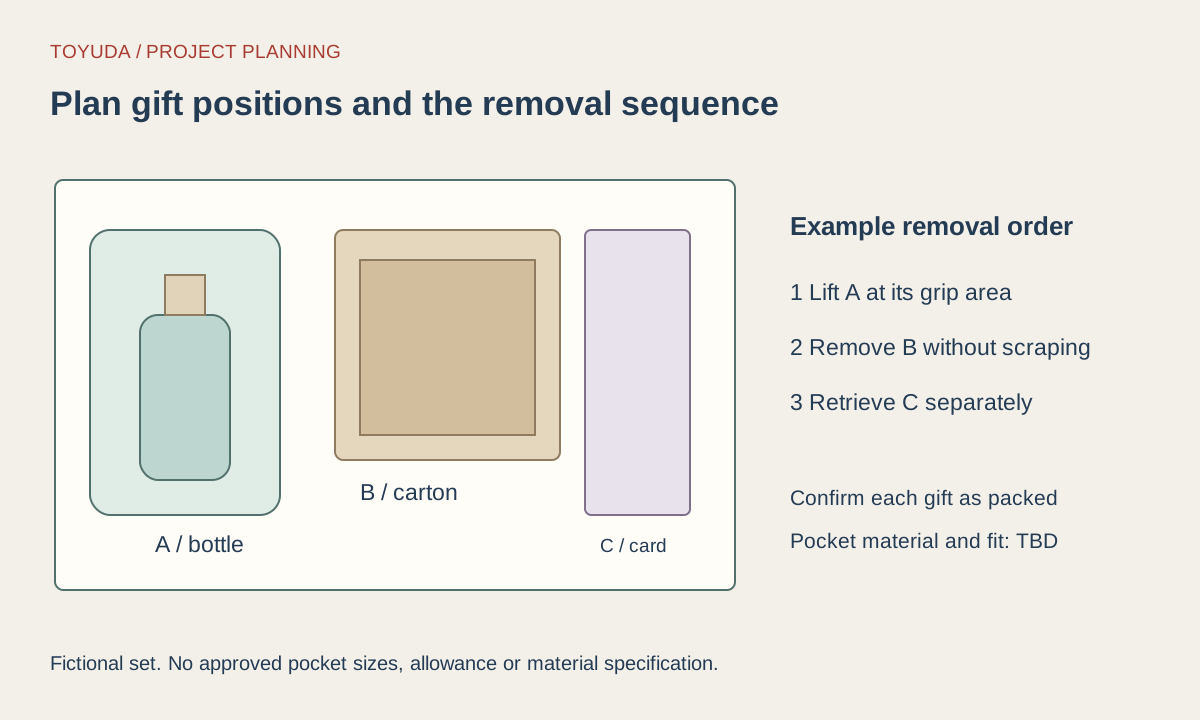
| Item reference | Presentation input | Fit and removal check | Still to confirm |
|---|---|---|---|
| A — bottle | Use the complete retail-packed bottle | Grip the intended body area without loading the cap | Final dimensions, mass and pocket construction |
| B — carton | Show the front artwork on the layout | Lift it without scraping neighboring items | Packed dimensions and contact surfaces |
| C — card | Identify whether it is visible on opening | Remove it without dislodging the gifts | Card size, position and whether it has a separate pocket |
Check how the selected gift box changes the layout
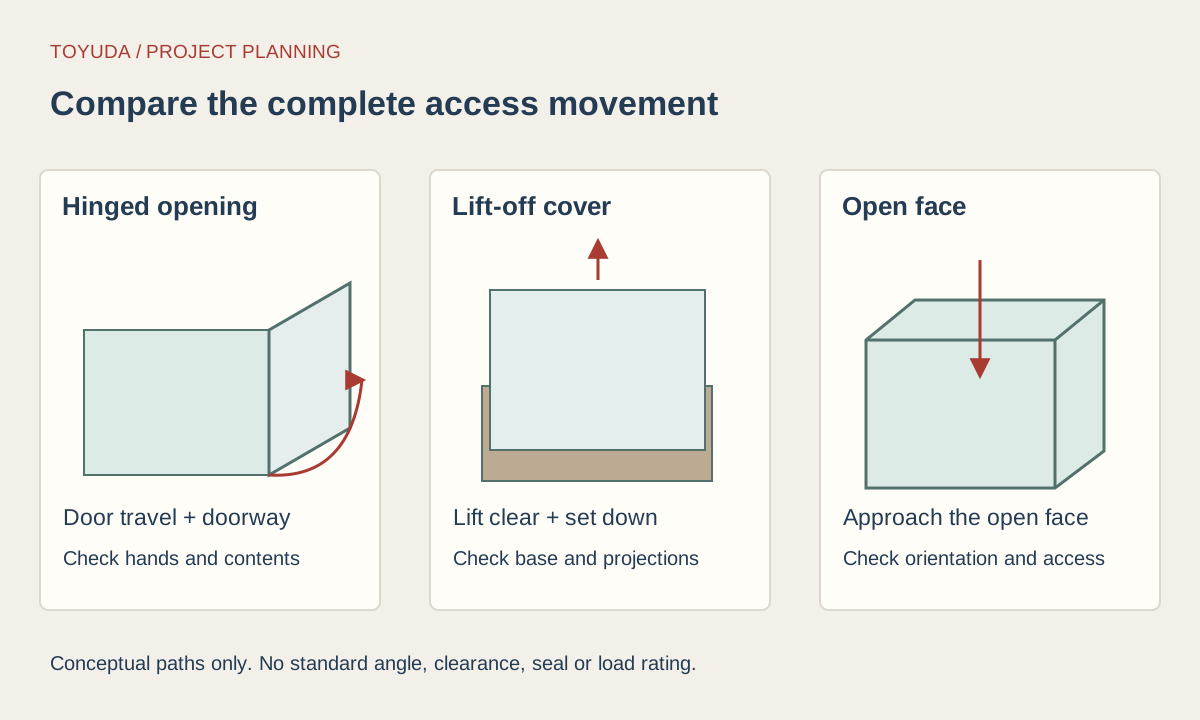
A book-style opening and a handled box create different access and handling questions. Use a format reference to define the task, then request the construction details that the picture cannot establish.
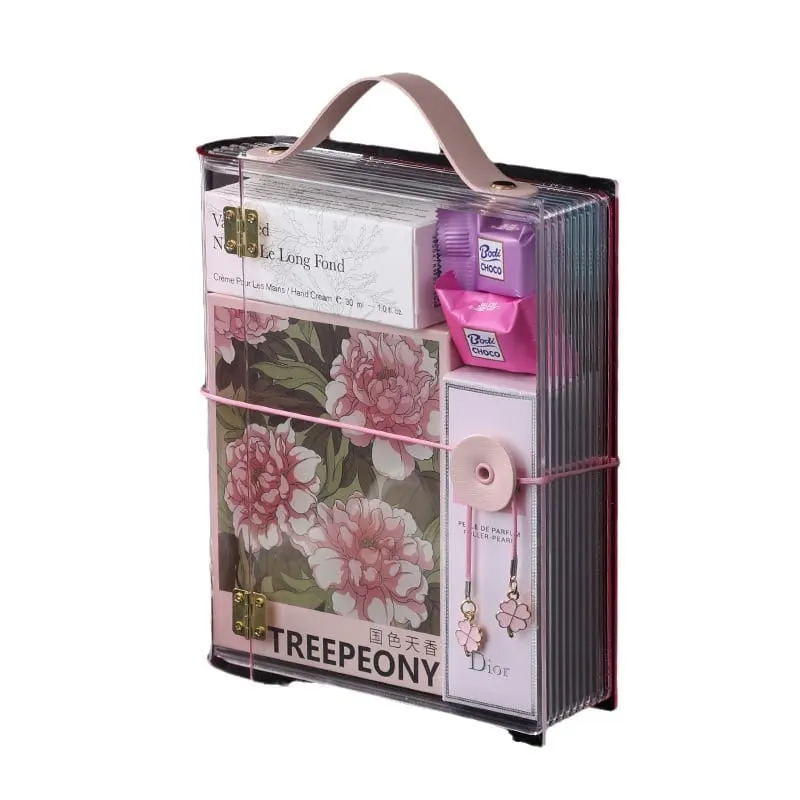
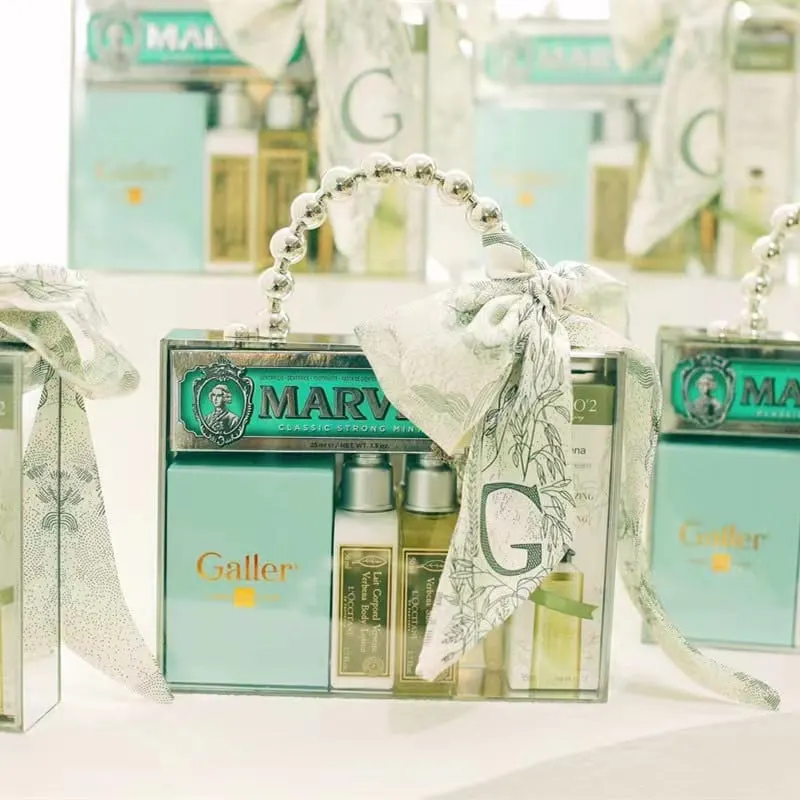
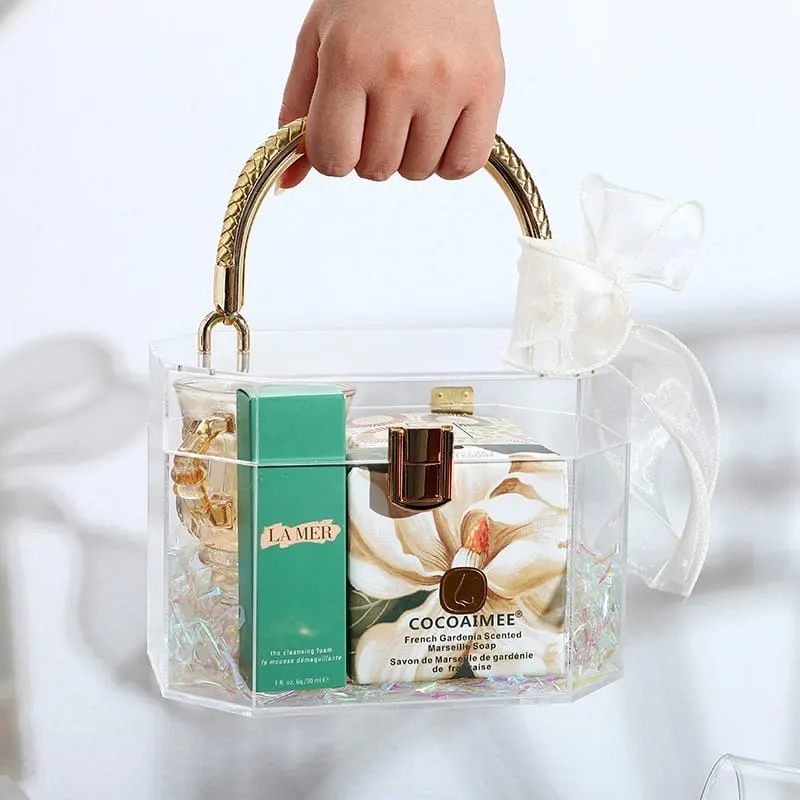
For a book-style gift box, check the opening movement, usable depth and any closure intrusion with the complete insert installed. A cover that closes over an empty box may press on a gift or its packaging after assembly.
For the chain-handle reference, record the full set weight, handle attachment and intended carrying orientation. For a rounded-handle reference, also show the grip opening and whether the gifts obstruct access. A decorative handle does not establish a carrying-load rating.
Compare the body, lid covering and handle materials separately. A leather-look or woven-look appearance does not identify the actual material. The gift-box style discussion record documents reference selection and sample requests; it does not prove this fictional insert was produced or delivered.
Specify the insert's job before naming a material
Describe what the insert must locate, display, separate and release. Ask the supplier to propose a construction and material for those requirements and identify the actual contact surfaces.
A soft appearance, a cut pocket or a clear divider can suggest different approaches, but none establishes suitability for every coating or gift. Confirm material identity, finish, attachment and compatibility with the contents. If a requirement involves direct food contact or another regulated use, identify it explicitly for a separate materials review.
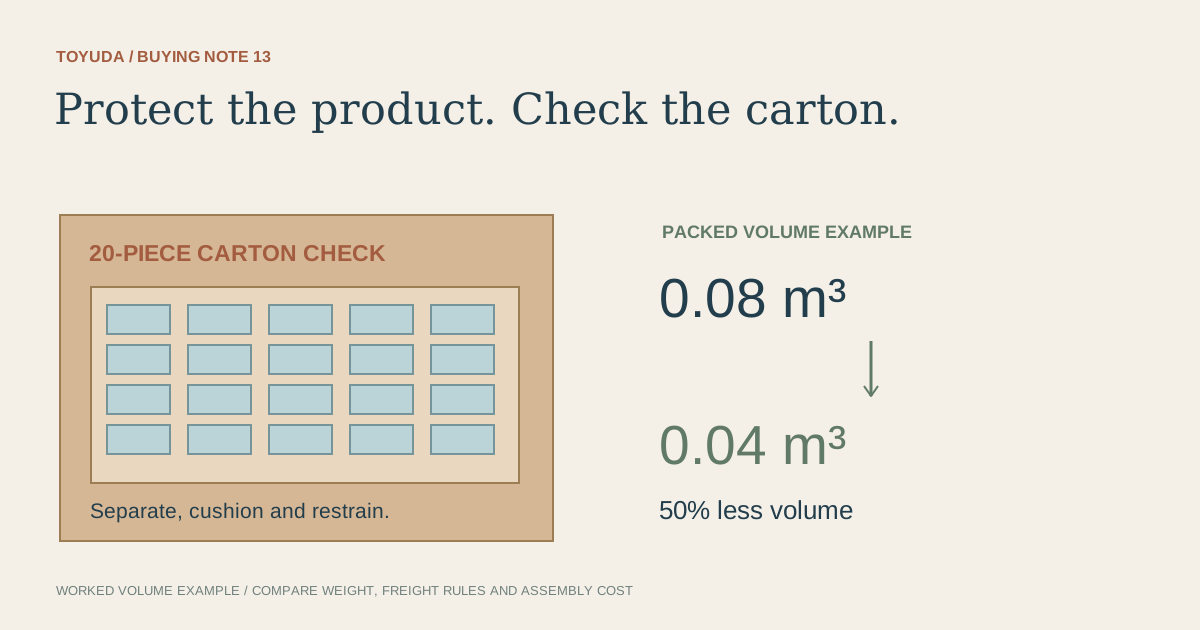
Presentation inserts and transit protection serve different tasks. Use the packing-layer guide to define the full pack, then include the insert and gifts in the carton schedule and packing approval. Do not transfer a material claim from a sheet datasheet to the entire finished box.
Approve the complete gift set and retain the record
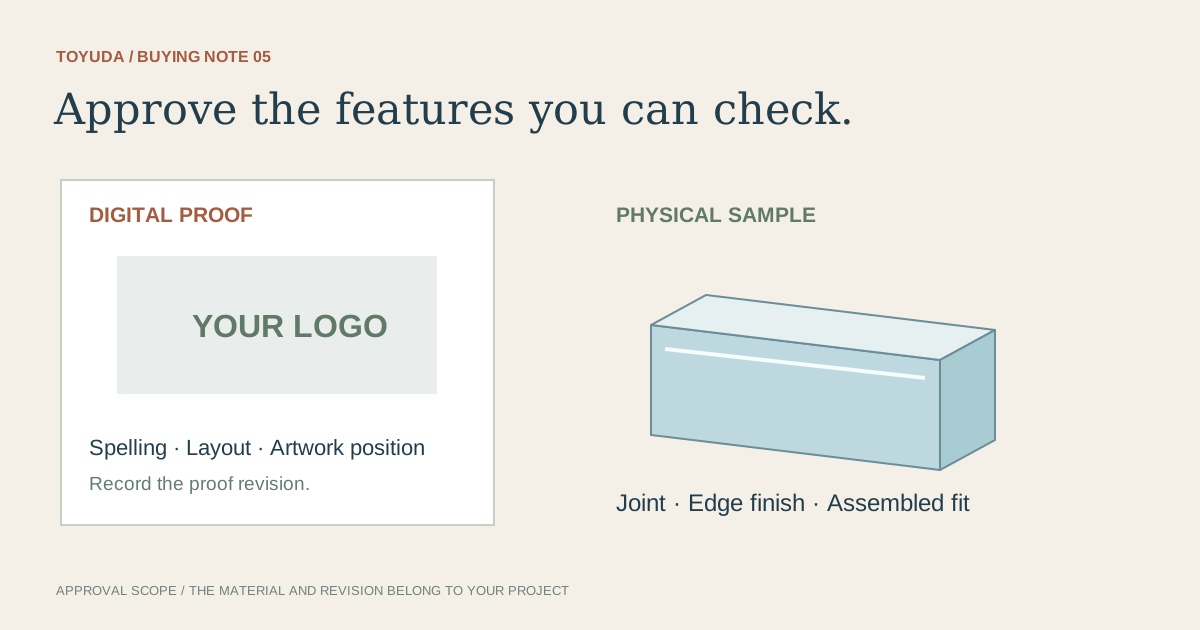
Trial-fit the actual gifts, open and close the box, remove each item and check the intended handling sequence. Record which features are approved and which remain open before releasing the affected work.
Gift set and insert brief
Project / revision / date:
Box reference and opening:
Gift IDs, quantities and packed dimensions:
Weight and intended orientation of each gift:
Presentation faces and removal order:
Usable inside space and closure intrusions:
Insert material / construction to confirm:
Contact areas and surface compatibility:
Total set weight and carrying check:
Individual protection and transit pack:
Sample findings, approval scope and open points:
Download this blank project record (.txt). Mark unknown entries “To confirm” and retain the approved revision.
The sample approval status table can keep an accepted appearance separate from an unresolved fit or handle check. Keep the revised drawing, gift inventory and sample reference together.
Two questions about gift box inserts
Can different gift sets share one outer box?
Possibly. Compare each complete set and its proposed insert against the same usable interior, opening and handling requirements, then approve the versions separately.
Is a presentation insert the same as transit protection?
No. Define its role in the complete pack and validate the proposed protection with the actual contents and shipping arrangement.
Send your complete gift inventory and preferred box reference. TOYUDA can coordinate the insert requirements and sample scope with suitable suppliers.
Apply this guide to your project brief
Combine the complete gift inventory with the selected box reference before reviewing an insert.
- Custom acrylic gift boxes
Review the usable interior, opening, component materials and complete set weight.
Related project records
Prepare your quantity, artwork and delivery details before requesting a quotation.
Compare current product references
Use these formats to apply the guide to a specification. Confirm materials and sample requirements for your project.
- Acrylic Gift Boxes with Chain Handles
Review the actual gift weight, handle attachment, insert and opening sequence with a sample.
- Book-Style Acrylic Gift Boxes
Compare the cover opening and usable depth before defining the gift and insert layout.