Retail buyers order custom acrylic display stands for one of two reasons. Either an off-the-shelf unit does not fit the product, or the brand wants fixtures that match store design and outlast a single campaign. Both are valid. Both also fail in predictable ways when the specs are wrong: shelves that sag under load, bases that slide on glossy counters, edges that chip in the first month.
This guide walks through the main types, the specs that decide whether a unit works, and what to prepare before you request quotes from acrylic display stand manufacturers.

The four types that cover most retail needs
Riser stands lift a product above the counter surface. Single-step, two-step and three-step versions arrange small items (cosmetics, figurines, electronics) in a stair pattern so every SKU stays visible. Risers work hardest in shops where counter depth is limited.
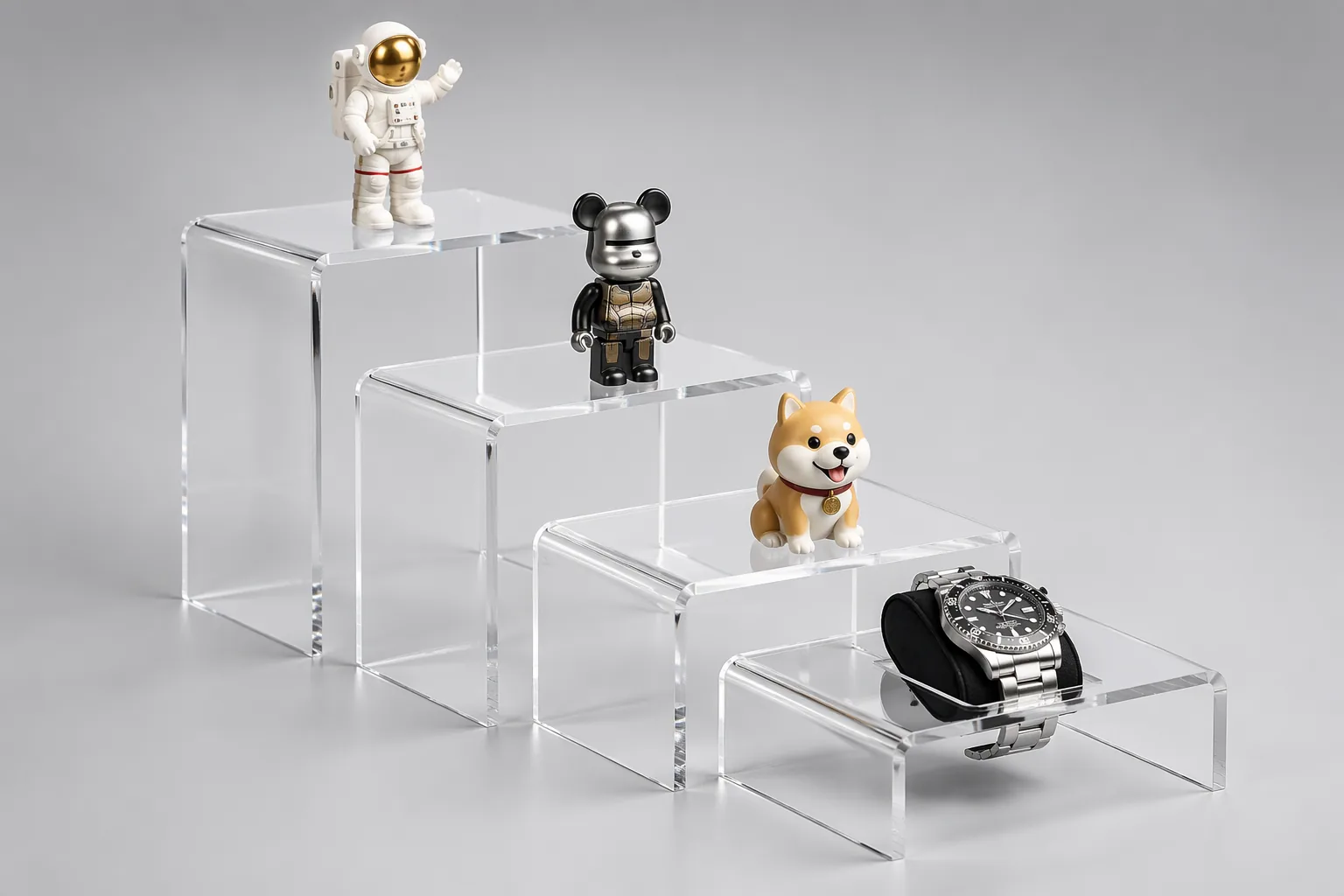
Tiered display units stack two to four shelves on a frame or solid base. Perfume, skincare and eyewear brands use them for hero products at the point of sale. Weight matters here: a tiered unit holding 10 kg of product needs a thicker base plate than most buyers expect.
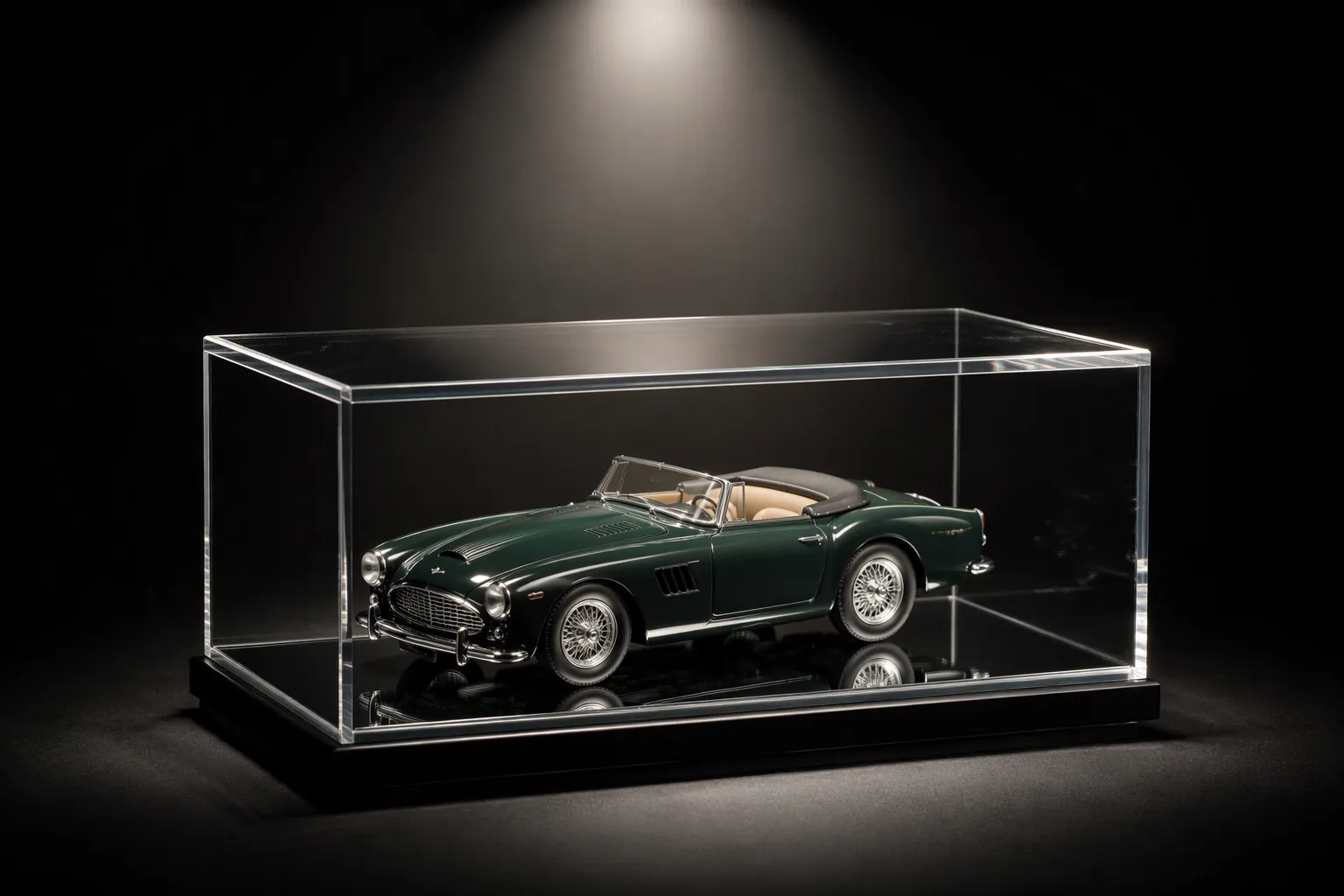
Display cases enclose the product. Museum-style cases with a lift-off top suit collectibles and high-value items; sliding-door cases work for merchandise that staff restock daily. If you are sourcing a custom-size acrylic display case for collectibles, specify interior dimensions, not exterior. Collectors measure their items and expect the case to fit the item plus a small margin, usually 5 mm per side.
Standees are life-size or near-life-size printed panels mounted in an acrylic base. Brands use them for product launches, photo points and event wayfinding. An acrylic standee outlasts a cardboard one by years, which matters for permanent retail installations.
Specs that decide quality
Three specs do almost all the quality work. Get them right and most other problems disappear.
Thickness. Load-bearing shelves need 5 mm minimum for light items under 2 kg. Heavier products, or shelves wider than 300 mm, should move to 8 mm. Solid bases start at 8 mm and go to 15 mm for floor-standing units. Extruded acrylic sheet costs less than cast, but it scratches more easily during fabrication. For displays that customers touch daily, specify cast acrylic.
Edges. A flame-polished or diamond-polished edge looks glass-like and resists chipping. Laser-cut edges left untreated show tool marks and feel rough. Polishing adds a small cost per unit and a day or two of production time; it is worth it for anything at eye level.
Base stability. Counter units need silicone feet or a weighted base so staff can wipe the surface without the stand sliding. Floor units need a footprint calculated against height: a 1.8 m standee on a 400 mm base will tip. We generally specify 500–600 mm for anything above 1.5 m, or a flat base plate with mounting holes for carpeted floors.
Finishes beyond clear
Clear acrylic suits most products, but finishes change how the fixture reads in a store:
- Frosted or sandblasted panels soften the look and hide fingerprints on touch zones.
- Colored sheet (smoke, black, white, brand colors) anchors the fixture to store design. Black bases with clear shelves photograph well for e-commerce detail pages.
- Mirror acrylic reflects product from below, common for jewelry displays.
- Printed backs using UV printing add brand graphics on the rear panel of a case or tiered unit.
What to prepare before requesting quotes
Acrylic display stand manufacturers quote faster and more accurately when you send four things:
- Product dimensions and weight per unit, plus total load per shelf. A shelf holding 5 bottles at 400 g each needs different specs than one holding a single 6 kg display model.
- Store environment. Counter, wall-mounted, floor-standing, or window? Sunlight exposure matters: acrylic yellows slowly under constant direct UV unless you specify UV-stabilized sheet for window displays.
- Quantity and replenishment plan. Fixture programs often reorder quarterly. Sharing the full-year estimate lets the factory plan material purchasing, which usually improves your per-unit price.
- Reference images or drawings. Even a phone photo of a competitor fixture communicates more than a paragraph of description.
For single-product questions, like how a stand fits a specific item, our earlier guides on choosing acrylic cap displays and measuring fit and tolerances walk through the measurement process with examples.
Costs and lead time
Simple riser sets in 50–100 units land in the low single-digit dollar range per piece. Complex tiered units with printing and assembly run higher, driven by assembly time more than material. Lead time follows the same pattern as other custom acrylic work: 3–5 days for samples, 10–15 days for production up to a few hundred units, plus freight. Fixtures ordered for a store opening should enter production no later than six weeks before the fixture install date.
Frequently asked questions
What is the MOQ for custom acrylic display stands?
Standard shapes start at 50 pieces. Fully custom designs start at 100 pieces in most factories because cutting programs and jigs need to be built.
Can I get one sample before committing?
Yes. Sample cost typically runs two to three times the per-unit mass-production price, and most factories credit it against the first bulk order.
How do I stop acrylic from scratching in store?
Specify cast acrylic, add a protective film that staff peel at install, and choose frosted finishes on touch surfaces. For high-traffic areas, 3 mm sacrificial film sheets can be replaced during the fixture's life.
Do you make display cases to fit a specific collectible?
Yes. Send interior dimensions and we cut to size, with options for mirror backs, risers inside the case, and lockable doors for retail environments. Cases pair naturally with our acrylic sign holders for price and information cards.
Start your fixture project
Send product dimensions, quantities and the store environment, and we will recommend a thickness and base design with a quote within one working day. See standard custom acrylic display stands in our product range, or brief us on a fully custom unit if you have drawings ready.