Approve acrylic sign colour against an identified reference and a sample of the proposed material and finish. A customer photo, colour code and digital proof each carry different information; none should silently become a finished-sample approval.
Label what the colour reference actually represents
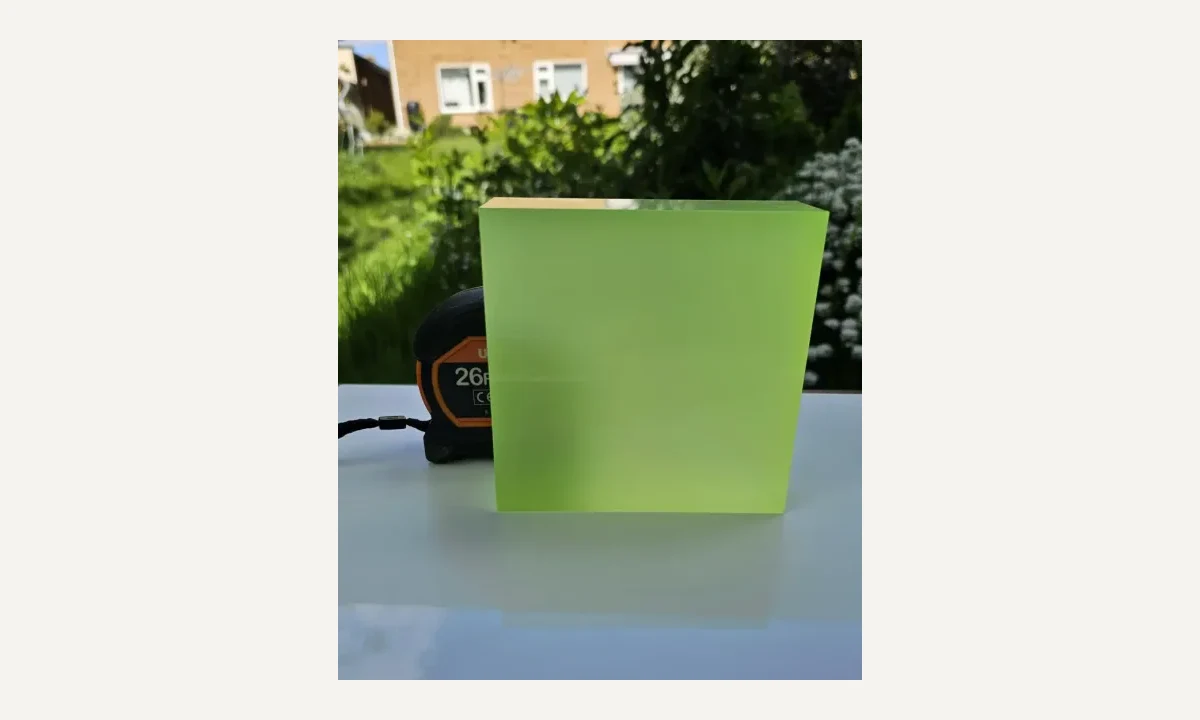
The green image here came from a customer appearance enquiry. It shows the desired general look. The project record does not show a completed supplied sample or a delivered order, so the image is retained as an inspiration reference with that status visible.
Give every reference a name and record who supplied it, whether it is physical or digital and which feature it controls. A photo may guide translucency or edge appearance while a separate physical swatch controls the colour. Identify conflicts before requesting a sample.
Define the substrate, decoration and viewed face
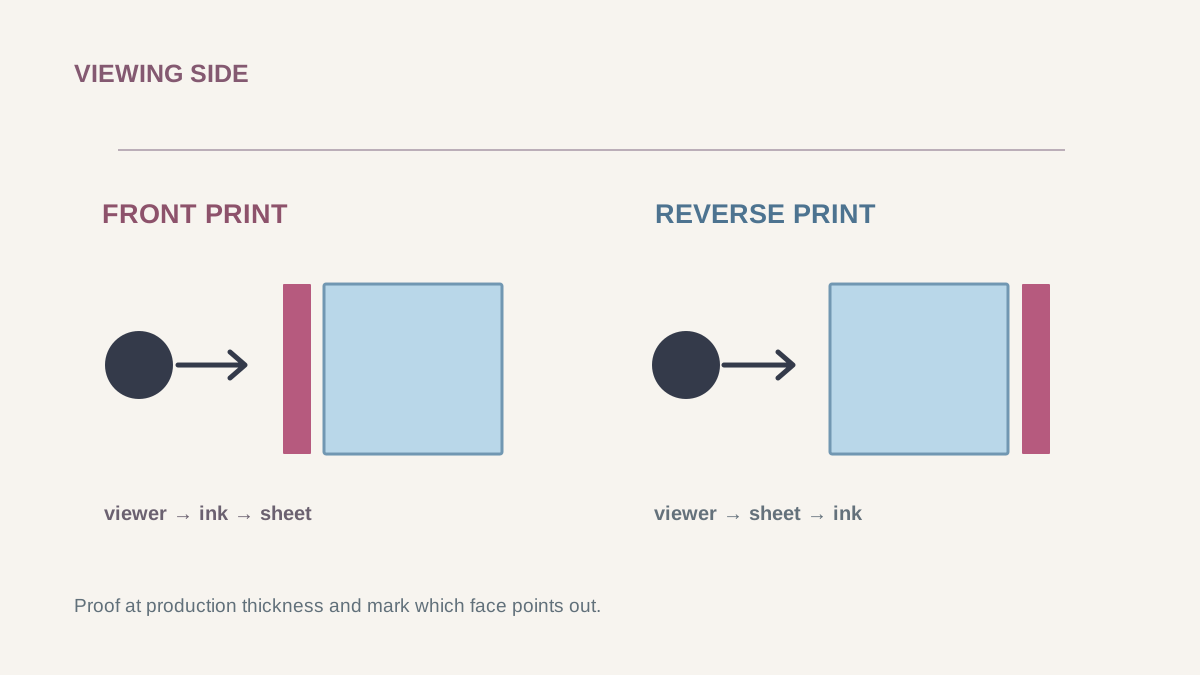
Record the proposed sheet colour and grade, thickness, clear or frosted appearance, printing method and any backing or coating. Mark the side from which the sign will be read. The same artwork needs a different review when viewed through a panel rather than directly on its decorated face.
Ask the supplier to identify the sample construction instead of describing it only as green acrylic. A through-coloured sheet, a printed clear panel and a coated surface should not be treated as equivalent ways of meeting a colour reference.
ACRYLITE fabrication guidance treats painting and printing as processes that need compatible materials and preparation. Use that guidance to ask about the proposed process; it does not certify a particular supplier sample.

Compare a physical sample in the intended setting
Agree how and where the sample will be compared. Record the lighting, background, viewing side and whether the sign is illuminated. A coloured translucent panel against a light wall can present differently from the same panel against a dark counter.
If instrumental colour measurement is required, agree the method, geometry, target and acceptance limits with the parties responsible for approval. Do not invent a numerical colour tolerance from a photograph. Keep visual finish approval and any measured colour result identifiable as separate decisions.
| Reference | Useful for | Approval boundary |
|---|---|---|
| Customer photograph | General appearance and features to discuss | No physical colour or supplied-sample approval |
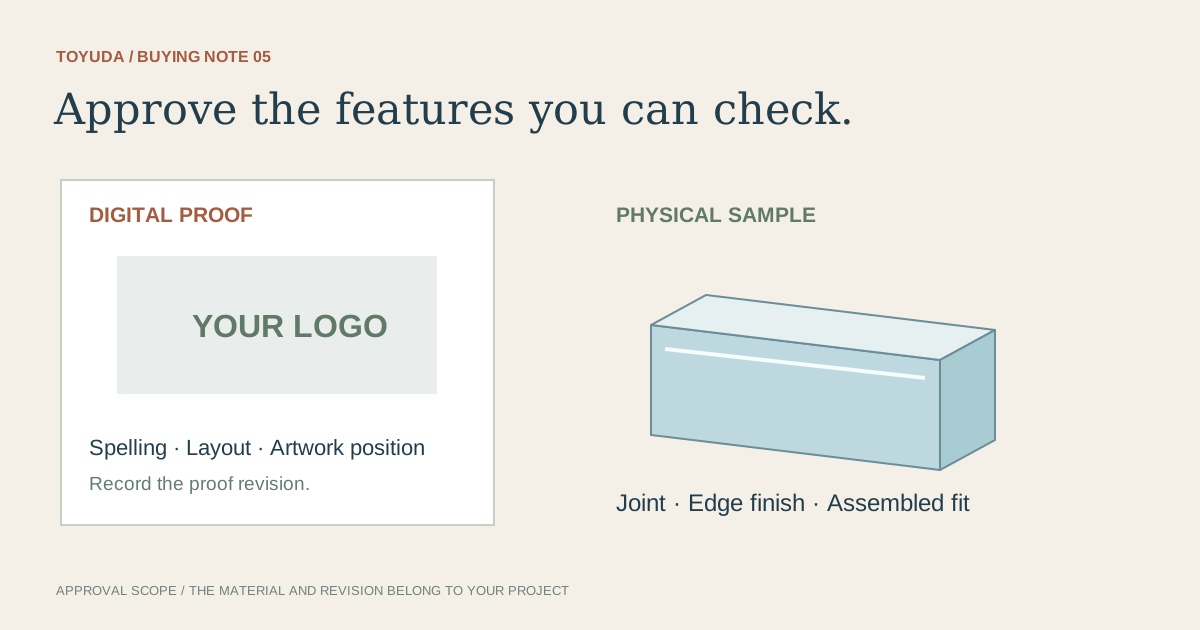
| Digital artwork proof | Text, layout and reading direction | Screen appearance alone does not approve finished colour |
| Identified material swatch | A named substrate appearance | Decoration and backing still need review |
| Finished physical sample | The recorded construction under agreed conditions | Applies to that revision and approval scope |
Keep the approved reference with the released construction
Label the accepted physical sample and retain it with the material, finish and artwork revisions. Record the approved viewing face, comparison conditions, decision owner and any exclusions. A screen proof can still approve text and layout while colour remains open.
A change in substrate, coating, print stack or illumination should trigger a review of the affected appearance. For a reorder, refer to the retained sample and its construction rather than sending an unlabelled old image.
Download the project record
Use this blank record for the enquiry and agreed sample review. Mark unverified entries “To confirm” and retain the approved revision.
Approving Acrylic Sign Colour: Reference, Substrate and Finish
Reference IDs, owners and physical/digital status:
Feature controlled by each reference:
Material, thickness, decoration and finish stack:
Viewed face, background and illumination:
Agreed visual or measured comparison method:
Physical sample ID and decision owner:
Artwork and construction revisions:
Open colour/finish decisions and retained sample location:
Download this blank project record (.txt). Mark unknown entries “To confirm” and retain the approved revision.
Specification questions
Is a colour code enough to approve a translucent sign?
Include the actual material, finish, backing, viewing side and comparison conditions. Agree which physical reference controls the decision.
Can a screen proof approve the text while colour stays open?
Yes. Record separate decisions so text or layout approval is not mistaken for finished-colour approval.
Send the reference and project record. TOYUDA is a trading and supply-chain coordination partner and can coordinate specification and sample reviews with suitable suppliers.
Apply this guide to your project brief
Use the recorded interface and review conditions when comparing the proposed reference.
- Colour and finish approval references
Confirm the actual construction, dimensions and approval scope for the project.
Related project records
Prepare your quantity, artwork and delivery details before requesting a quotation.