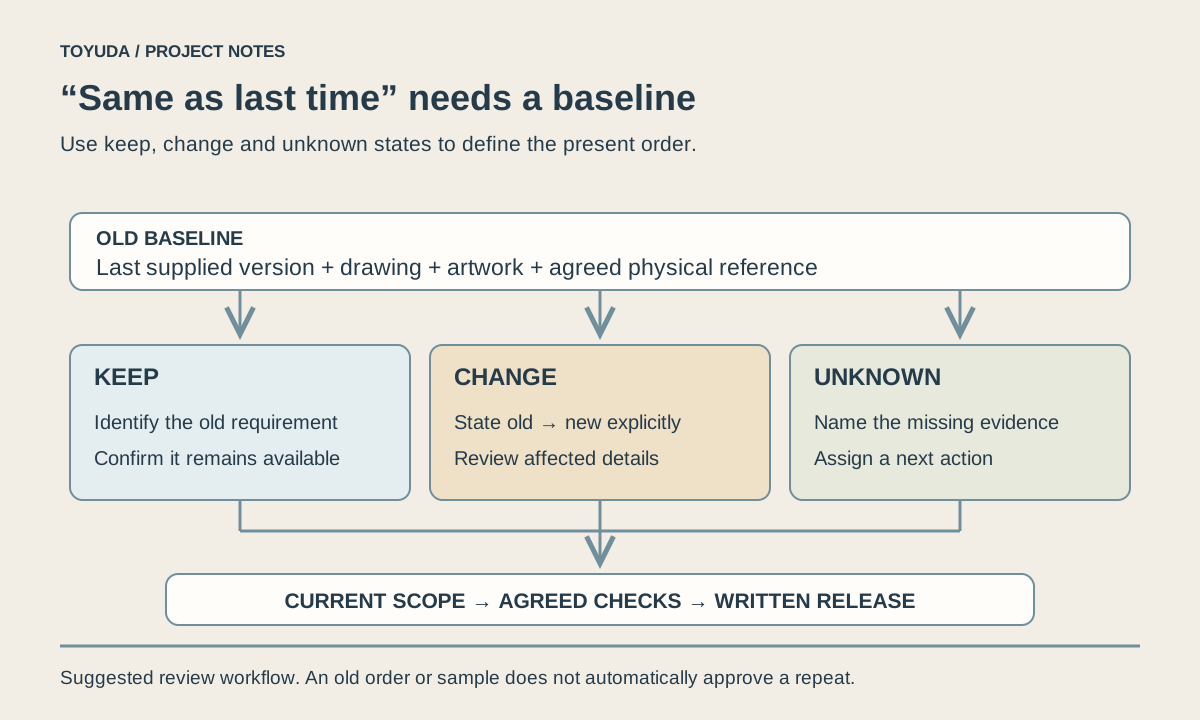
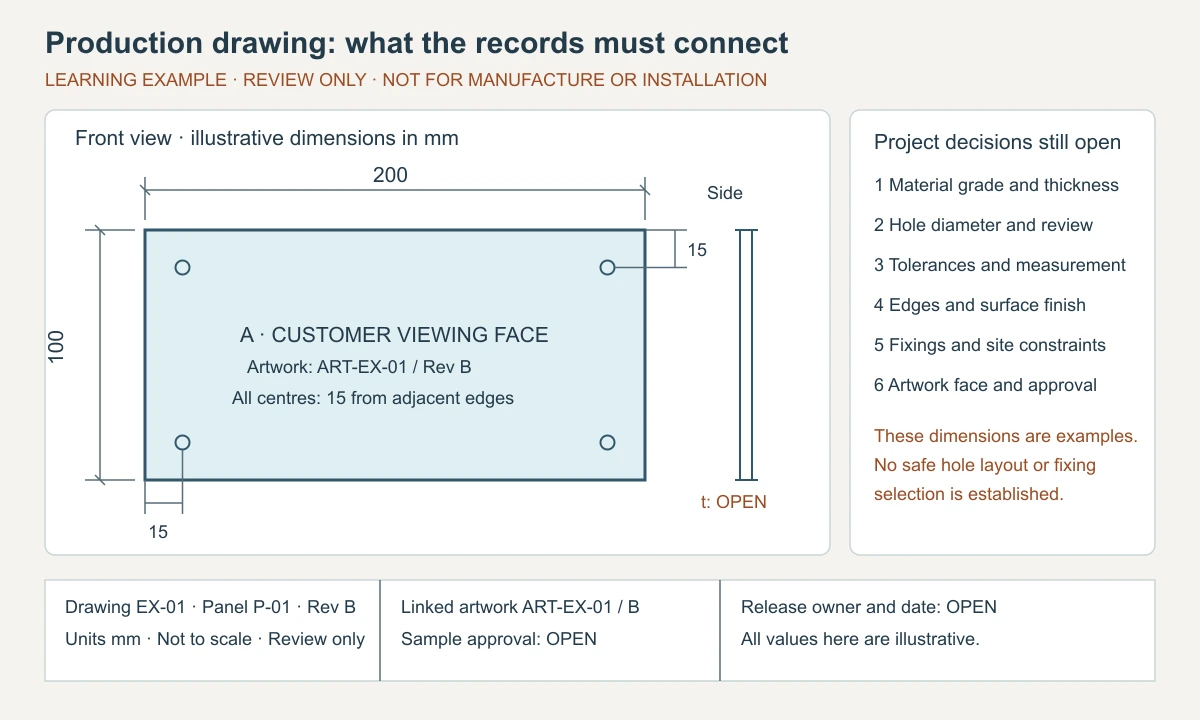
Check an acrylic slatwall sign against the actual slatwall panel and rear-mount profile before reordering. Similar front faces do not establish compatibility: the part that meets the wall is often hidden in a catalog image.
Identify the installed slatwall, including its profile
Record the panel manufacturer or profile reference if available, groove shape, relevant dimensions and any inserted liner. Photograph a representative groove from the front and side. Distinguish measurements taken on site from dimensions supplied on a panel drawing.
If the new location uses a different panel, treat it as a new interface review. Do not copy an old approval based only on groove spacing or the general name slatwall.
Compare the complete rear mount and insertion route
Request a side profile and rear view of the proposed sign mounting arrangement. Mark its engagement features, offsets, orientation and connection to the sign face. Confirm which pieces and fixings form part of the supply.
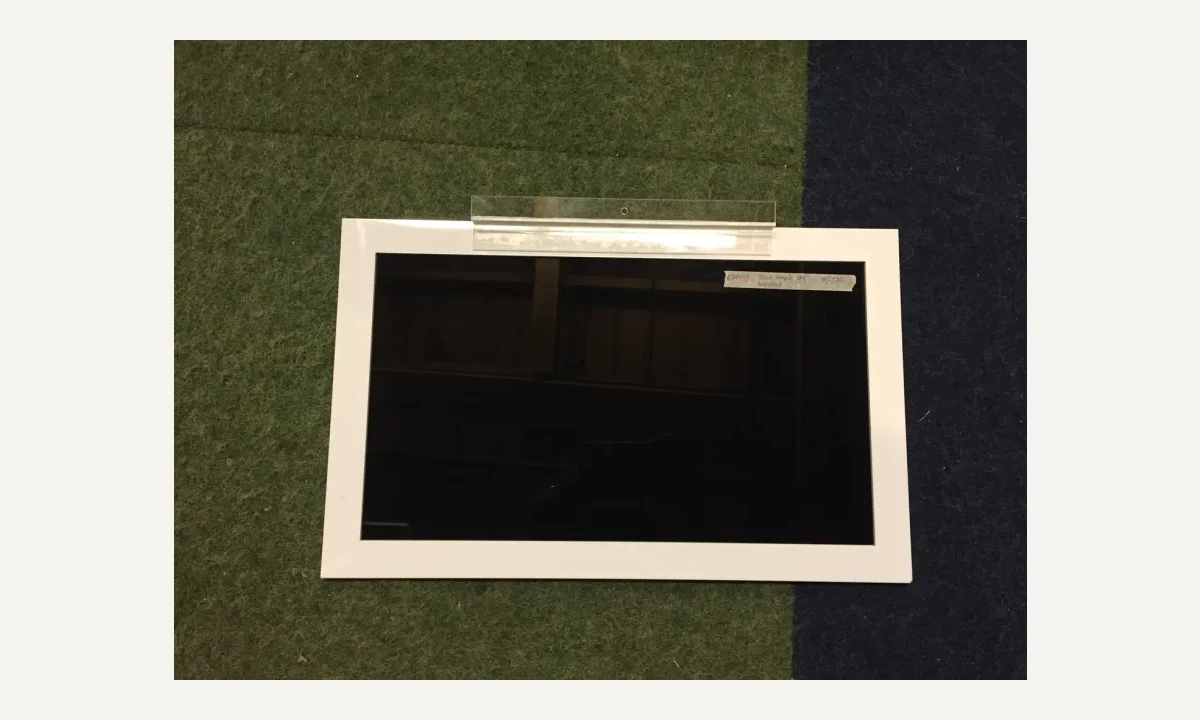
The documented project includes a historic rear-mount photo used as a reference in a later reorder discussion. It helps identify what needs comparison. It does not prove that the new mount is dimensionally identical, that another wall accepts it or that the later order was shipped.
Check the path used to insert, seat and remove the assembly. The final seated position alone can hide a clash during insertion. Include the wall edge, adjacent fixtures and the room needed to raise or tilt the sign.
Review a representative mount-and-panel pair
Arrange a sample with the intended panel profile and assembled sign. Have the supplier and responsible installer agree the review conditions, supported configuration and acceptance responsibilities. Record the sign version and any contents or accessories fitted during the review.
Observe seating, unwanted movement, interference and removal. Any load or retention requirement needs an agreed method and evidence for the actual assembly; a photograph of the mount supplies no load rating. Keep the panel and mount identities in the same record.
| Interface | Compare old and proposed | Evidence to retain |
|---|---|---|
| Installed panel | Profile, liner and measured constraints | Panel ID, section drawing or site record |
| Rear mount | Engagement shape, offset and attachment | Dimensioned side/rear drawing revision |
| Handling | Insertion, seating and removal route | Paired sample observations |
| Order version | Face, artwork, panel group and supply scope | Release list and pack identification |
Make a change list before releasing the reorder
Compare the old and proposed sign face, rear mount, panel, artwork and packing as separate rows. Mark each as unchanged, changed or unconfirmed and attach the evidence behind that status. Unknown part dimensions should remain open.
For multi-location orders, connect each sign version to its intended panel group and packing label. Release against the reviewed drawing revision and retain a reference sample or dimensional record so the next reorder begins from an identifiable assembly.
Download the project record
Use this blank record for the enquiry and agreed sample review. Mark unverified entries “To confirm” and retain the approved revision.
Acrylic Slatwall Signs: Check the Rear Mount Before Reordering
Location group and slatwall panel/profile ID:
Measured groove and liner information with units:
Old reference status and date:
Proposed rear-mount drawing revision:
Insertion, seated and removal observations:
Agreed review method, supported configuration and result:
Change list, unresolved dimensions and release owner:
Sign version, quantity by panel group and packing labels:
Download this blank project record (.txt). Mark unknown entries “To confirm” and retain the approved revision.
Reorder revision control · What Should a Custom Acrylic Production Drawing Include?.
Specification questions
Will a mount fit because the wall is called slatwall?
Confirm the actual panel profile, liner and mount engagement. A generic product name is insufficient.
Can an old rear photo serve as a reorder drawing?
Use it to identify the arrangement. Compare current dimensions and revisions, and review the proposed mount with the intended panel.
Send the reference and project record. TOYUDA is a trading and supply-chain coordination partner and can coordinate specification and sample reviews with suitable suppliers.
Apply this guide to your project brief
Use the recorded interface and review conditions when comparing the proposed reference.
- Retail fixture interfaces references
Confirm the actual construction, dimensions and approval scope for the project.
Related project records
Prepare your quantity, artwork and delivery details before requesting a quotation.