Plan a hair extension display stand with the actual swatches, their positions and the labels buyers need to read. Review the complete arrangement and branding on a representative sample before specifying a batch.
Identify what each hanging position will carry
Give each swatch a unique ID and record its attachment form, length, width and weight where relevant. Include any clip, loop, tab or label that stays with it. A display for comparing short color samples may need a different layout from one presenting full-length extension pieces.
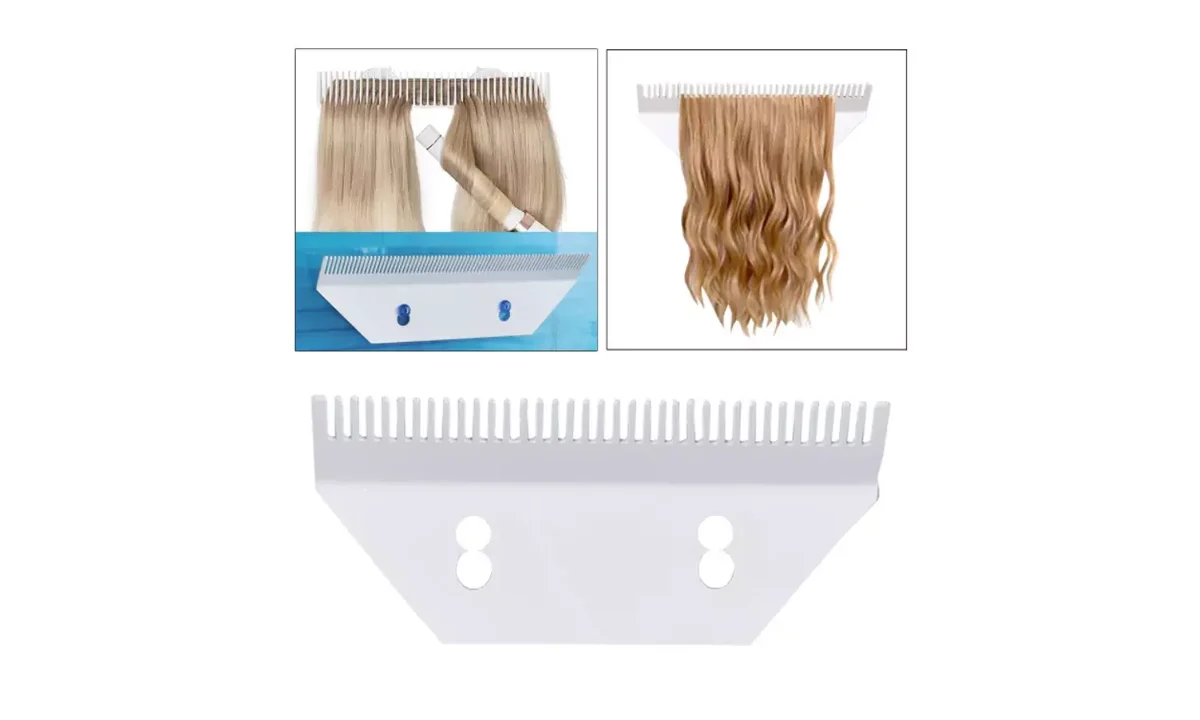
State how many positions will be filled and which versions must be shown together. Leave capacity open for review until the actual attachments and spacing have been checked. Counting visible teeth in a reference image does not establish how many finished swatches can be presented clearly.
The photograph shows a comb-style reference and its mounting features. Use it to discuss how a sample could be held and reached. It does not approve a particular mounting surface or show that every extension attachment suits the same teeth.
Arrange swatches around the comparison task
Choose an order that helps the buyer compare the intended range. For example, a brand may group its own length options or arrange its own shade references. Keep the position map linked to the swatch list so similar-looking items are still identifiable.
Review the longest and widest proposed swatches in place. Check whether hanging pieces overlap, obscure a label, meet the counter or block access to a neighboring position. Record the viewing side and the amount of free space below the display.
Use physical references under the intended lighting for appearance decisions. Screens and photographs help communicate the arrangement, but they do not replace a physical color comparison. This guide specifies a display layout; it does not assess hair performance or application methods.
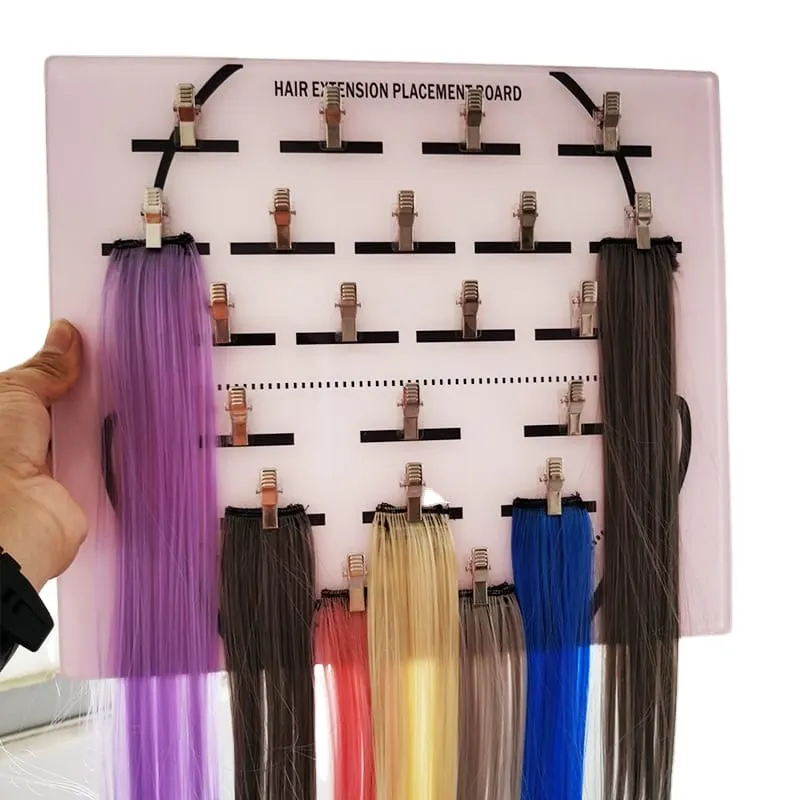
Keep labels readable with the swatches installed
Assign a label ID to each position and decide whether the information sits on the stand, on the swatch attachment or on a separate card. Check it with the hair hanging in its normal position, including any movement during comparison.
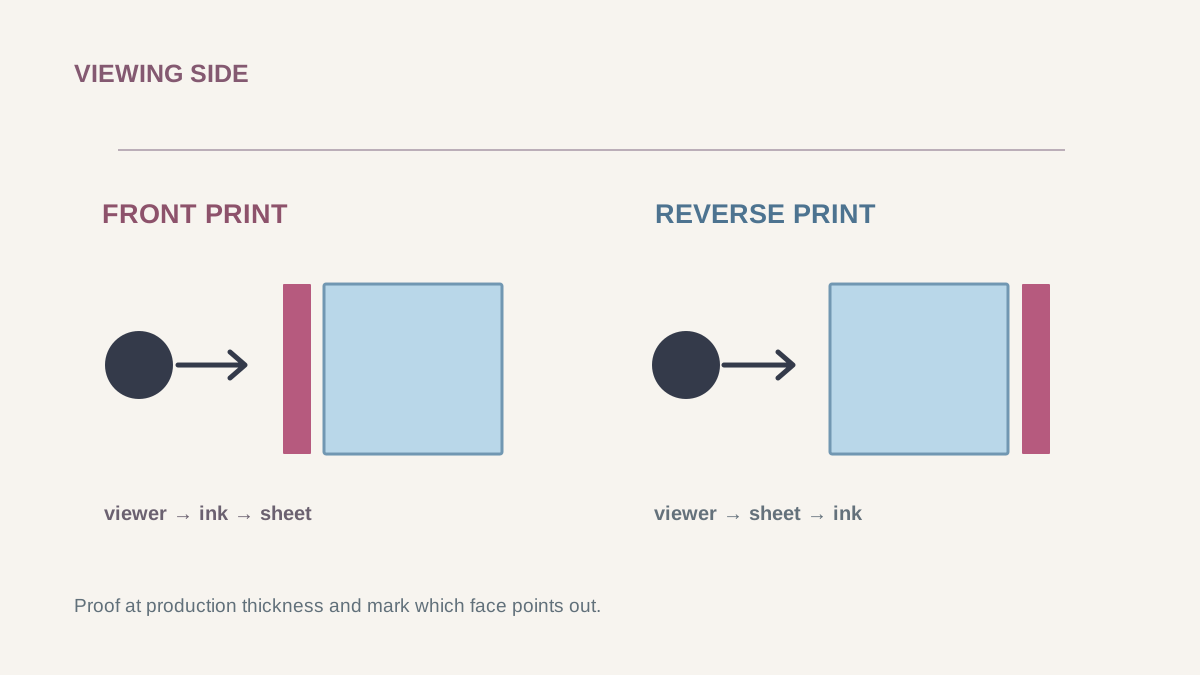
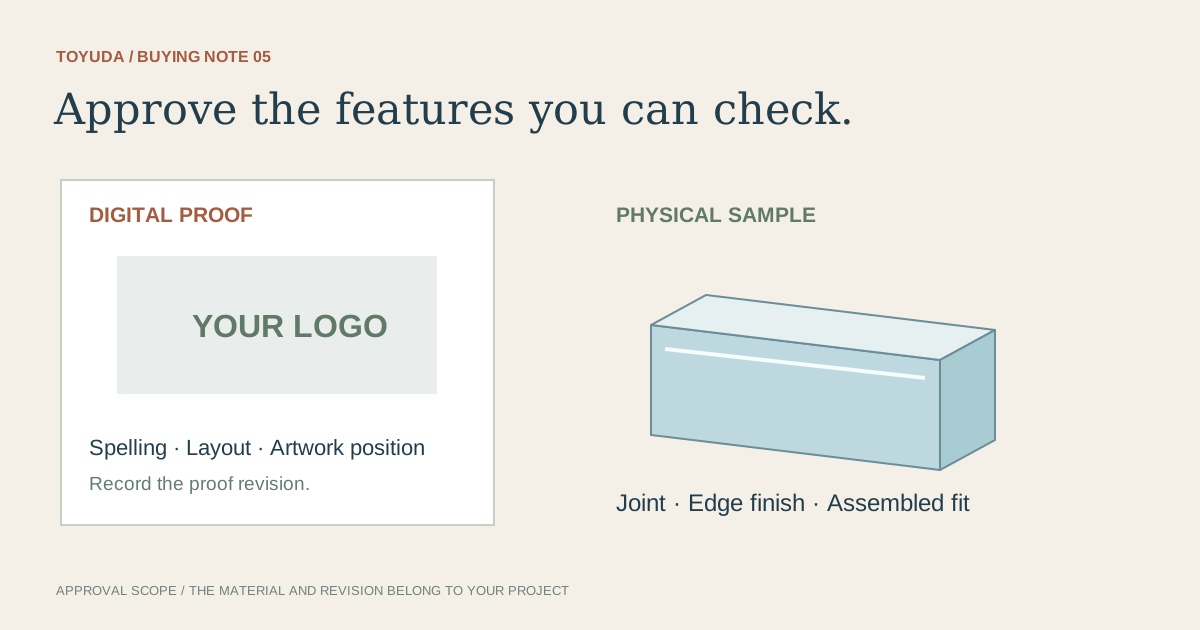
Mark the viewing face, orientation and proposed branding area on the same layout. Keep the approved text and artwork revision with the position map. A blank stand proof cannot show whether the finished swatches hide a shade number or logo.
If the stand is read from more than one side, prepare each view explicitly. The existing front-versus-reverse printing guide explains the reading-face questions. The chosen decoration and finish still need review on the actual display construction.
| Record | Example field | Decision supported |
|---|---|---|
| Swatch register | ID, attachment, length and finished envelope | Which actual pieces the display is for |
| Position map | Position ID linked to swatch and label IDs | How pieces are ordered and replaced |
| Viewing record | Lighting, background and intended reading side | What a physical appearance approval covers |
| Sample findings | Access, interference and unresolved items | Which revision can proceed and what remains open |
Review a complete pilot arrangement and record changes
Set up a representative display with the intended swatches and support or mounting arrangement. Agree the review scope with the supplier and the person responsible for the installation. Include placement, removal, replacement and replenishment.
Record contact with teeth or edges, spacing between neighboring pieces, label visibility and the route used to remove a swatch. Keep observations specific to the swatch IDs and display revision. Any proposed support or mounting change needs its own confirmation.
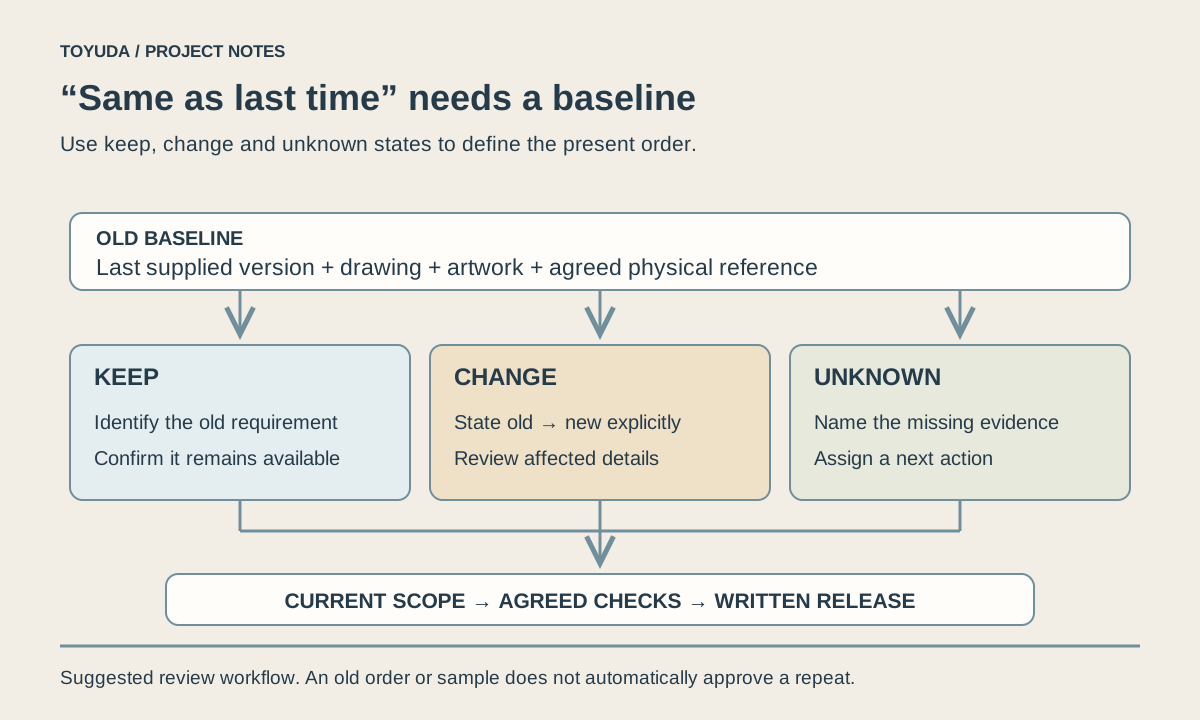
Release the position map, swatch list, artwork and packing contents together. For later range updates, identify what has changed before reusing the display. A new attachment, longer swatch or revised label can require a further fit or appearance check.
Download the project record
Use this blank record to prepare the enquiry and capture the agreed sample review. Unknown measurements and unchecked results should remain open until they are confirmed.
Hair Extension Display Stands: Swatch Layout, Labels and Approval
Project, swatch register and revision:
Swatch IDs, attachment forms and finished envelopes:
Proposed number of filled positions and spacing:
Position-to-swatch-to-label map:
Viewing faces, artwork files and revision:
Lighting, background and physical appearance references:
Counter/site boundary and support or mounting review:
Removal, replacement and replenishment observations:
Sample findings, responsible person and open questions:
Pack contents, quantities and destination:
Download this blank project record (.txt). Mark unknown entries “To confirm” and retain the approved revision.
Prepare the reading-face artwork and retain the sample approval record. Use the reorder checklist when the swatch range changes.
Two specification questions
Can capacity be taken from the number of teeth in the photo?
No. Confirm the actual attachments, spacing and access with the intended swatches.
Can a new swatch range automatically reuse the approved stand?
Check the changed lengths, attachments, labels and layout against the retained display before confirming reuse.
Share the swatch list, attachment photos and label artwork. TOYUDA is a trading and supply-chain coordination partner and can coordinate the specification and sample review with suitable suppliers.
Apply this guide to your project brief
Use the completed specification record to review the selected reference with its actual contents and site.
- Hair and beauty display references
Compare the proposed format, dimensions and sample review scope.
Prepare your quantity, artwork and delivery details before requesting a quotation.