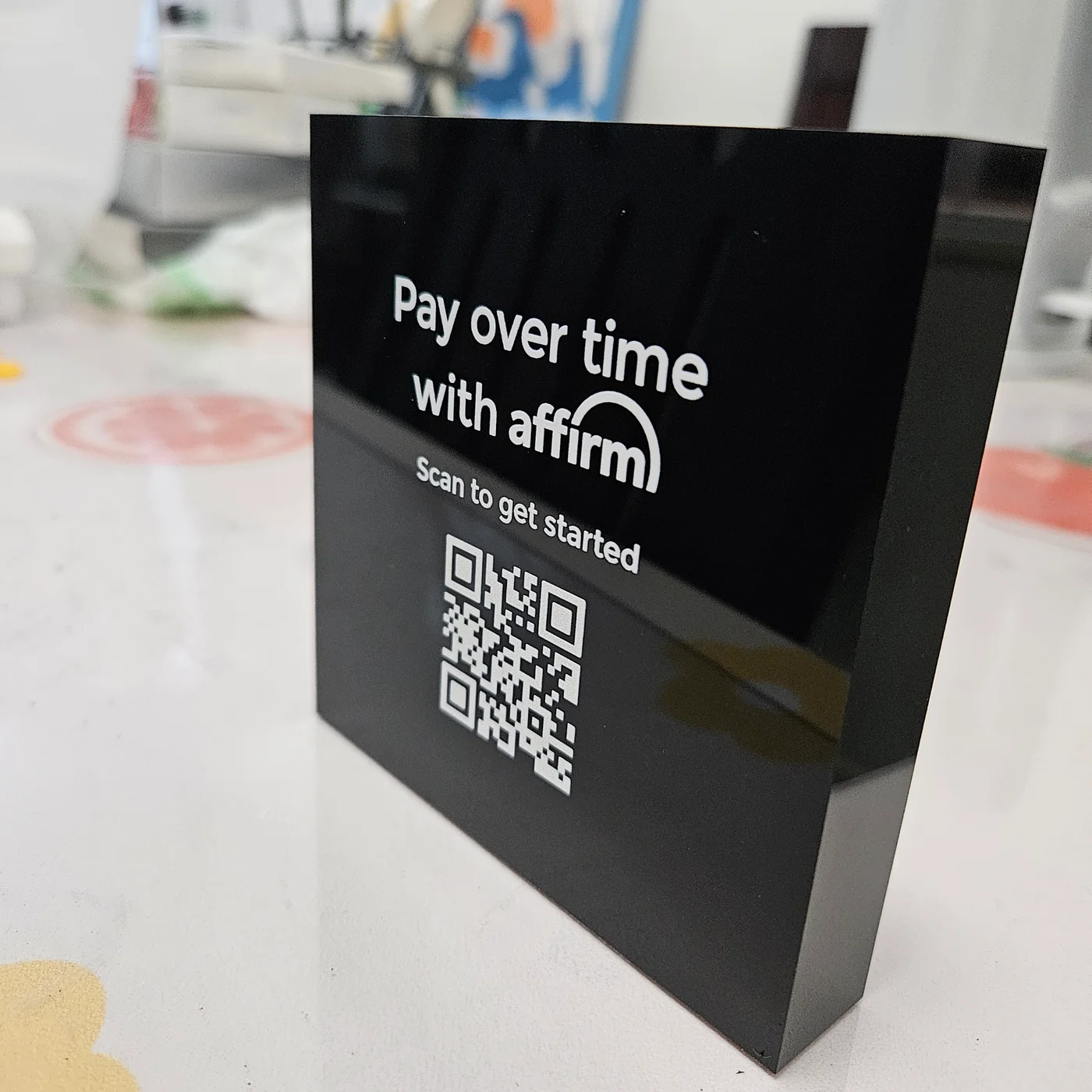
Two languages. One carefully checked retail block.
We worked through sample thickness and revised bilingual artwork, then coordinated a 175-piece reorder with the front and back checked together.
Small footprint.
Two working faces.
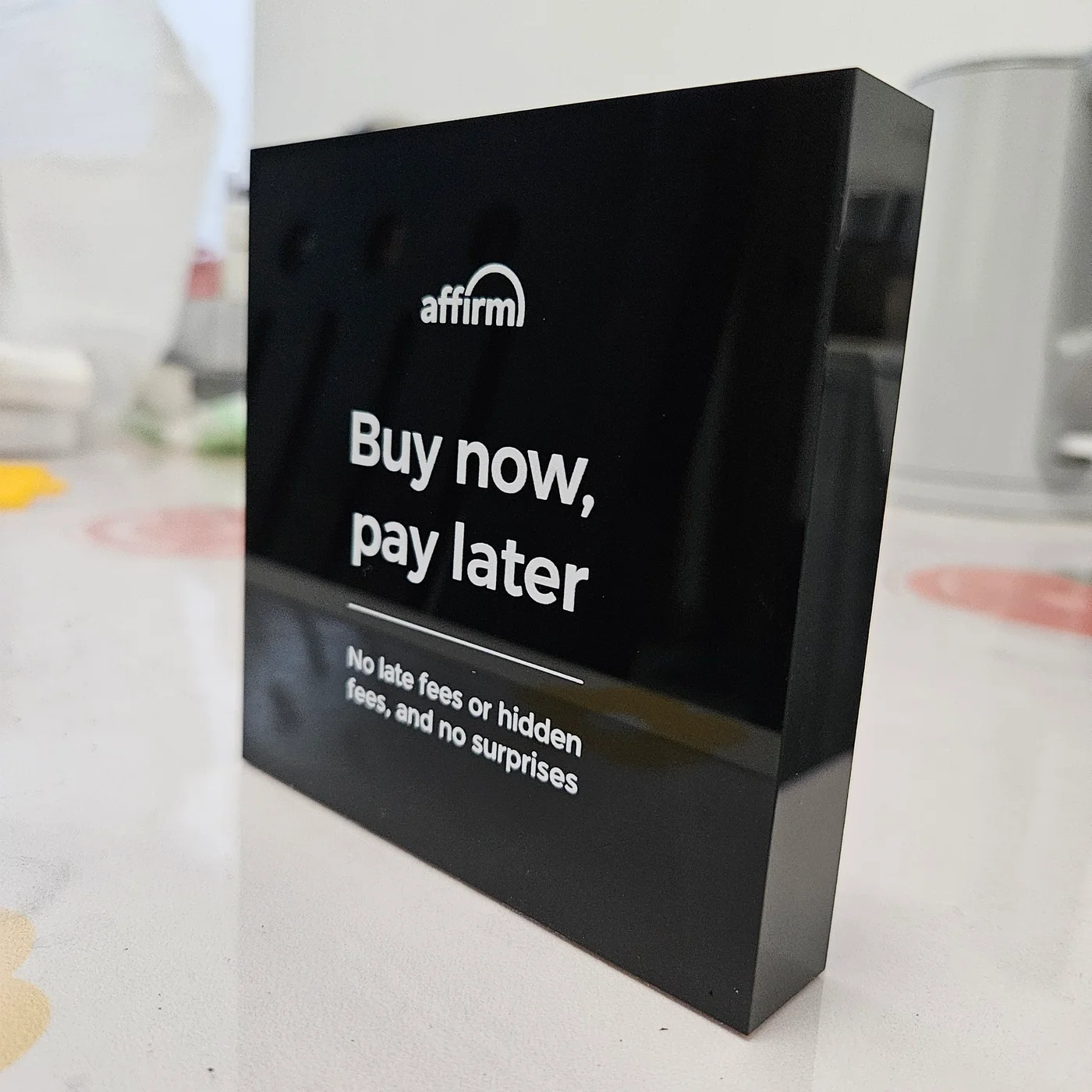
The brief called for a 4 × 4 × 1 inch black acrylic tabletop sign with white artwork on the front and back. The buyer initially needed six pieces, with a larger programme possible later.
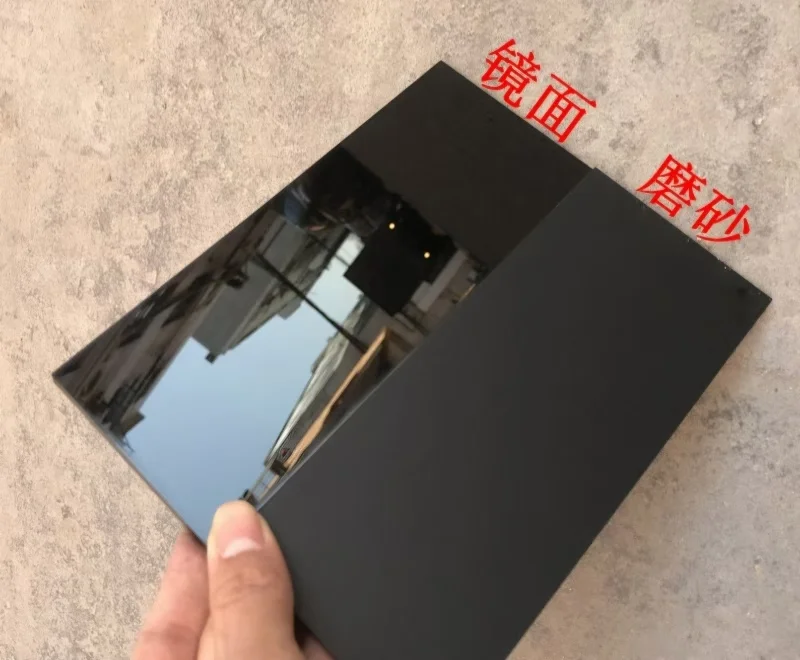
A gloss-versus-matte question came back before approval. We shared a material comparison and explained the sample stock limitation, so the buyer could separate the finish decision from the thickness of the first sample.
- Requested format
- 4 × 4 × 1 in
- Material selected in the later brief
- Glossy black acrylic
- Artwork
- White print, front & back
How the specification was decided
| Decision | What the project record shows |
|---|---|
| Sign construction | The brief called for a 4 × 4 × 1 inch black tabletop block with white artwork on both faces. Gloss and matte finishes were discussed separately from sample thickness. |
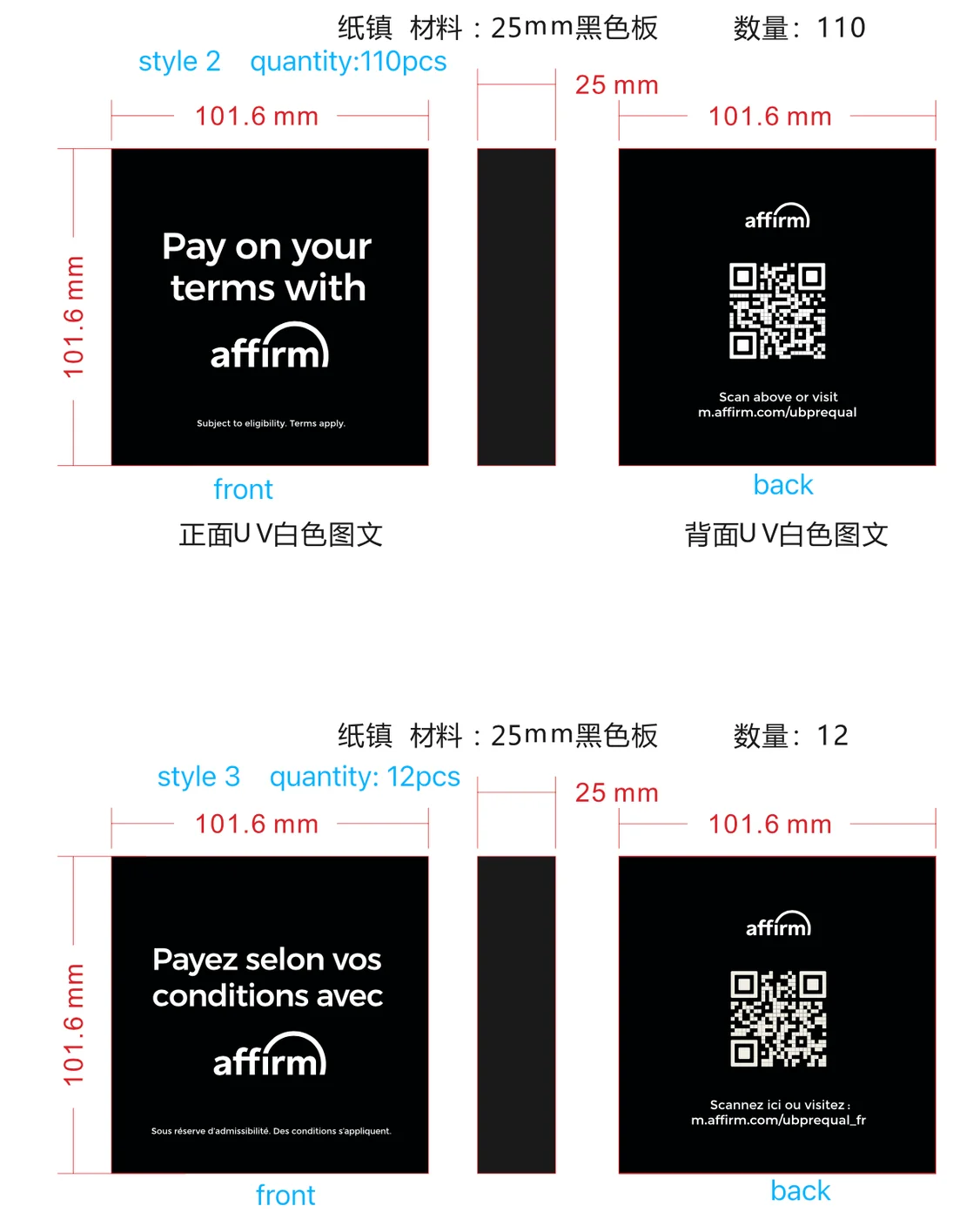
| Language approval | The revised proof matched front and back art to 110 English and 12 French blocks. |
| Repeat order check | The 175-piece reorder was split 150 English and 25 French. We checked a mismatched back file before the buyer approved the previous artwork. |
Use the acrylic logo block reference to mark both faces. Pair it with an artwork version and quantity schedule for each language.
One revised proof. 122 blocks.
January's exchange included a larger allocation across three styles. On 6 February, the buyer removed Style 1 and supplied revised artwork for the French version. The new breakdown was 110 English blocks and 12 French blocks. We checked the resulting total, returned a fresh design, and received approval to proceed on 7 February.
The revised proof brought the language versions, front-and-back artwork and production quantities into one approval. That gave the next production step a clear reference.
A second order kept the same format.
In December, the buyer returned with a 175-piece reorder: 150 English and 25 French. We noticed that the file described as the French back contained English artwork. We pointed out the mismatch and proposed using the previous files for confirmation.
The buyer approved the proposal on 9 December. We acknowledged payment in the following exchange and sent a DHL tracking reference on 25 December.
A language label in a filename is useful, but the proof still needs to show the actual front and back that will be printed.
Two batches, two confirmed allocations.
| Batch | English | French | Total | Recorded shipping step |
|---|---|---|---|---|
| February 2025 | 110 | 12 | 122 | FedEx tracking supplied, 20 February |
| December 2025 | 150 | 25 | 175 | DHL tracking supplied, 25 December |
The emails establish approval and dispatch updates. They do not include a final dimensional inspection or a signed delivery report.