Before the trophy: weight, gold and the first sample.
We reviewed a substantial acrylic award brief, examined the proposed gold finish and engraving together, and explained how 60 mm sheet availability affected the sample route.
The shape was clear.
The finish needed a closer look.
In November 2022, a print-agency buyer sent us an L-shaped award brief for an initial quantity of 100. The design was intended to feel substantial and included two graphic directions: a year-specific version and a more general version.
We quoted a clear acrylic construction with a nominal 60 mm thickness, a proposed gold surface treatment and an engraved graphic. That opened two linked discussions: how the gold would look, and how to review such a thick part before placing a full order.
Nominal clear acrylic thickness
The original drawing below labels the depth as 2.5 inches. Our 60 mm quotation was a proposed material specification, not an exact conversion or an approved production measurement.
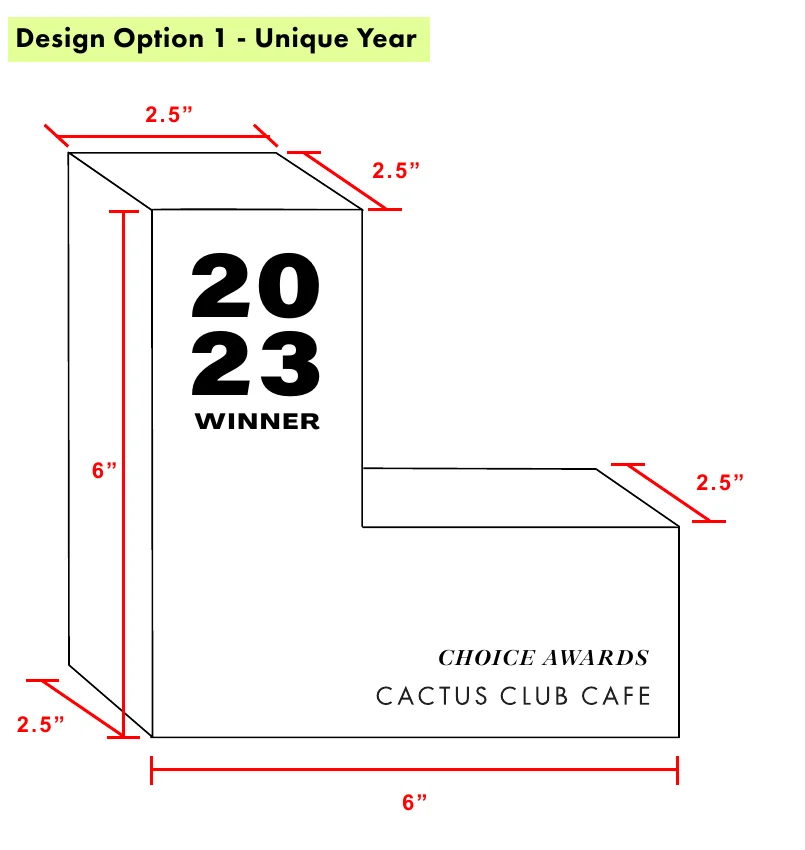
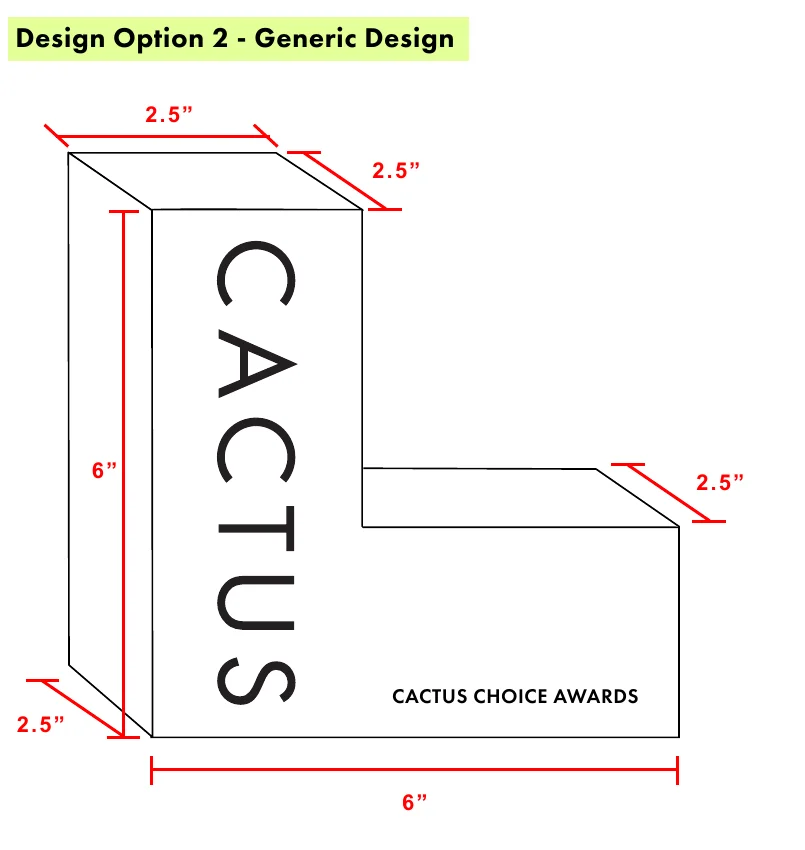
A gold colour was only part of the request.
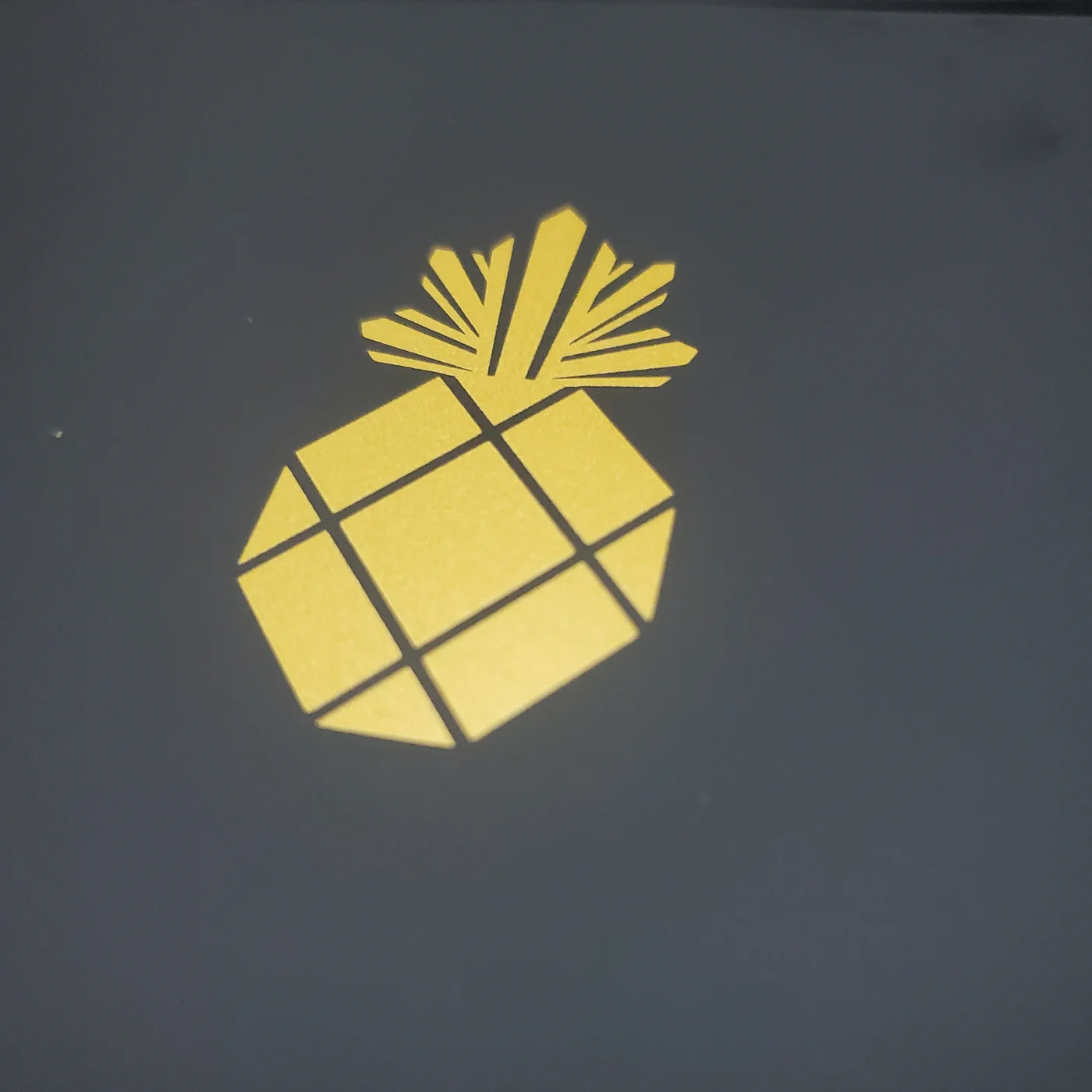
Our first proposal described a sprayed gold colour with a light-looking engraved logo. The buyer then asked whether we could achieve the brighter metallic effect in the reference.
After checking the proposed production route, we explained that the gold-colour process would not reproduce that shine. The plating option discussed also did not support the requested laser-logo approach in that proposal. Those were the constraints of this project review, rather than a general rule for every acrylic finishing process.
The buyer said they would ask the client to consider clear acrylic. That kept the appearance discussion open before committing to a sample.
The next decision remained with the client.
The buyer acknowledged the sampling explanation in December and said they would return with an answer. The archive establishes the brief, quotation and process review; it does not establish a finished award sample or a 100-piece delivery.
For a similar award, we would settle the desired reflection, graphic method and sample material together, then agree what the sample is intended to prove.
Read about thickness and support